
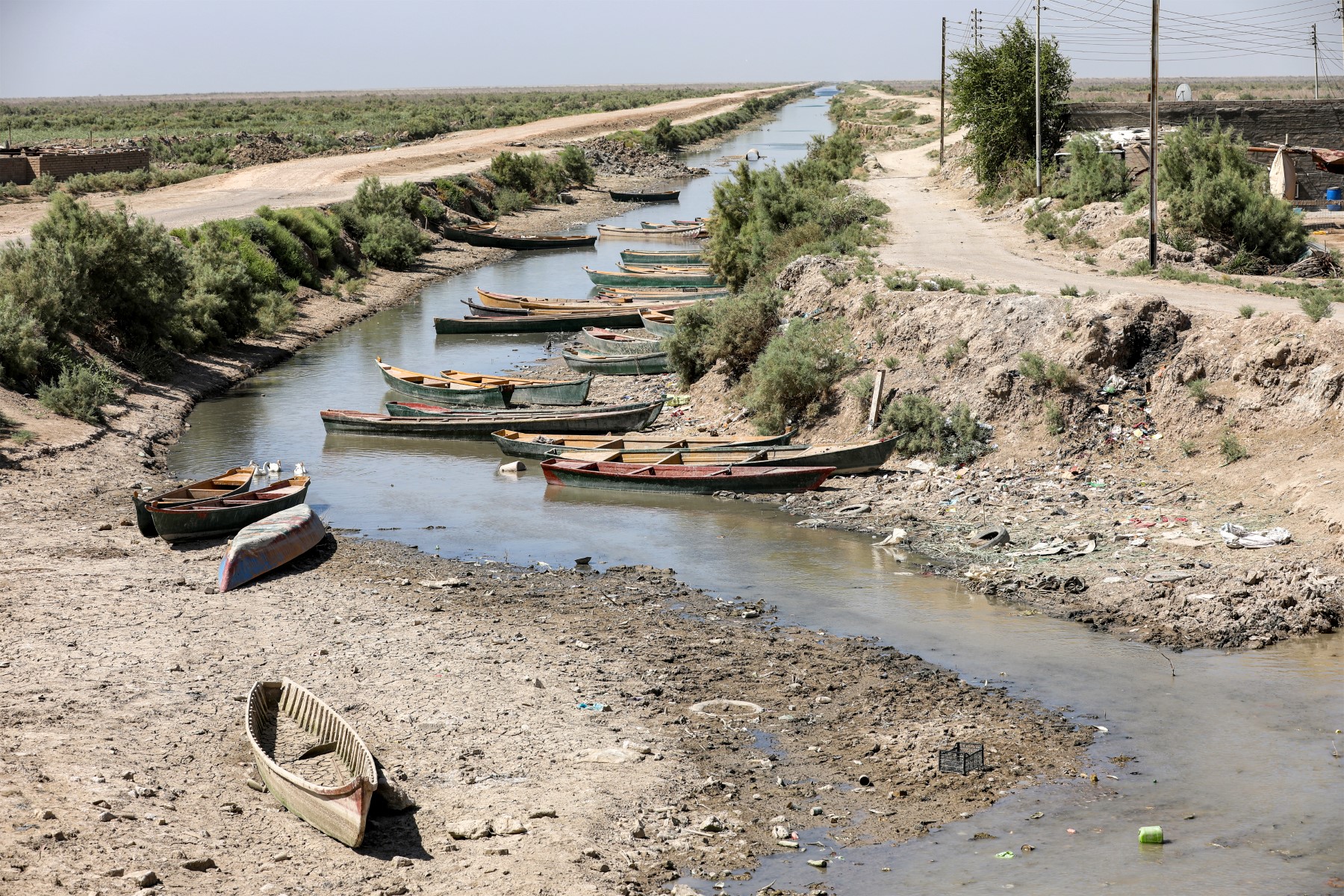


Baghdad, Iraq — Sixty percent of farmers surveyed in four provinces of drought-hit Iraq reported having to reduce cultivated areas or water used, an international rights group said Sunday.
The Norwegian Refugee Council called on the Iraqi authorities to improve governance of water resources in the country that has been described as one of the most vulnerable to climate change and water scarcity.
“Climate change in Iraq is impeding the economic recovery of communities affected by conflict and precipitating risks of secondary displacement,” the NRC said.
The survey was conducted in July and August and relied on results from interviewing 1,079 people in Iraq’s Anbar, Kirkuk, Nineveh and Salaheddin provinces, 40 percent of whom were women and 94 percent of whom were residents of rural areas.
It said 60 percent of respondents “said they cultivated less land or had to use less water due to extreme drought”.
“Iraq’s climate is changing faster than people can adapt,” said Anthony Zielicki, the NRC’s interim Iraq director.
“For the 1.2 million still displaced by conflict, and the millions who have returned home, resettled or relocated, recovery from years of conflict is being crippled by extreme drought,” he added.
Farmers’ incomes saw an increase in 2023 due to “higher than estimated rainfall”, the NRC said. But that “did not necessarily translate into greater economic and food security for all farmers across Iraq”, with women reporting higher income insecurity.
Some “15 percent of women reported not earning incomes in 2023, compared to six percent in 2022”, the NRC said.
Rainfall was moreover concentrated in the south, as opposed to the north in previous years, the report said.
The report comes days before the start of the COP28 climate summit set to be held in the United Arab Emirates this year.
Successive years of drought have already displaced tens of thousands from rural areas in Iraq, particularly in the southern provinces that face extreme heat during the summer.
In addition to drought, the authorities blame upstream dams built by Iraq’s powerful neighbors Iran and Turkey for dramatically lowering water levels in the Tigris and Euphrates rivers which have irrigated Iraq for millennia.
A study published earlier in November by the World Weather Attribution (WWA) group blamed the “extreme” drought in Iraq, as well as Syria and Iran, on human-caused climate change.