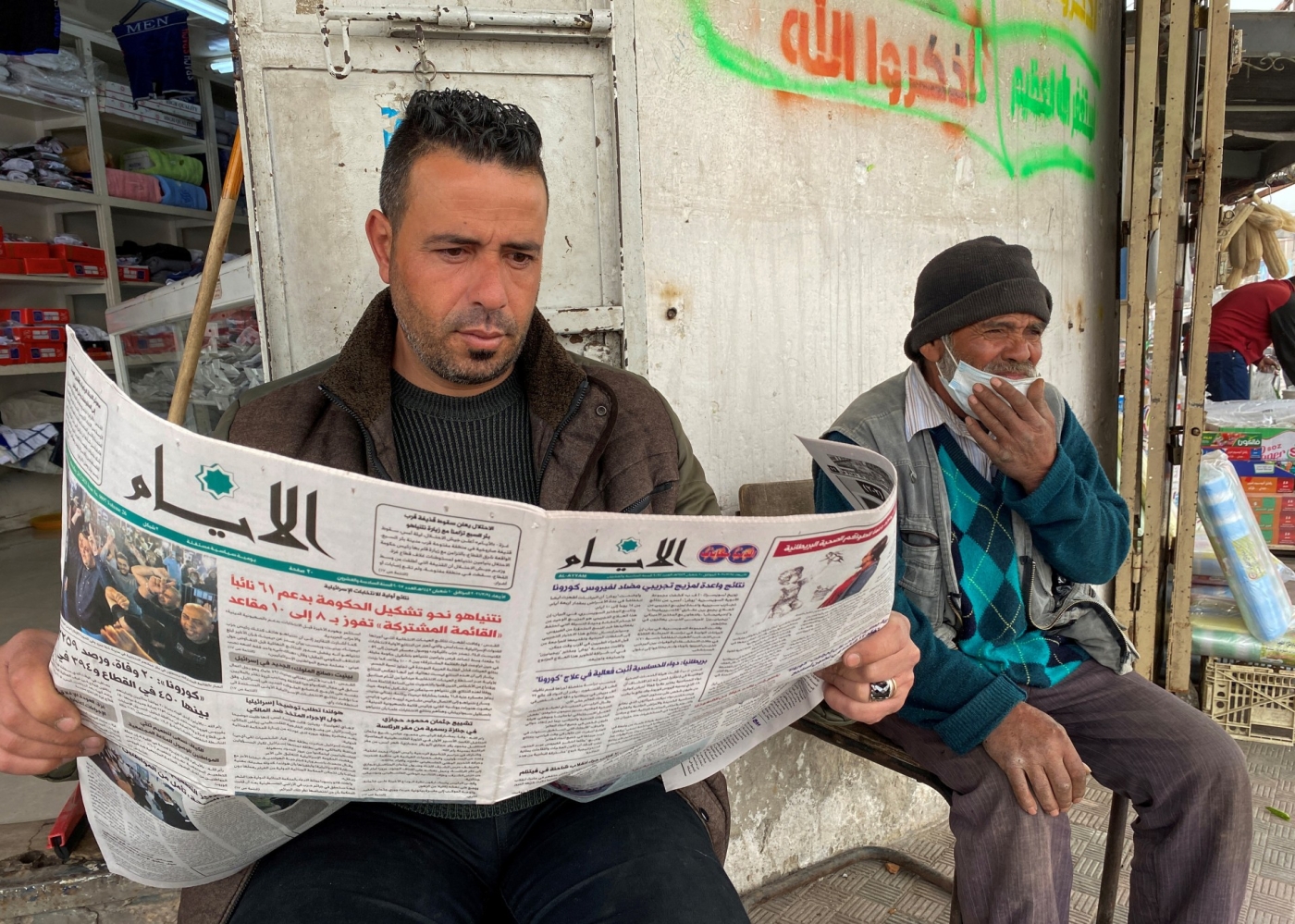

Dubai, UAE— During the height of the Covid-19 pandemic a Dubai-based journalist approached a restaurant owner in the United Arab Emirates (UAE) for a comment on the impact of the restrictions on food businesses in the country. The owner evaded the query saying, “I’m deliberately staying away from doing or reading/watching media interviews.” Words are being twisted to make headlines more attractive, which can often be “detrimental” for the industry and readers, he explained.
The comment was illustrative of the cynicism defining the modern-day relationship between a news consumer and the media industry. The fear of being misrepresented by the media person speaks of the lack of trust, and how it has altered the relationship between the two.
In fact, the Reuters Institute for the Study of Journalism’s annual Digital News Reports in 2022 and 2023 indicate a consistent “decline in trust” for news.
Today, it’s hard to imagine that there was a time when a lot of “breaking newsworthy pieces were discussed over cups of Sulaimani,” reminisced Radwa Nasser (name changed on request), an Arab journalist who reported from the UAE for over two decades and more recently from Qatar.
Back in the days [late 90s] even when stories were filed from “the field,” and usually often in a rush to meet the edition timelines, fact checking was foolproof, Nasser emphasized.
“There was no miscommunication, leave aside lack of trust even though sometimes on request we didn’t even record the interviews on our dictaphone. We were taught by our seniors to do credible reporting, to check every angle before filing a story, unlike today’s Twitter-based [now X] breaking news reportage,” she said, while adding that during her career she faced only one interviewee [a real estate and e-commerce business tycoon] who came close to mentioning a lawsuit.
In agreement is Lawrence Pinto, a journalist with more than 30 years of reporting experience in the GCC, who said the regional news media landscape was dignified, diverse, and respected. “During my time in Oman, around the early 90s, I interviewed a lot of politicians, members of the royal families, business leaders, and other high-level dignitaries. No one ever asked for a list of questions in advance or a draft before the piece was published.”
Alas, this can’t be said of the present times. This is particularly common in the UAE, he shared. Over the years gatekeeping by organizations’ corporate communications team became a major issue often leading to dilution of stories that could stand out due to their merit.
“The gatekeeping issues intensified further with the growth/dominance of the PR industry, particularly in the UAE, which was absent during my time in Oman,” Pinto shared.
In addition, one cannot but wonder if media outlets overlook narratives based on hard data and ground realities in favor of agenda-driven coverage to shape public opinion. Are reliable news sources becoming few and far between?
Over the past few years, there has been an undeniable rise in eyeball-grabbing, often clickbait headlines aimed to get hits and clicks, drowning out the work of journalists working with integrity and a genuine urge to disseminate unbiased news and stories to inform and educate.
With advertisements and subscribers being two main revenue generating channels, news media outlets are often pushed to create content that will ‘sell’.
However, the bigger question remains whether hits and clicks always guarantee higher revenues, a practice not only questionable but unethical as well.

To make up for the drop in revenues media outlets are entering into commercial deals with business groups, writing puff pieces about a company or its leader, hosting award functions to confer awards on business leaders. Many feel the unwholesome trend has distracted media outlets from their role to safeguard space for informed debate on public issues.
And if that were not enough, add to them inducements offered by brands and their PR teams, a tendency accepted so commonly that no one bats an eyelid.
As a result, “what is the commercial implication” is a question that journalists regularly encounter even for organically driven stories and objective coverage of an event or entity. That said there is still a community of flagbearers of ethical journalism who report based on ground realities and personal – although unbiased – opinion.
However, with commercials being a reality without which sustaining media outlets – and ultimately good journalism – will be impossible, the choices are woefully inadequate for the industry.
Either news media platforms are financially supported by public sector entities or business groups offer sponsorships albeit with their own set of conditions.
Even trusted media outlets with relatively deep pockets, which have been part of the regional news landscape for decades, are battling against thinning revenues and being forced to think differently.
Are media houses making mistakes? Are journalists not creating interesting content for readers?
During an exclusive interview with TRENDS, we asked Ravi Raman, publisher of Fast Company Middle East & MIT Sloan Management Review Middle East and Ex-Associate Publisher of Vogue Arabia & Wired ME about some fundamental mistakes that he has seen the regional media outlets make and how he has learnt from them.
“Not knowing your readers well enough is a huge mistake,” he responded. “Today with the kind of technology available, we can have a deep understanding of our readers and use it effectively to monetize by creating curated content for super segment readership.”
From a revenue perspective, not creating solutions that are more value adding and engaging for the reader is another mistake. “Readers are looking for niche content that appeals to them, engages, informs, and inspires them. That’s what made media successful and brought us revenues,” he added. It’s also crucial to understand that readers are interested in “stories” and not necessarily the “brands” disseminating those stories, of course gaining their trust is important.
The third mistake Raman spoke about is counting on legacy credibility. “Today, loyalty can’t be taken for granted,” he emphasized.
Asked if seeing others’ mistakes helped him learn crucial lessons before launching Fast Company Middle East in 2022 – at a time when publications were reducing circulation and even shutting down – Raman said, “Not just by seeing them, but also from my past experiences of working with brands here really helped.”
“Sometimes I feel as if we had the good fortune of coming in late into the market, because we’ve seen where other brands have gone wrong and how we can improve,” especially in a post-pandemic scenario.
Staying with the post-pandemic media landscape, recently, two major UAE-based dailies announced their decision to halt physical editions owing to “dwindling ad revenues” and the fight for the share of readership pie against not only digital news platforms but also social media driven creators’ community.

Readers still want credible, authoritative news to be delivered to them. The only difference is they don’t want it to be delivered at the time that the newspaper wants it to be delivered, Raman opined.
If food, fashion, and entertainment can be delivered on-demand, why not the newspaper?
At the same time, he also said readers must be willing to pay the real price of the newspaper without expecting offers, freebies, and coupons with the subscription.
Unsurprisingly, a Dubai-based, three-decade old print trade publication has been facing similar challenges and the editor-in-chief resolutely said, “We’ve to play the hand we’re dealt with. So, we’re trying to explore newer revenue streams beyond print.”
Asked if rethinking print or reducing frequency (from monthly to quarterly) is an option, he said discontinuing the “flagship product” isn’t an option. Even as this publication has seen its print advertising revenues plummet to “almost nothing” from Dh1.4 million annually during the 2013-18-period.
Having seen both the heydays and decline of print media, Pinto talked about how ad revenues were “deliberately” redirected towards digital media platforms.
“Around 2012-13 digital media wasn’t as big as it is today in the Middle East region. Yet, suddenly print publications began to struggle to generate revenues although ad agencies had big accounts and clients with an appetite to shell out a chunk of their marketing budget for print media. We noticed peculiar mafia-like tendencies among ad agencies as they deliberately, even manipulatively, averted budgets towards digital media even though brands and industry majors desired to be seen on covers of trustworthy publications and key pages in newspapers.”
Eventually, of course, digital media took off in a big way. However, currently ad revenues even for digital media have at best plateaued and at worst declined giving way to an events’ economy (conferences, awards, roundtables, networking) driving major chunks of revenues, if not everything in certain cases.
Making a pertinent observation, Raman said, it’s important for media houses to understand their raison d’etre.

“If your business model and the reason for existence is reaching out to readers with good, inspiring content that adds value to their life, it doesn’t really matter whether you’re reaching them through a piece of printed paper, digital product, events, or even collaborative tie-ups or affiliate marketing exercises.”
Interestingly, The New York Times’ recent revenue growth for the second quarter seems to be aligned with Raman’s views. The publication recorded $46.6 million of profit during the quarter, with total revenue rising 6.3 percent year-over-year to reach $590.9 million. This was mainly driven by higher digital subscriptions and money made through product reviews site Wirecutter.
Similar collaborations are being seen in the region’s traditional media space as well. For example, the content-driven ‘Best Buy’ section on Gulf News’ online portal leverages Amazon’s affiliate marketing model.
Newer formats such as podcasts, live sessions on social media, limited time “IG stories” have gained popularity, traction, and are in some cases revenue generators too, Nasser observed.
Notably, the 2023 edition of Reuters Institute for the Study of Journalism’s Digital News Reports indicates “significant shifts in audience behaviour, driven by younger demographics” who prefer “more accessible, informal, and entertaining news formats, often delivered by influencers rather than journalists, across platforms such as YouTube, Instagram, and TikTok.
Globally, news media, particularly print, seems to be at that watershed moment trying to figure a way to stay relevant to its loyalists and importantly stay in business.
Thus, a noticeable trend is the adoption of digital by these traditional media houses to remain relevant in a highly competitive market. Today all major print publications have a robust digital presence with growing multimedia teams leveraging the power of hybrid.
According to a report by the UAE Ministry of Economy, digital is expected to account for 46% of media revenues by 2024. The increasing propensity to consume content online is leading to the growth of digital media platforms.
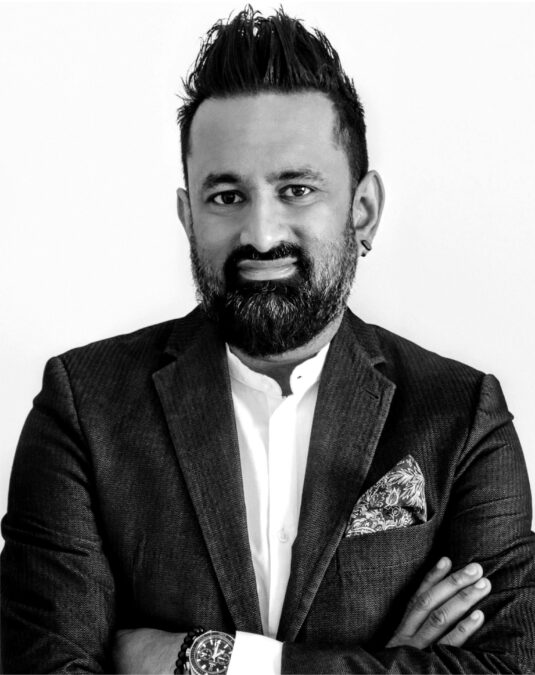
While print struggles, digital investments have grown especially in areas such as mobile, gaming, and more native formats. “Paid advertising opportunities remain limited currently and will be slow to evolve,” opined Naveen Chacko Mathews, Head of Business Unit, Havas Media Middle East.
Even as multimedia and OTT continue to gain steam and attract precious ad dollars, the rising interest in credible storytelling, albeit multimedia-driven, seem to be a ray of hope in the age of Artificial Intelligence and ChatGPT.
In summation, asked how the regional media landscape can overcome a doomsday scenario, Raman said, “If you see content as your business, reaching out to readers, informing them, then you’re just getting started out because readership has grown phenomenally, particularly since the internet boom. It’s just that the format or the platform is now different and how we monetize is a different thing altogether.”
Overall, publications must rethink their one-to-many model, adopting a one-to-one approach through custom-built content by journalists having their areas of specialization. “We need to be invested enough to understand what kind of content is valuable to the reader that they’re willing to pay for it. We also need to make payment options easier, enabling micro-payment for one piece of content if that’s what the reader wants.”
Raman also believes that media organizations can’t depend on one single stream of revenue. They must create a hybrid model where revenue comes from the reader who subscribes for native content and storytelling experience, advertising, and events which must be treated as an engagement, not just a revenue source.
“Revenues are under stress. Multiple brands are vying for the same pie that’s shrinking. But if we’re smart and lean, I think there’s still a winning business model. As an example, Fast Company Middle East has completed a year and we’ve been quite successful in a very tough and competitive market,” Raman concluded.