
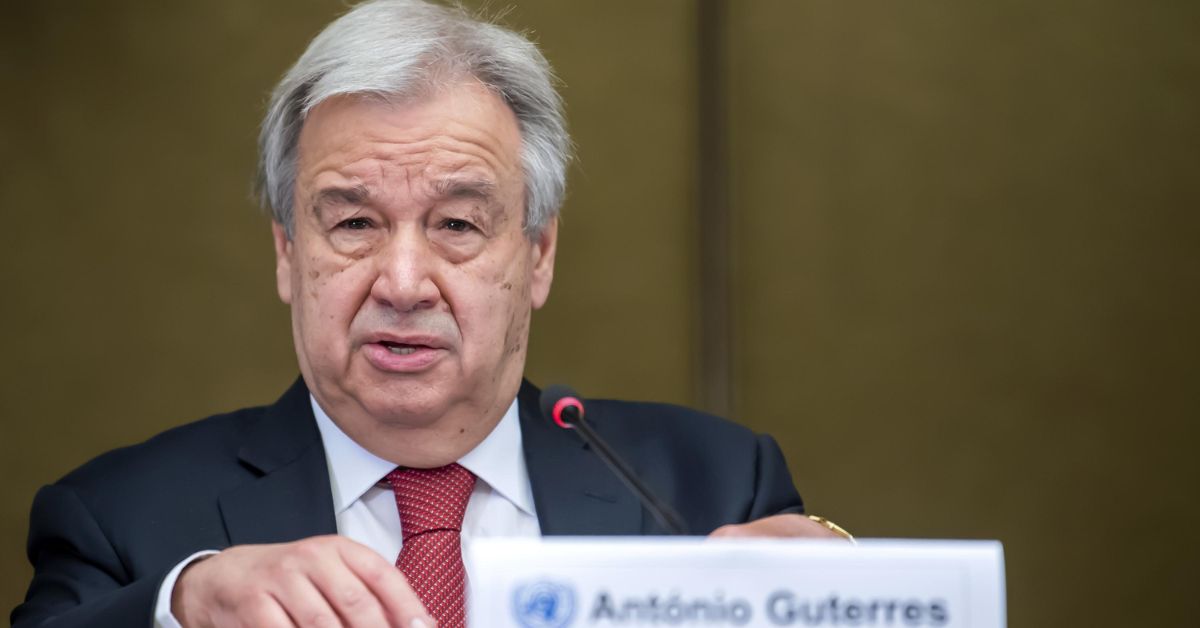


NEW YORK — Conflicts, climate change and financial turmoil are increasing the need for humanitarian aid, but a lack of funding is resulting in painful rollbacks, UN Secretary-General Antonio Guterres told a meeting in Geneva that was discussing ways to respond to the crisis.
According to Guterres, the number of people worldwide requiring humanitarian assistance has surged by 30 percent since early 2022, reaching a record 360 million.
He shared this information during a video message to the Humanitarian Affairs Segment, an initiative of the UN’s Economic and Social Council (ECOSOC) dedicated to addressing critical humanitarian issues.
Guterres cited alarming statistics, noting that over 110 million people have been displaced, and over 260 million people grapple with food insecurity daily.
He attributed these escalating figures to persistent conflicts, the global economic upheaval exacerbated by the COVID-19 pandemic and the Ukraine crisis, and the devastating effects of climate change.
The Secretary-General also warned that the most vulnerable populations are suffering the most, leading to a stagnation or reversal in sustainable development. As of mid-2023, the Global Humanitarian Appeal has only secured 20 percent of its required funding.
To combat this dire situation, Guterres urged the attendees to explore methods to boost humanitarian resources, enhance the efficiency and effectiveness of aid delivery, improve protection for individuals in crisis, reduce food insecurity, and bolster resilience through climate adaptation investments.
The ECOSOC’s Humanitarian Affairs Segment, which meets each June, convenes UN member states, UN organizations, humanitarian and development partners, the private sector, and affected communities to discuss the best strategies to address the most pressing humanitarian concerns and crises.