
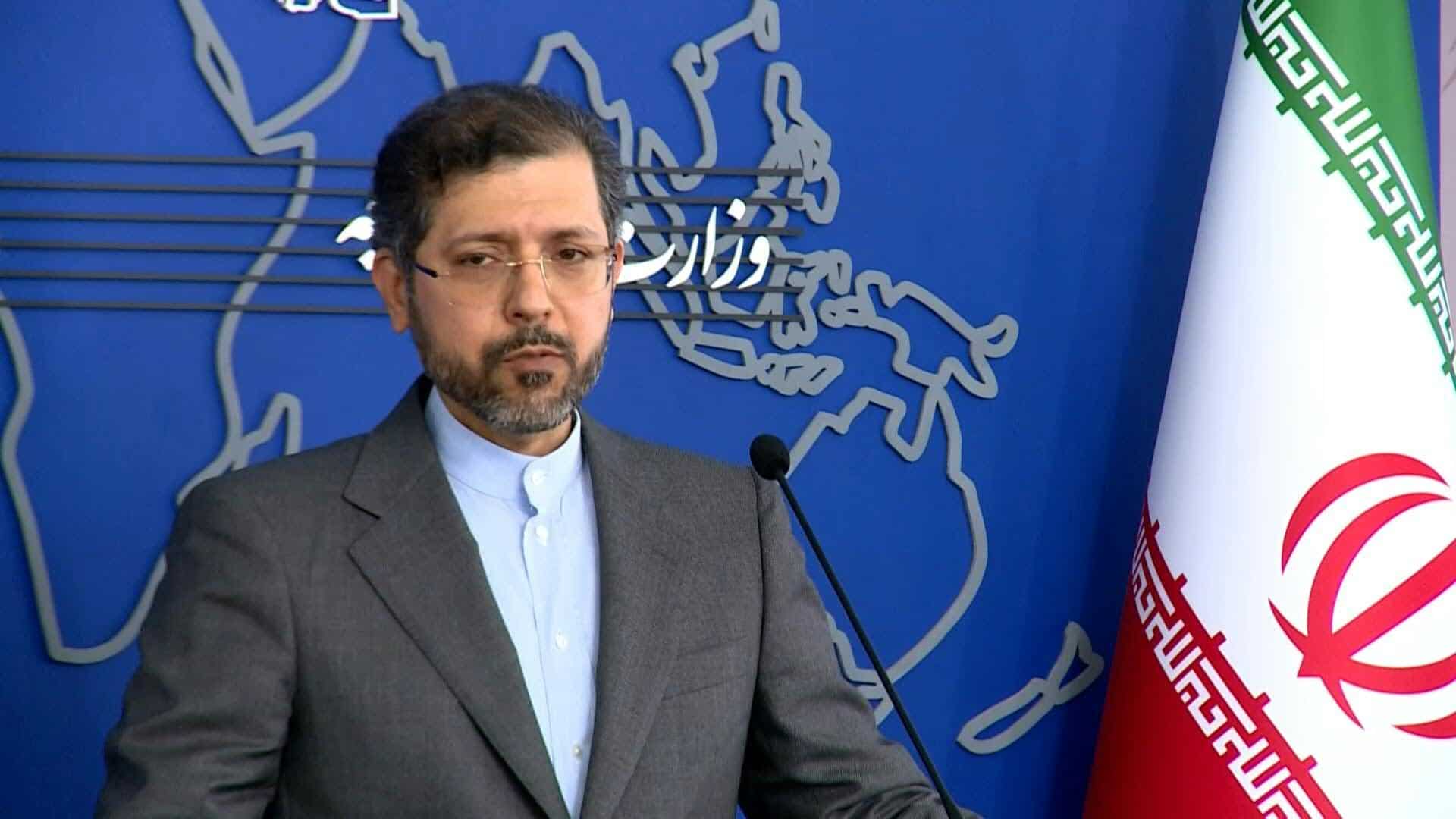


Tehran on Monday questioned Washington’s will in reaching an agreement to restore the 2015 nuclear agreement, with key sticking points unresolved after talks halted last month.
Iran has been engaged for a year in negotiations with France, Germany, Britain, Russia and China directly, and the United States indirectly to revive the deal, known formally as the Joint Comprehensive Plan of Action (JCPOA).
Negotiations in the Austrian capital Vienna aim to return the United States to the nuclear deal, including through the lifting of sanctions on Iran, and to ensure Tehran’s full compliance with its commitments.
“We really don’t know if we’ll get a deal or not, because the United States hasn’t shown the necessary will to reach an agreement,” Iranian foreign ministry spokesman Saeed Khatibzadeh said.
“What remains are the decisions of Washington,” he added.
Earlier this month, Khatibzadeh’s counterpart in the State Department Ned Price said it was Tehran that was not giving way to make a deal possible, but that Washington still believed there was “opportunity to overcome our remaining differences.”
The 2015 agreement gave Iran sanctions relief in exchange for curbs on its nuclear program to guarantee that Tehran could not develop a nuclear weapon — something it has always denied wanting to do.
But the US unilateral withdrawal from the accord in 2018 under then-president Donald Trump and the reimposition of biting economic sanctions under a “maximum pressure” campaign prompted Iran to begin rolling back on its own commitments.
“All components of maximum pressure must be removed,” Khatibzadeh said.
“Unfortunately, the United States is trying to maintain some of the elements of maximum pressure,” he added.
The talks have been paused since March 11 after Russia demanded guarantees that Western sanctions imposed following its February 24 invasion of Ukraine would not damage its trade with Iran.
Days later, Moscow said it had received the necessary guarantees.
The negotiations had progressed most of the way toward reviving the deal, with different parties pointing to the “final phase”, but pending issues are still unresolved.
“More than one issue is remaining between us and the United States,” Khatibzadeh added.
Among the key sticking points is Tehran’s demand to delist the Revolutionary Guards, the ideological arm of Iran’s military, from a US terror list.
Last month, US negotiator Rob Malley said the Guards would remain “sanctioned by American law” even in the event of an agreement.
“What is important to us is the certain benefit of the Iranian people from the lifting of the sanctions,” Khatibzadeh said.