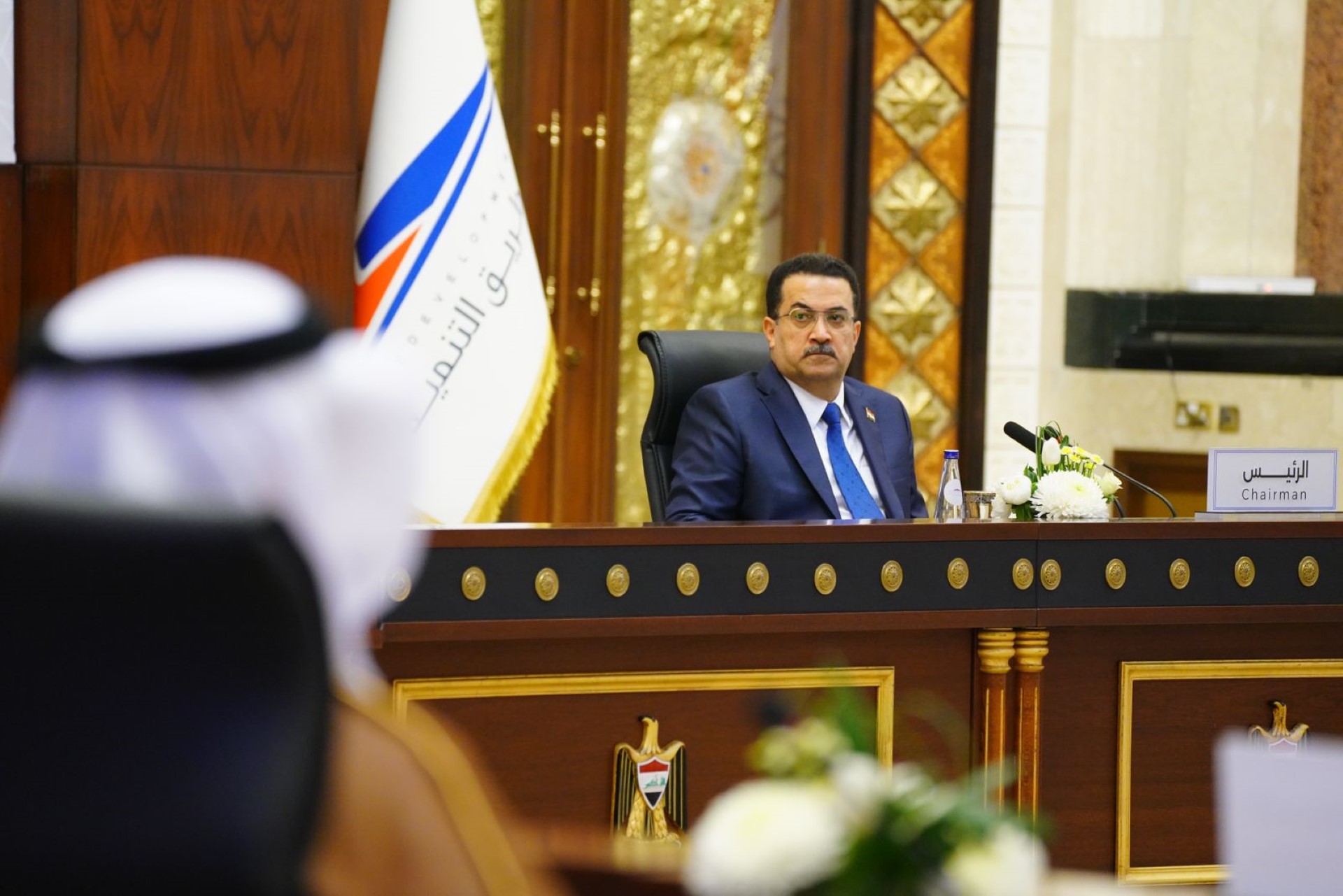

Baghdad, Iraq–The federal government in Baghdad on Sunday agreed to increase funds allocated to Iraqi Kurdistan that are desperately needed to pay salaries in the northern autonomous region.
The decision came after thousands of people took to the streets of Dohuk, the third-biggest city in the region, in early September over unpaid civil service salaries which they blamed on Baghdad.
On Sunday the federal government said in a statement it would disburse annually to Iraqi Kurdistan two trillion and one hundred billion dinars to be paid in three equal installments of 700 billion dinars (more than $530 million).
The funds will be loaned by three state-banks and reimbursed by the finance ministry in Baghdad, the statement said.
This mechanism aims to “cover employee salaries, social welfare recipients, and retirees”, it added, and the funds will be available from September.
Authorities in Baghdad and in Kurdistan have a month to “conduct an audit of the employee, social welfare recipient, and retiree numbers in the Kurdistan Region of Iraq”, it said.
Iraqi Kurdistan has long accused Baghdad of not sending the necessary funds to pay civil servants.
Previously the region, thanks to its oil exports, had independent funding that partly covered salaries.
Since the end of March it has been deprived of this resource because of a dispute with Baghdad and Turkey, through which oil was exported.
In principle, Iraqi Kurdistan and Baghdad later agreed that sales of Kurdish oil would pass through the federal government. In exchange, 12.6 percent of the federal budget is allocated to Iraqi Kurdistan.
Earlier this month, Baghdad unblocked a package of 500 billion dinars (about $380 million) for the region’s salaries, but the government of Iraqi Kurdistan said it was not enough.
Masrour Barzani, the region’s prime minister, welcomed Sunday’s decision, calling it a “fruitful agreement” to “cover (civil servant) salaries”.
“I thank our compatriots for their patience, their determination and their unshakable trust in the government,” Barzani said in a statement.
He also telephoned Iraqi Prime Minister Mohamed Shia al-Sudani to thank him for his “support”.