
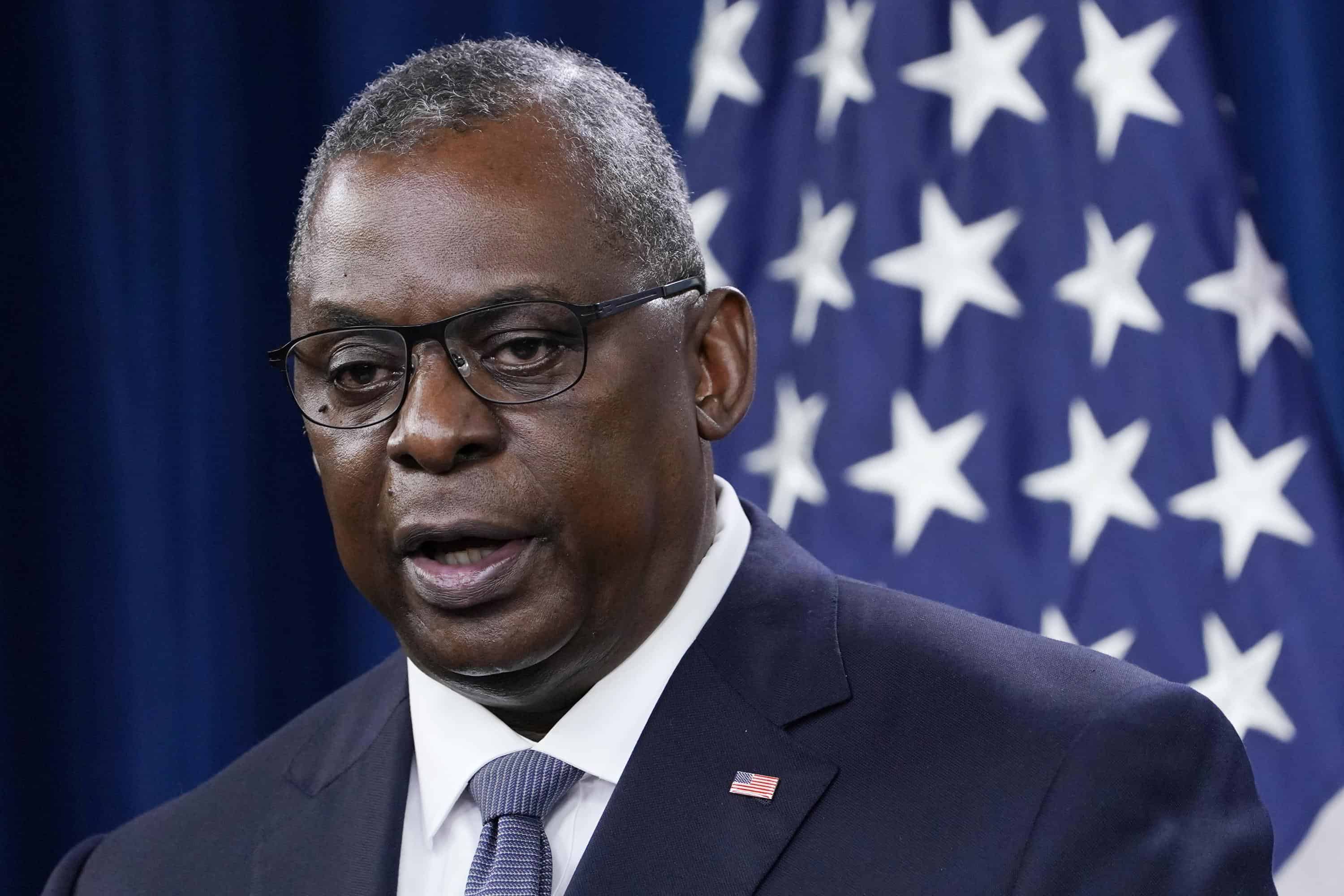


Baghdad, Iraq – US Defense Secretary Lloyd Austin arrived in Iraq on Tuesday on an unannounced visit barely two weeks before the 20th anniversary of the US-led invasion that toppled Saddam Hussein.
“I’m here to reaffirm the US-Iraq strategic partnership as we move toward a more secure, stable and sovereign Iraq,” Austin tweeted as he landed in Baghdad.
His visit comes ahead of the March 20 anniversary of the ground invasion which ushered in two decades of bloodshed that Iraq is only now beginning to exit.
In the run-up, Iraq has hosted a raft of foreign officials, including the Iranian, Russian and Saudi foreign ministers and UN chief Antonio Guterres.
Since US-led coalition troops ousted Saddam’s Sunni Arab-dominated regime, Iraq’s Shiite majority has led Iraq under a confessional power-sharing system.
Successive governments have forged close ties with Iraq’s Shiite-led neighbour Iran, while Iraq maintains relations with Iran’s arch foe the United States in a delicate balancing act.
Both allies provided extensive support during Iraq’s fightback against the Sunni extremists of the Islamic State group, who overran swathes of northern and western Iraq in 2014.
The jihadists were ousted from Iraqi territory in 2017 but retain sleeper cells in desert and mountain hideouts in both Iraq and neighbouring Syria.
Iraq announced the end of combat operations by US-led coalition troops at the end of 2021 but some units remain deployed to provide advice and training.