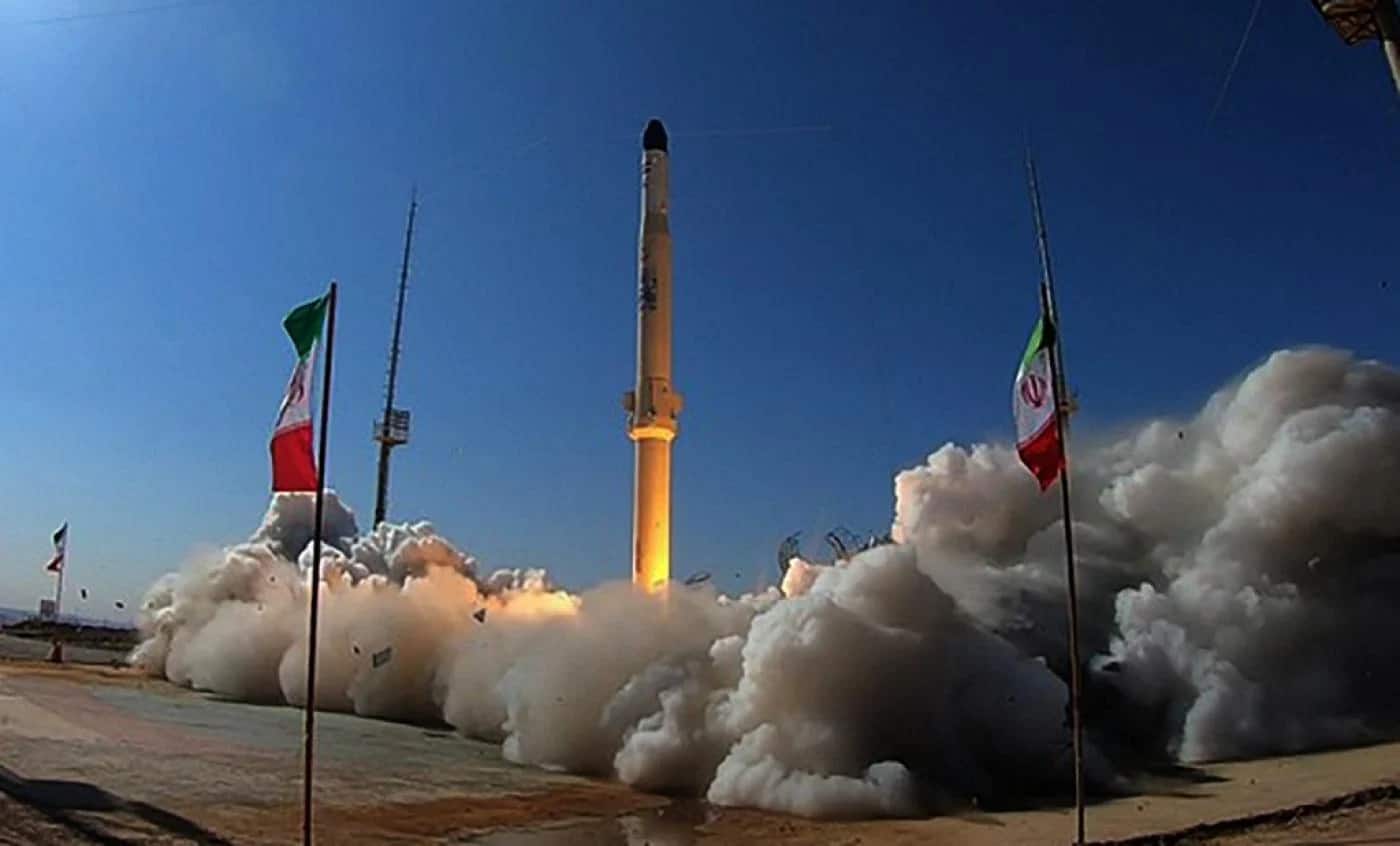

“In cooperation with Russia, the Khayyam satellite will be launched next week from the Baikonur space station in Kazakhstan by a Soyuz satellite carrier,” the Iranian space agency said late Wednesday.
The satellite, apparently named after 11th-12th century Persian polymath Omar Khayyam, aims to “monitor the country’s borders”, enhance agricultural productivity and monitor water resources and natural disasters, the agency added.
Russia’s State Space Corporation Roscosmos confirmed the launch is scheduled for Tuesday.
“On August 9, 2022, a Soyuz 2.1B rocket is scheduled to be launched from the Baikonur Cosmodrome… to put the Khayyam remote sensing device ordered by the Islamic Republic of Iran into orbit,” it said in a statement.
“The Khayyam device was designed and manufactured at enterprises that are part of the state corporation Roscosmos,” it added.
News of the launch follows Putin’s visit to Iran on July 19, when he met President Ebrahim Raisi and Iran’s supreme leader Ayatollah Ali Khamenei.
Khamenei called for strengthening “long-term cooperation” with Russia in his talks with Putin.
Iran’s state news agency IRNA said the satellite has high imaging accuracy and is capable of filming the earth’s surface in different image spectra.
Russia is putting the satellite into space but it will be guided and controlled from ground stations in Iran, IRNA added.
Khayyam will not be the first Iranian satellite to be put into space by Russia.
In October 2005, Iran’s Sina-1 satellite, which aimed to study and observe the Earth, was deployed from Russia’s Plesetsk cosmodrome.
In June 2021, Putin denied a US media report that Russia is set to deliver an advanced satellite system to Iran that will vastly improve its spying capabilities.
Iran insists its space program is for civilian and defense purposes only, and does not breach the 2015 nuclear deal between Iran and world powers, or any other international agreement.
Western governments worry that satellite launch systems incorporate technologies interchangeable with those used in ballistic missiles capable of delivering a nuclear warhead, something Iran has always denied wanting to build.
Iran successfully put its first military satellite into orbit in April 2020, drawing a sharp rebuke from the United States.
In March, the Revolutionary Guards, the ideological arm of Iran’s armed forces, announced it had successfully put a military “reconnaissance satellite”, Nour-2, into orbit.