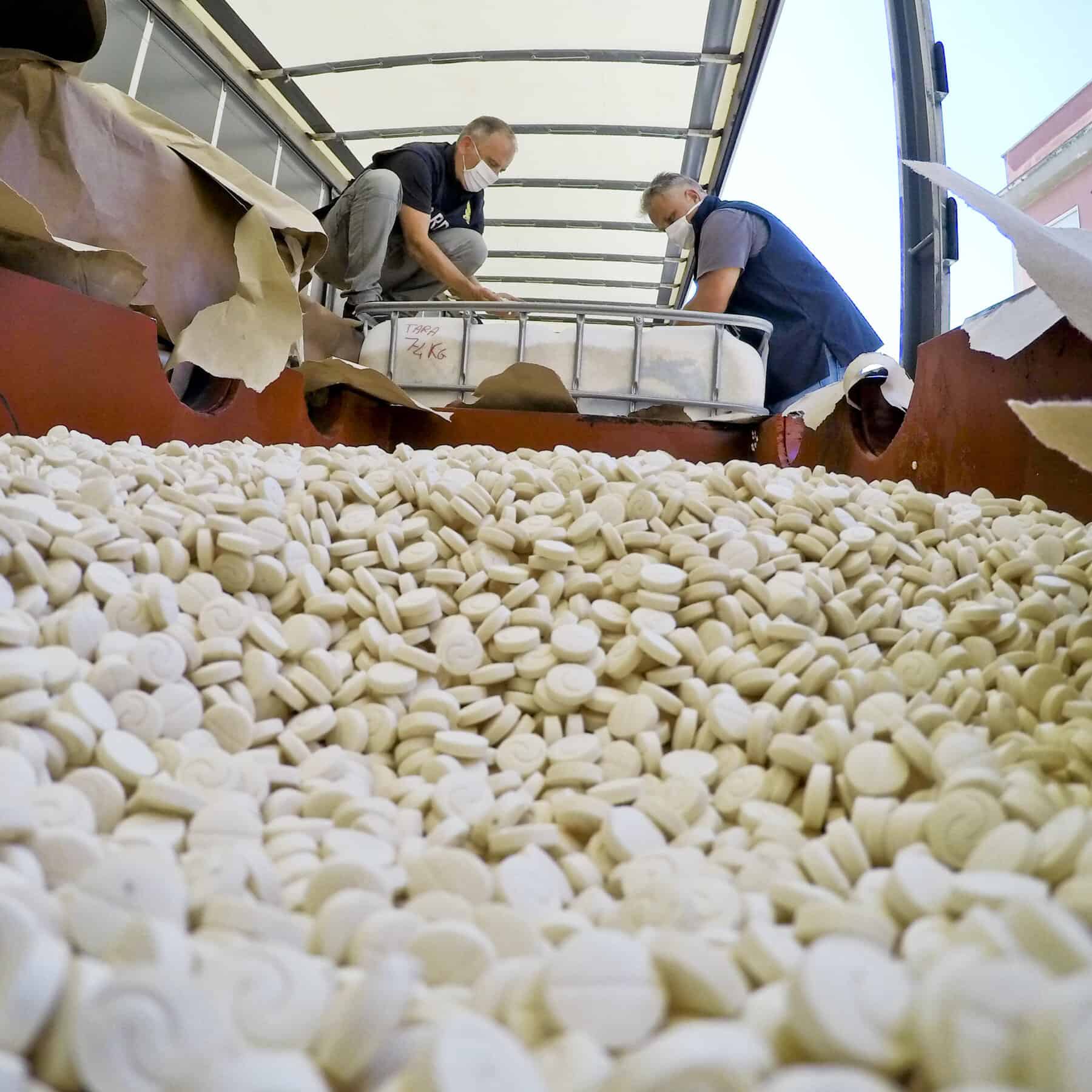

Saudi Arabia has seized over 700 million narcotic pills that entered its territory via Lebanon in the past eight years, its ambassador to Beirut said Tuesday.
The kingdom suspended fruit and vegetable imports from Lebanon in April last year, accusing it of inaction after seizing millions of captagon amphetamine pills smuggled in fruit shipments.
Captagon, an amphetamine that is wreaking havoc in Saudi Arabia and other Arab states, is produced mainly in Syria, as well as in Lebanon, and smuggled to the main consumer markets in the Gulf.
“The total number of seizures… that originated from or passed through Lebanon exceeded 700 million narcotic pills and hundreds of kilograms of hashish… since 2015,” Saudi ambassador Waleed Bukhari told reporters.
Bukhari, who was speaking after meeting Lebanon’s interior minister, said his country had seen improvements in counter-drug smuggling operations in Lebanon.
Trade in captagon in the Middle East grew exponentially in 2021 to top $5 billion, posing an increasing health and security risk to the region, a report by the New Lines Institute said in April.
Last week, authorities in Lebanon said they would investigate an audio recording shared online threatening to attack the Saudi Arabian embassy in Beirut.
Beirut’s ties to Riyadh — formerly a major investor in cash-strapped Lebanon — have taken a blow in past years as Hezbollah’s influence has grown.
The interior ministry had said Ali bin Hashem bin Salman Al-Haji, a Saudi national wanted by Riyadh for “terrorist crimes”, was the likely author of the recording.
Bukhari called on Lebanese authorities to hand over the suspect Tuesday.
“We have submitted an official diplomatic note to the Ministry of Foreign Affairs in this regard,” he said.