
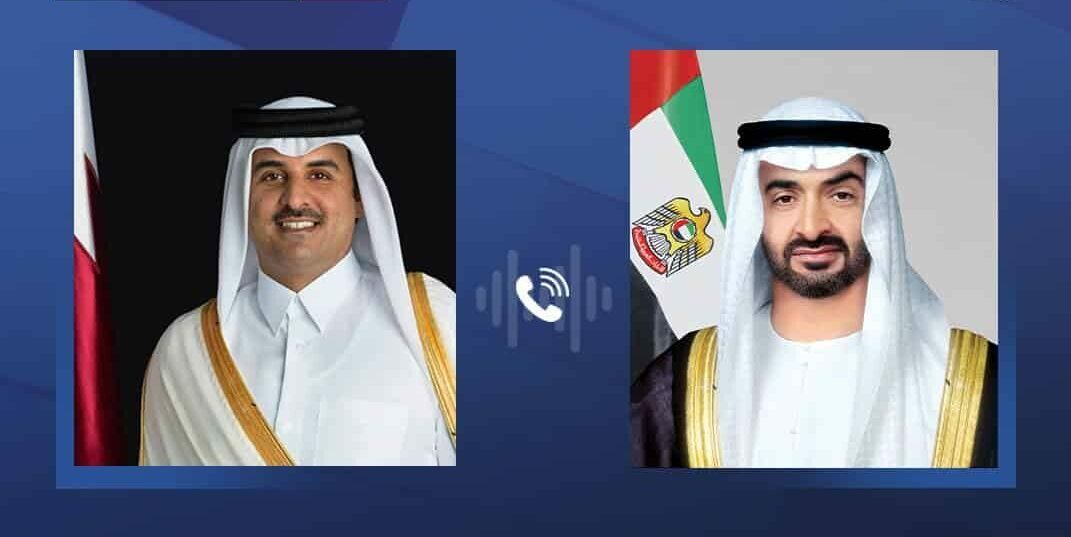


Abu Dhabi, UAE — UAE President Sheikh Mohamed bin Zayed Al Nahyan and the Emir of Qatar, Sheikh Tamim bin Hamad Al Thani, Thursday spoke on the telephone to discuss bilateral relations between the two countries and ways to strengthen them further.
The two leaders reviewed current areas of UAE-Qatar cooperation and explored opportunities for further collaboration. Their conversation also covered a number of regional and international issues of common interest.
In recent past, the UAE and Qatar have been moving towards restoring diplomatic ties and reopening embassies, just over two years after the lifting of a blockade on Qatar.
The agreement to end the political and economic blockade of Qatar by Saudi Arabia, Egypt, the UAE, and Bahrain was signed in January 2021, with states vowing to restore relations for the benefit of the region.
The fact that talk of reopening embassies is only happening now is a reminder of the actual pace of re-establishing ties in the Gulf, within the GCC, and of course within the wider region.
The move towards diplomatic normalization is seen as a positive development for GCC unity, even if tensions and competition between the countries remain a major reality.