
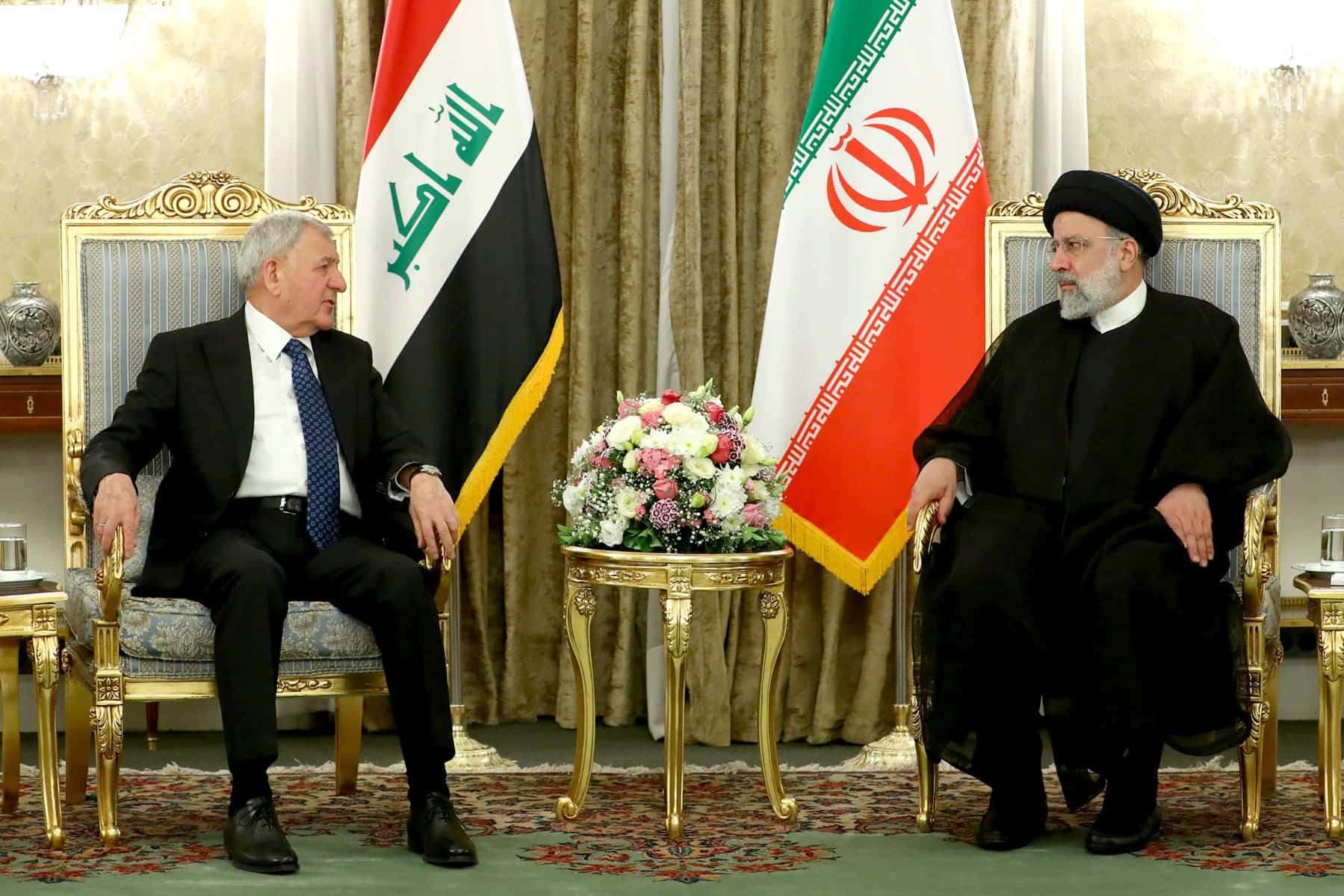


TEHRAN, IRAN – Iran’s President Ebrahim Raisi on Saturday slammed the United States’ presence in the Middle East, as he hosted his counterpart from neighboring Iraq for wide-ranging talks.
Decades-old arch enemies the United States and Iran have vied for influence in Iraq since the 2003 US-led invasion toppled dictator Saddam Hussein.
Both helped Iraq to defeat the Islamic State group, and the United States still has 2,500 non-combat troops in the country to provide it with advice and training.
About 900 US troops remain in Syria, most in the Kurdish-administered northeast, as part of a US-led coalition battling remnants of IS.
And the US Navy’s Fifth Fleet is based in the Gulf state of Bahrain.
“We do not consider the presence of foreign forces and foreigners in the region to be useful,” Raisi told a joint news conference in Tehran with Iraqi President Abdul Latif Rashid.
“The presence of the US disturbs the security of the region,” said the Iranian president.
“Our relationship with Iraq is based on common interests,” he said, adding the “Americans think about their interests, not the interests of the countries in the region”.
Although Iraq and Iran fought an eight-year war in the 1980s, relations between the Shiite-majority neighbors have warmed considerably since the 2003 invasion ousted Saddam and his Sunni-dominated regime.
Iraq has become a key economic lifeline for the sanctions-hit Islamic republic, while Iran provides Iraq with gas and electricity as well as consumer goods.
At the news conference, Raisi stressed the importance of Iran’s cooperation with Iraq in security and other matters.
“Relations between Iran and Iraq will continue in the field of water and electricity infrastructure,” he said.
“A security understanding has been established between the two countries, and the security of Iraq and its borders is very important to us,” Raisi added.