
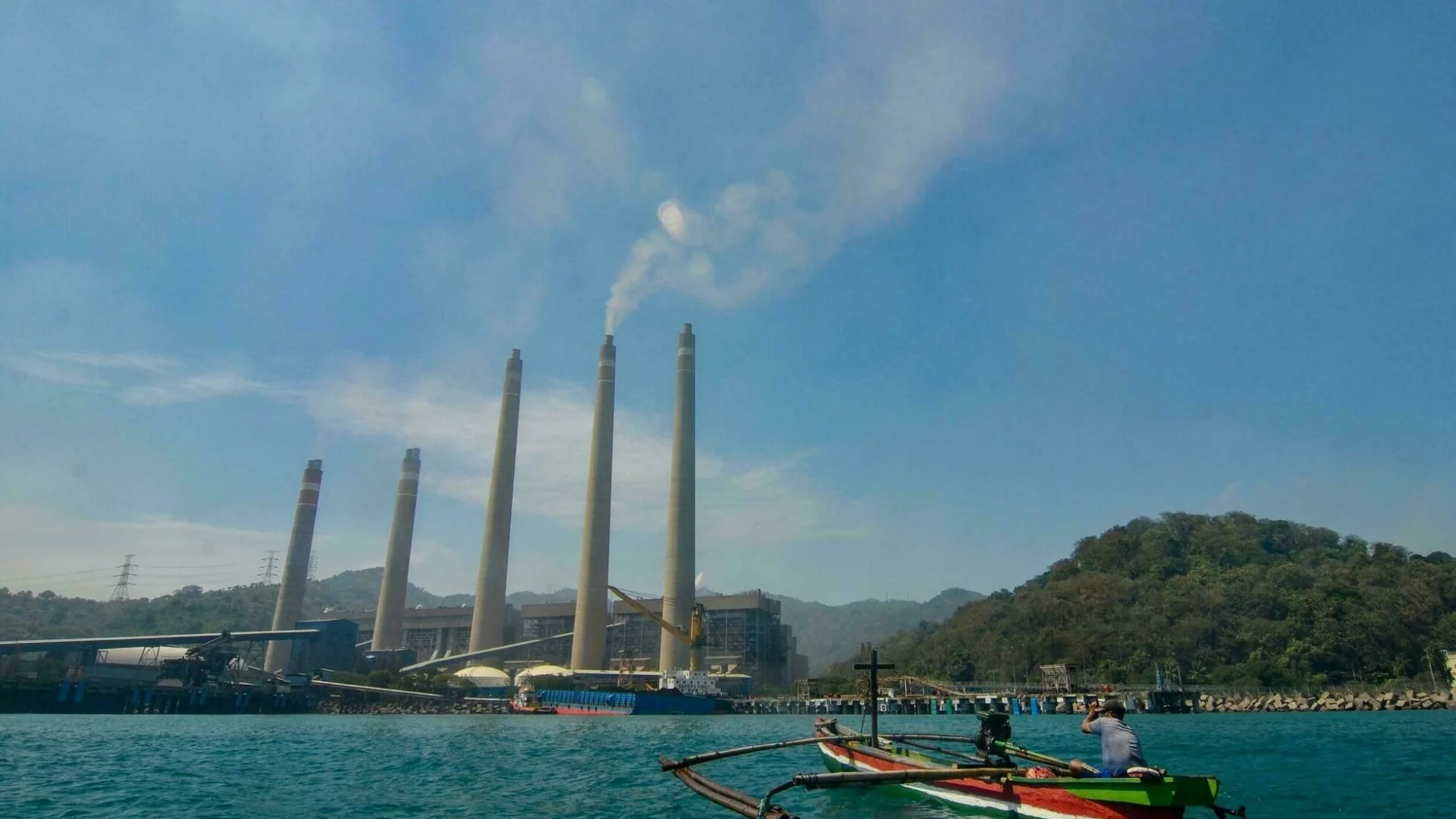


Several OECD nations including Britain, Japan and the United States have agreed to halt government-supported export credits for coal-fired power plants.
With the latest international climate conference just days away, the proposed ban will halt support to new coal power stations that don’t have systems that trap the carbon emissions responsible for global warming.
For existing coal-fired power stations, the credits can only be used for pollution mitigation and carbon capture equipment that doesn’t extend the service life of the facility.
Coal is the dirtiest fossil fuel and is responsible for a major chunk of carbon emissions.
While many developed nations have sought to reduce coal in their domestic power mixes to meet their climate pledges, they have also often continued to help finance coal projects abroad.
Government-backed export credits are one such means.
A domestic construction firm that wanted to bid on a contract to build a coal plant abroad, for instance, could apply for such credits which would see the government help with financing, insurance and guarantees.
These can make projects easier to finance and ultimately cheaper for clients.
Activist groups have long attacked nations for continuing to support coal projects in this manner.
The ban is expected to come into force by the end of this month and includes Australia, Britain, Canada, the European Union, Japan, Korea, New Zealand, Norway, Switzerland, Turkey, and the United States.
The COP26 conference in the Scottish city of Glasgow, which opens on October 31, has been called humanity’s “last best chance” to get devastating climate change under control.