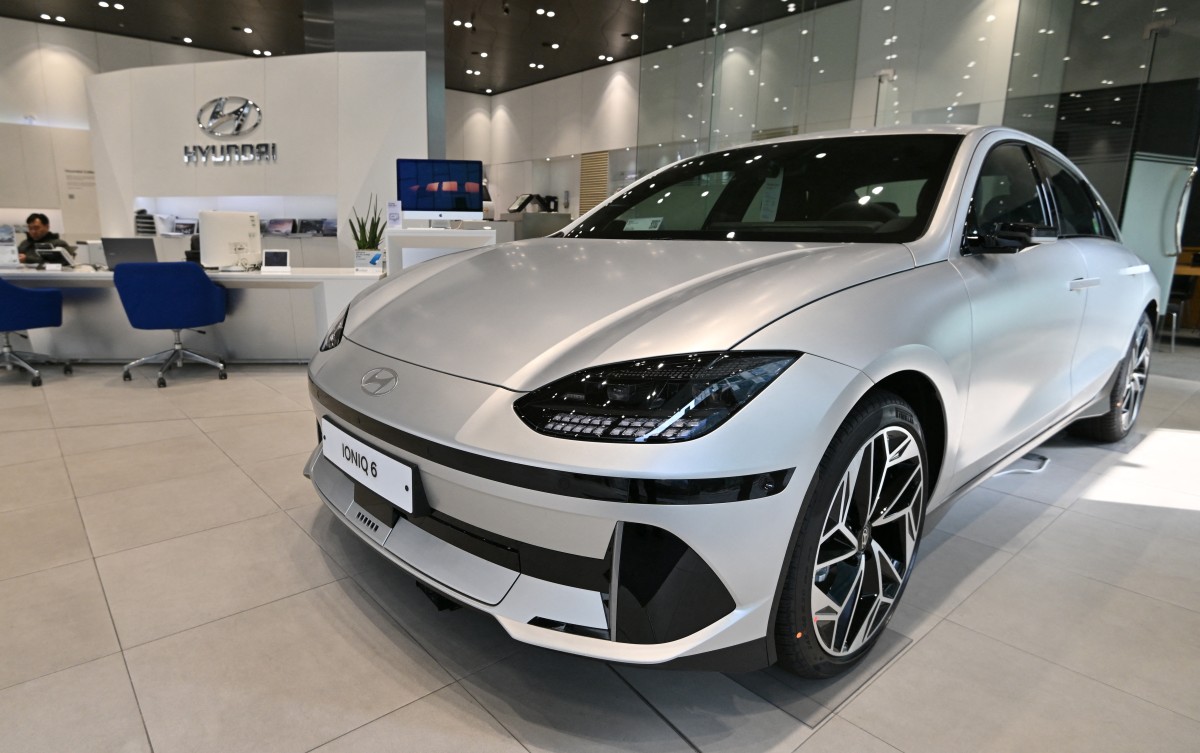

Seoul, South Korea– Hyundai on Wednesday revealed plans to invest more than $50 billion in South Korea by 2026, with a huge chunk dedicated to boosting the development and production of electric vehicles.
Along with its affiliate Kia, Hyundai is the world’s third-largest automaker by sales, but the South Korean giant lags in the EV sector behind Elon Musk’s Tesla and Chinese firm BYD.
Hyundai is keen to break into the global EV top three, saying last year that it was aiming to boost electric car production to more than 3.6 million units by 2030.
With the 68 trillion won ($50.5 billion) investment announced Wednesday, Hyundai Motor Group said it wants to “secure future growth engines in an uncertain business environment through constant change and innovation”.
“The automotive sector, including future mobility projects, accounts for… 63 percent of the Group’s total investment,” it added.
Under the plan, Hyundai will create 80,000 jobs in South Korea and build three new EV factories, with the aim of increasing annual EV production in the country to 1.51 million units by 2030.
The group’s EV strategy also includes investments in infrastructure, software, battery technology and autonomous driving.
A Greenpeace report in November said Hyundai’s growing sales of gas-guzzling sport utility vehicles had offset any climate gains from its transition to EVs.
It noted that Hyundai-Kia had posted SUV sales increases of more than 150 percent over the past decade.
SUVs emit approximately 12 percent more carbon dioxide than sedans, the environmental group said, urging Hyundai to reduce SUV sales.
When asked about the report, Hyundai said it was expanding its fleet of “fully electric SUV vehicles”, including Kia’s EV6 and EV9.