
Dubai, UAE — Iran’s Revolutionary Guards said on Saturday they had attacked several U.S. military deployment sites in the Gulf in retaliation for American strikes on Iranian targets, raising fears of renewed regional escalation just hours after Israel and Lebanon signed a US-brokered framework agreement aimed at ending decades of conflict.
Iranian state television, citing the Guards, said the attacks targeted multiple U.S. positions in the region. It warned that if Washington launched further attacks, Tehran’s response would be “broader than this”.
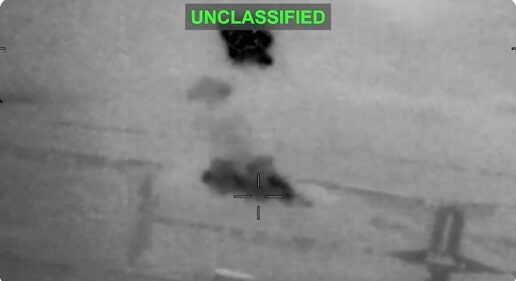
The United States earlier said it had struck Iranian missile and drone storage facilities and coastal radar positions after accusing Tehran of attacking a commercial vessel in the Strait of Hormuz, an incident Washington said violated a ceasefire.
US Vice President JD Vance said any further Iranian violence would be met with force.
“If they have disagreements about how the MOU is being applied, they can pick up the phone,” Vance said in a post on X.
Iran’s Revolutionary Guards also said they had repelled a U.S. attack on Sirik Island, on the Strait of Hormuz, and vowed that any fresh U.S. strike would draw a “swift and decisive” response.
The head of the Iranian parliament’s national security committee accused Washington of violating the ceasefire and said U.S. President Donald Trump had shown no commitment to negotiations or the truce.
LEBANON FRAMEWORK
Separately, Hezbollah supporters rode motorbikes through Beirut late on Friday to protest a framework agreement between Israel and Lebanon announced earlier in Washington.
Lebanon’s state-run National News Agency said protesters blocked at least one road with burning tyres, including on a route leading to Beirut’s airport.
The agreement, signed by Israel, Lebanon and the United States, lays out a path toward a broader peace deal between the long-time adversaries.
Under the framework, the Lebanese armed forces would gradually assume security control in designated areas as Israeli troops redeploy, while Lebanon commits to the verified disarmament of non-state armed groups, including Hezbollah.
Lebanese Ambassador to the United States Nada Hamadeh described the deal as a first step toward restoring Lebanon’s sovereignty and securing a permanent end to hostilities.
Israeli Ambassador to the United States Yechiel Leiter said the agreement’s ultimate goal was “real peace”, adding that “Iran is out. Hezbollah is out. And the road to peace between Israel and Lebanon is in.”
Hezbollah was not involved in the negotiations and has previously rejected calls for nationwide disarmament, maintaining that earlier agreements require it to disarm only south of the Litani River.