
US President Donald Trump has demanded that Iran pay compensation for deaths and damages he says were caused by Tehran over the past 50 years, according to Al Jazeera.
Trump told reporters at the White House that Washington would seek payment in response to Iran’s demand for war reparations as a condition for reopening the Strait of Hormuz.
“They asked for reparations,” Trump said, referring to Iran. “We’re going to ask for money for the damage they’ve done over a 50-year period.”
He said the payments would include compensation for US forces killed in the region and for civilian protesters in Iran.
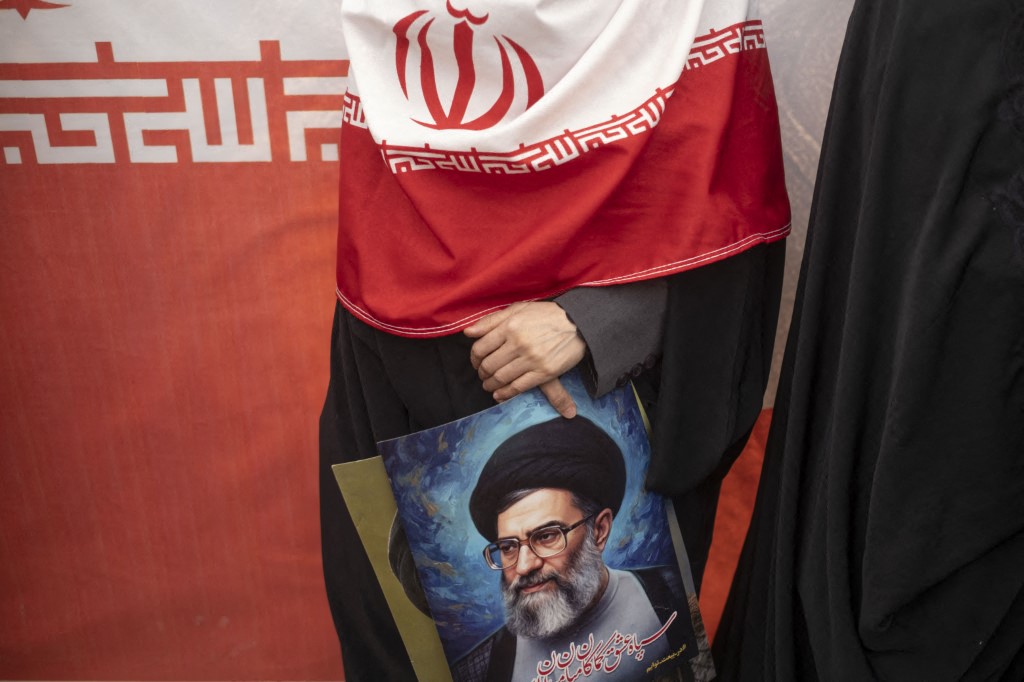
Trump claimed that 52,000 people had been killed in Iran over the past four months. Tehran has put the death toll from antigovernment protests that swept the country in January at about 3,117.
The US-based Human Rights Activists News Agency (HRANA), cited by Al Jazeera, reported about 7,000 deaths in February, including 6,500 protesters.
Trump also said Iran should compensate the families of 17 US sailors killed in the October 2000 attack on the USS Cole in Yemen. The attack has been attributed to al-Qaeda, not Iran.
In a Truth Social post, Trump additionally said Iran should be responsible for deaths and damage in Lebanon, Syria, Yemen and Gaza.
‘Banter’ between Washington and Tehran
Trump’s latest demands come as his administration shifts between threats of further military action and suggestions that a peace agreement with Iran could be reached.
Charles Kupchan, a former special assistant to former US President Barack Obama, described Trump’s compensation remarks as “banter” in comments to Al Jazeera.
Kupchan said both sides had strong incentives to reach an agreement, arguing that Iran could not survive without oil exports while Trump would not want high gasoline prices ahead of the US midterm elections.
He also pointed to pressure on the Pentagon amid reports of depleted US munitions stocks.
Iran-Oman talks continue
Iran has made the reopening of the Strait of Hormuz conditional on Washington agreeing to war reparations, ending sanctions and halting military threats, according to Al Jazeera.
The demands largely reflect terms in an interim peace agreement signed in June that subsequently broke down over control of the strategic waterway.
Iranian Foreign Ministry spokesman Esmaeil Baghaei said Monday that talks with Oman over the strait were “progressing smoothly and constructively”.
He said Tehran and Muscat had agreed on a map for a new shipping route, although technical issues remained unresolved.
The discussions also cover safe navigation, environmental protection, maritime services and efforts to combat crime.
Baghaei said continued US actions in the strait had made the waterway unsafe and described the US naval blockade of Iranian ports as an “act of aggression”.
Strait remains heavily restricted
US Central Command said Monday that it had redirected 55 commercial vessels since reinstating its blockade in July and had “disabled” at least two, according to Al Jazeera.
Maritime intelligence firm Windward said the blockade had resulted in a “complete halt” to Iranian oil exports from Kharg Island.
Trump described the blockade as a “steel wall” and said the US Navy was the only force currently controlling the Strait of Hormuz.
He also claimed the waterway was open and that US forces had cleared it of mines.
However, shipping data indicated that maritime traffic remained sharply reduced.
MarineTraffic data showed crossings falling from 15 on Friday to 11 on Saturday and six on Sunday. Seventeen vessels used an Iran-designated route, while another 10 followed a route classified as “undetermined”, according to Al Jazeera.