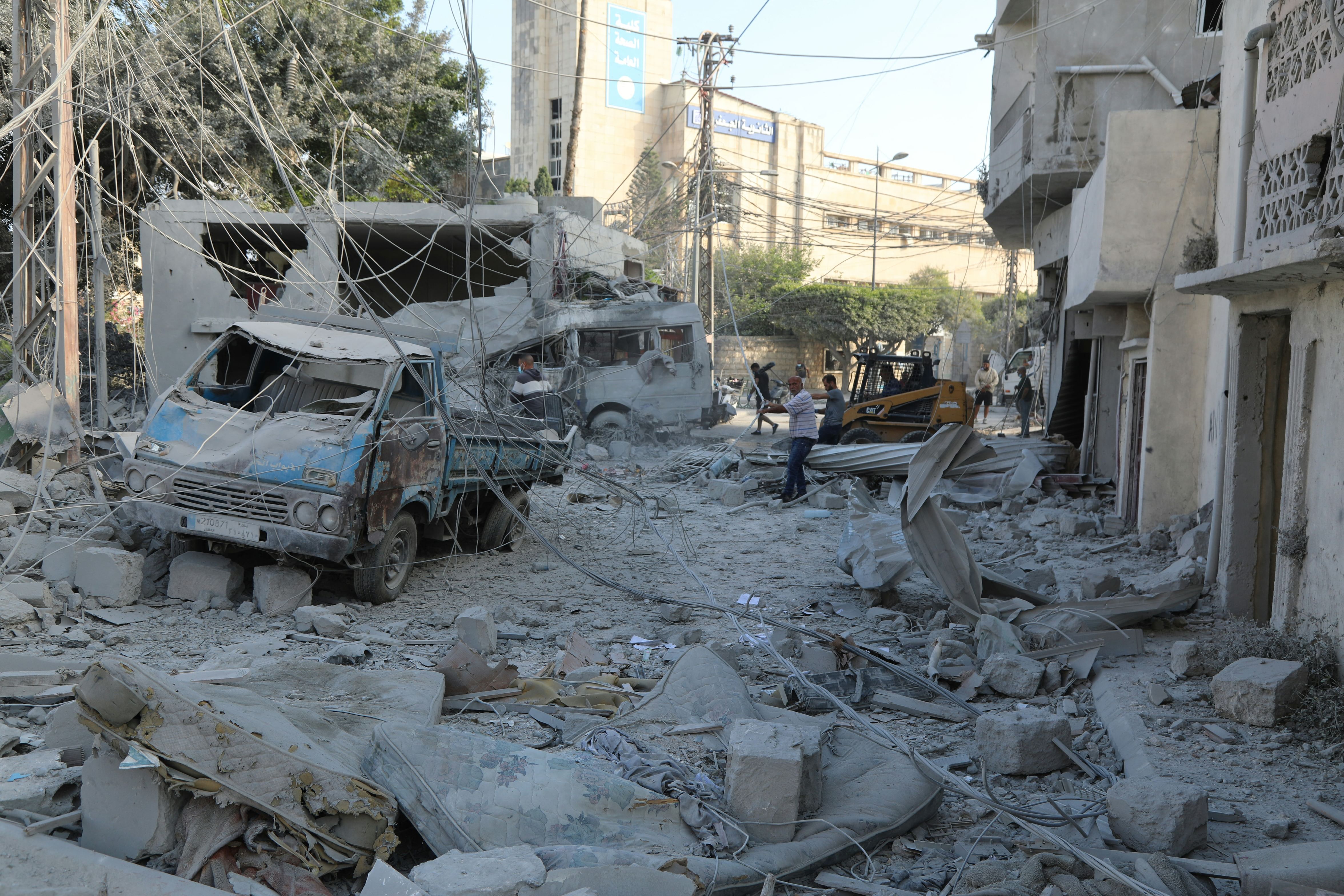

Dubai, UAE — Israeli air strikes and ground fighting in southern Lebanon intensified on Friday, casting fresh doubt on the durability of the US-Iran memorandum of understanding signed this week and highlighting deep divisions over the future of Lebanon.
The latest escalation came after four Israeli soldiers were killed in combat in southern Lebanon. Hezbollah said it ambushed Israeli forces near Ali al-Taher hill, destroying three Merkava tanks and targeting troops with rockets and artillery.
In response, Israel launched one of its heaviest bombardments of recent weeks. Lebanon’s Health Ministry said at least 21 people were killed and 39 wounded in overnight strikes across southern Lebanon. Israel’s military said it struck more than 80 Hezbollah targets and killed dozens of militants, describing the operation as a response to repeated ceasefire violations.
Ben-Gvir’s rhetoric sparks backlash
The sharpest reaction came from Israel’s far-right National Security Minister Itamar Ben-Gvir, who declared that “all of Lebanon must burn” after the deaths of the four Israeli soldiers.
“For every tear of an Israeli mother, a thousand Lebanese mothers must weep,” he wrote on social media.
Iranian Foreign Minister Abbas Araghchi condemned the remarks, saying they reflected Israel’s desire for “permanent war”.
“This is not a rant by a random genocidal lunatic. It’s a public post by the national security minister of the Israeli regime,” Araghchi said, accusing Israel of threatening regional stability.
The exchange added to growing friction between Tehran and Israel at a time when negotiators are attempting to preserve momentum behind the US-Iran accord.
Israel vows to remain in southern Lebanon
Israeli leaders signalled no intention of withdrawing from territory seized in southern Lebanon despite provisions in the US-Iran framework that emphasise Lebanese sovereignty and territorial integrity.
Prime Minister Benjamin Netanyahu said Israeli troops would remain in Lebanon “as long as necessary” to protect northern Israeli communities.
Defence Minister Israel Katz went further, saying Israeli forces would stay from the Mediterranean coast to the Beaufort heights and that the military was systematically destroying villages in areas under its control.
“The 200,000 residents who lived in the security zone are not returning. None of them are returning,” Katz said in televised remarks.
Lebanese President Joseph Aoun said the latest strikes represented a dangerous escalation that undermined efforts to consolidate the ceasefire and end the war.
Iran links talks to Lebanon ceasefire
Tehran reiterated that ending hostilities in Lebanon remains central to its understanding with Washington.
Iranian Foreign Ministry spokesman Esmaeil Baghaei said a halt to the war in Lebanon formed an integral part of the agreement reached with the United States and warned that Iran would take necessary measures to protect its interests and allies.
Hezbollah lawmaker Hassan Fadlallah said Iran had informed the group that negotiations with Washington could not continue without implementation of a comprehensive ceasefire.
Aoun, meanwhile, stressed that any negotiations involving Lebanon would remain independent of the US-Iran process, while welcoming efforts by any country seeking to help secure a ceasefire.
Uncertainty over diplomacy and Hormuz
The renewed violence comes as uncertainty surrounds the next phase of US-Iran diplomacy.
Swiss authorities said talks planned for Friday had been called off, while the White House confirmed Vice President JD Vance would not travel to Switzerland as previously expected.
Iran’s chief negotiator, Mohammad Bagher Ghalibaf, said discussions with Washington would remain bound by Tehran’s “red lines” and warned Iran remained ready to respond forcefully to any perceived excesses.
At the same time, Iran announced it would waive planned transit fees for vessels crossing the Strait of Hormuz during the 60-day negotiation period outlined in the memorandum. Ships will still be required to submit advance transit requests because of ongoing mine-clearance and navigation safety concerns.
The Netherlands said it had redirected an air-defence frigate toward the region to allow participation in any future international mission aimed at securing maritime traffic.
With Israeli operations continuing in Lebanon and major questions unresolved over implementation of the US-Iran accord, hopes for a broader regional de-escalation remain uncertain.