
Iranian media has reported explosions and projectile strikes in Sirik on Wednesday, as fighting between Iran and the US intensified around the Strait of Hormuz and attacks on shipping sent Brent crude above $100 a barrel.
Iran’s state news agency IRNA said “several areas” in Sirik were hit by projectiles fired by “the enemy”. Earlier, Iranian media had reported explosions in Sirik, Minab County and on Qeshm Island, although the origin of the blasts was initially unclear.
IRNA said a loud explosion was heard on Qeshm Island, adding that it was not immediately known whether the sound came from the sea or whether the explosion occurred on the island. Fars news agency reported multiple explosions in Sirik and Minab County, quoting the Hormozgan Province Governorate as saying the sounds originated from the sea.
The developments came as the conflict increasingly threatened maritime traffic through the Strait of Hormuz, a critical route for global energy supplies.
UN Secretary-General Antonio Guterres urged restraint amid reports of further escalation around the strait, warning of potentially “grave consequences” for civilians and the global economy.
His spokesperson, Stephane Dujarric, cited reports of attacks on commercial vessels and threats against maritime and energy infrastructure. He said navigational rights and freedom of navigation must be restored and respected under international law.
Guterres also urged the parties to use diplomatic channels and resolve their disputes through dialogue and negotiations. The UN Secretariat remained ready to support credible efforts aimed at de-escalation and a durable settlement, Dujarric said.
The escalation was already being reflected in energy markets. Brent crude futures rose above the $100-a-barrel threshold on Wednesday, settling at $101.21, up $3.29, or 3.4%. US West Texas Intermediate gained $3.02, or 3.25%, to $96.05.
Both benchmarks closed at their highest levels since May 22. Oil prices had generally remained below the psychologically important $100 level since late May, reflecting expectations that the conflict would remain relatively contained.
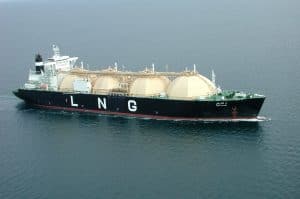
The latest rise followed what Reuters described as the biggest wave of attacks on shipping since the war began, with Iran and the US striking tankers.
Washington also signalled that it would continue using economic pressure against Tehran.
US Secretary of State Marco Rubio said the US would continue targeting Iranian oil tankers in retaliation for attacks on American warships. He said Washington’s objective was to “strangle” Iran economically.
Rubio said Iran would pay a price in tankers whenever it attacked US naval ships, arguing that Tehran would lose five tankers for every attack on an American vessel.
The confrontation has also extended beyond shipping. Several US military aircraft were reportedly damaged in Iranian strikes overnight on Muwaffaq Salti Air Base in Jordan, according to CBS reporter Jennifer Jacobs.
An A-10 Thunderbolt was reportedly struck and left with a missing wing, while about eight F-15s sustained light damage and were returned to service. US forces in Jordan also launched more than 30 Patriot missiles in response to the Iranian strikes, according to the report.
Against that backdrop, President Donald Trump struck a more threatening tone while speaking at the Republican Party’s first-ever midterm convention in Dallas.
Trump warned Iran against activity at Pickaxe Mountain, a fortified site near Iran’s heavily damaged Natanz uranium enrichment facility that hosts two deeply buried tunnel complexes.
“We notice there’s a little activity at Pickaxe. I would advise Iran not to get cute because we will have to hit them very hard,” Trump said. He has threatened strikes on Pickaxe Mountain since at least mid-July.
Trump also said he expected the war to end “immediately after” the US midterm elections in November, arguing that Iran was trying to influence the vote but would not be able to sustain its resistance much longer.
He acknowledged that diplomacy remained possible but said it was not his preferred option.
That public assessment contrasts with warnings reportedly delivered privately by some of Trump’s top advisers. Vice President JD Vance and Secretary of State Marco Rubio were among officials who warned Trump that the conflict could continue through the remainder of his presidency, the Wall Street Journal reported, citing US officials.
The advisers reportedly told Trump in Oval Office and Situation Room discussions that Tehran could continue resisting US pressure, potentially prolonging the conflict beyond January 2029.
The reported assessment underscores the uncertainty surrounding the trajectory of the war even as Trump publicly predicts a conclusion shortly after the November elections.
The conflict has also intensified the pressure on Iran’s economy. Iran’s UN envoy, Gholamhossein Darzi, condemned new US sanctions targeting the Iranian aviation sector, calling them “economic terrorism”.
In a letter to the UN Security Council, Darzi accused Washington of imposing collective punishment and committing a crime against humanity, saying the sanctions violated the UN Charter and international law.
Meanwhile, Iran’s capture of a US military underwater drone could give Tehran an opportunity to study and potentially reverse engineer the vessel, according to reporting in the file. The Dive-LD autonomous underwater vehicle is designed for long-range surveillance and other undersea missions.
The US military and its manufacturer, Anduril, have downplayed the significance of the drone falling into Iranian hands, although Washington has previously treated the loss of advanced unmanned technology to Iran as a serious matter.
The widening military confrontation, pressure on shipping and rising oil prices have therefore placed the Strait of Hormuz and the global energy system increasingly at the centre of the conflict, while Washington and Tehran show little sign of stepping back from the confrontation.