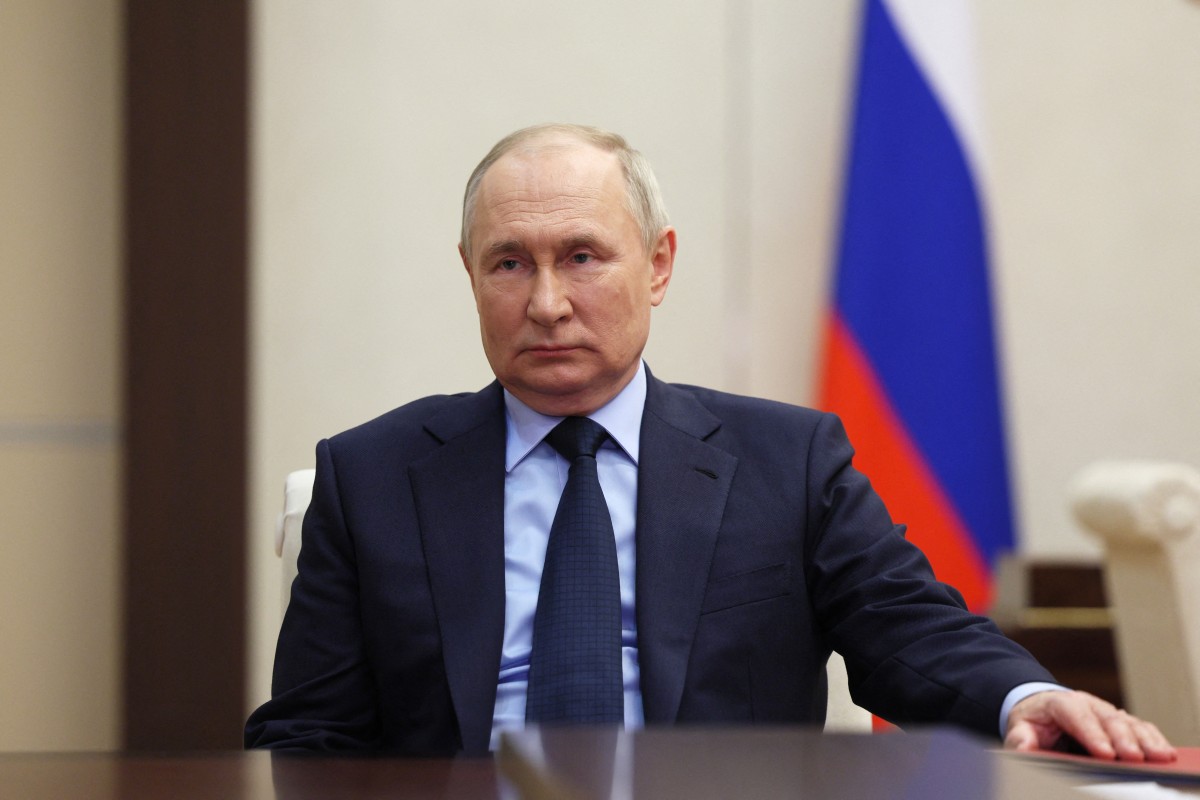

Moscow, Russia – Russian President Vladimir Putin on Thursday signed a law revoking Russia’s ratification of the Comprehensive Nuclear Test Ban Treaty.
The 1996 treaty outlaws all nuclear explosions, including live tests of nuclear weapons, though it never came into force because some key countries — including the United States and China — never ratified it.
The West has accused Russia of using reckless nuclear rhetoric since it launched its offensive on Ukraine last February.
Putin last week oversaw ballistic missile drills in what Defense Minister Sergei Shoigu said was practice for a “massive” retaliatory nuclear strike against an unnamed enemy.
Putin also said last month he was “not ready to say” whether Russia would carry out live nuclear tests.
The bill to revoke the treaty passed through Russia’s parliament last month in a fast-track process.
During parliamentary hearings, State Duma speaker Vyacheslav Volodin said the move to revoke the treaty was a response to the United States’ “cynicism” and “boorish attitudes” on nuclear weapons.
Although it never entered into force, the agreement was ratified by 178 countries, including nuclear powers France and Britain, and has symbolic value.
Its backers say it established an international norm against live tests of nuclear weapons, but critics say the potential of the deal remains unrealized without the ratifications of major nuclear powers.
Russia’s parliament ratified the agreement in June 2000, six months after Putin first became president.