
With untreated sewage in the water and rubbish piled on the sand, pollution on Tripoli’s Mediterranean coast is denying residents of the war-torn Libyan capital a much-needed escape.
The environment ministry last month ordered the closure of a number of beaches along the 30-kilometre (18-mile) Greater Tripoli coastline, despite the roasting summer heat.
“The situation is catastrophic,” said Abdelbasset al-Miri, the ministry official in charge of monitoring the coast.
“We need quick solutions for this problem because it harms the environment just as much as it harms people.”
Daily discharges of untreated sewage from the capital’s two million population make this the most polluted section of the North African country’s 1,770-kilometre coastline.
Cans, plastic bags and bottles plague the water and shore.
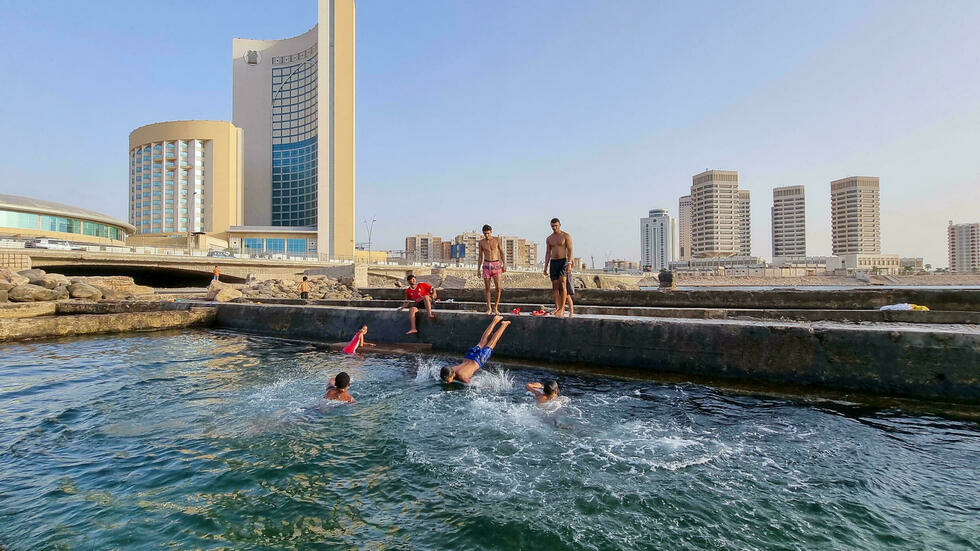
On one beach, near a large hotel, open-air rivulets channel untreated wastewater into the sea, where a few young men brave the contaminated waters in search of cool.
Libya’s infrastructure has been devastated by a decade of conflict, state collapse and neglect since the 2011 overthrow and killing of dictator Moamer Kadhafi in a NATO-backed rebellion.
But Tripoli’s only sewage works closed years before that, like many industrial facilities shuttered for lack of maintenance or funding.
As a result, all of Tripoli’s wastewater goes directly into the Mediterranean.
“Huge amounts of sewage gets dumped in the sea every day,” said Sara al-Naami of Tripoli city council.
‘Summer prison’
Laboratory tests have found “a high concentration of bacteria, 500 percent more than normal,” including E. Coli, at five sites along the capital’s coastline, she added.
“We have raised the issue of pollution in Tripoli’s seawater with the former and current governments, and emphasised the urgent need for a sanitation facility,” Naami said.
But, she said, in the absence of such infrastructure, “temporary solutions” are needed such as settling tanks to filter wastewater before it reaches the sea.
A hard-won ceasefire last year led to a UN-backed government being installed several months ago, with elections set for December.
But day to day, Libyans continue to face power cuts, a liquidity crisis and biting inflation.
And for a country of seven million where leisure facilities are almost non-existent, swimming is a much-needed way to relax and cool down.
Some take to the water despite the risks.
But shop owner Walid al-Muldi doesn’t want to risk getting sick.
“It’s become worse over the years. During heatwaves, the smell gets disgusting,” the 39-year-old said, sitting on a plastic seat a few paces from the shoreline.
“You have to go more than 100 kilometres east of Tripoli to find water that’s a bit cleaner.”
His friend, Mohammed al-Kabir, agreed.
Because of coronavirus restrictions and the unhealthy sea water, “Libyans live in a summer prison,” he said.