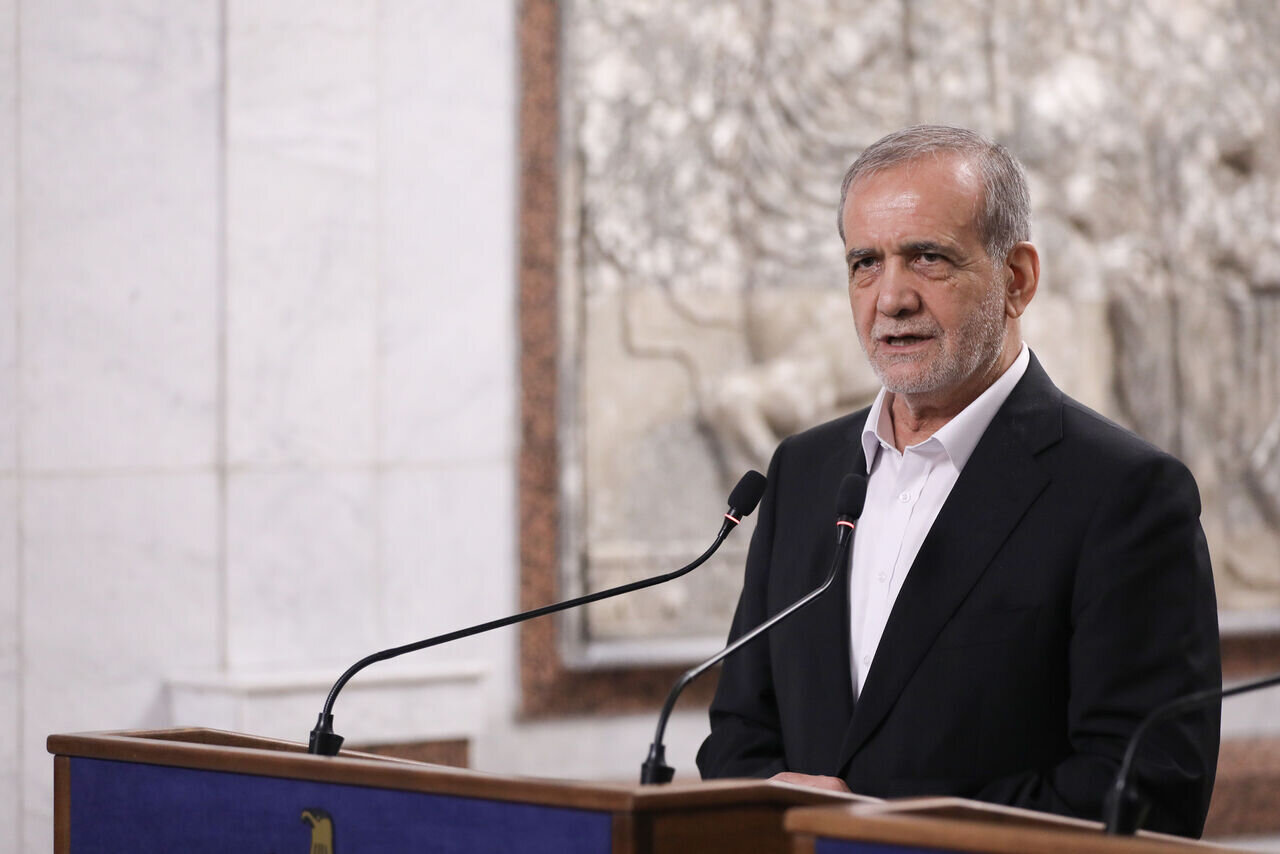

Dubai, UAE — U.S. President Donald Trump and Iranian President Masoud Pezeshkian signed a memorandum of understanding on Wednesday aimed at ending a three-month conflict, extending a ceasefire and opening negotiations on Iran’s nuclear programme, sanctions relief and regional security arrangements.
The accord, signed electronically by both leaders, is intended to serve as a framework for a broader settlement rather than a final agreement, with both sides expected to hold technical talks in the coming weeks.
Iranian Foreign Ministry spokesman Esmaeil Baqaei confirmed the document had been signed by both presidents and said implementation would now be the key test of the agreement.
The memorandum follows weeks of negotiations involving regional mediators after a conflict that disrupted global energy markets, shut the Strait of Hormuz and triggered military exchanges across the Middle East.
Pakistan Prime Minister Shehbaz Sharif said the agreement had entered into force immediately, adding that Iran would reopen the Strait of Hormuz while the United States would lift its naval blockade of Iranian ports. He said Pakistan, supported by Qatar, would host a ceremony in Switzerland on Friday to launch technical-level discussions.
Nuclear talks and sanctions relief
The framework extends the existing ceasefire by 60 days, creating a window for negotiations on a permanent settlement and Iran’s nuclear activities.
A senior U.S. official said Washington would waive sanctions on Iranian oil exports under the arrangement, potentially allowing Iranian crude to return to global markets.
Trump, however, stressed during the G7 summit in France that the memorandum was not a final agreement and cautioned that military action remained possible if diplomacy failed.
Under the framework, Tehran has agreed to dilute part of its enriched uranium stockpile, while negotiators continue discussions on unresolved issues surrounding highly enriched uranium and long-term nuclear restrictions.
Iran’s ballistic missile programme and its support for regional allies, including Hezbollah, are not part of the current negotiating framework.
$300 billion investment mechanism
At the centre of the proposed settlement is a Reconstruction and Development Fund valued at up to $300 billion, designed to encourage both sides to reach a comprehensive agreement.
According to people familiar with the negotiations, the fund would be financed by private-sector commitments from companies in the United States, Gulf Arab states, Asia, Africa and South America rather than government contributions or reparations.
The mechanism would become operational only after a final and mutually acceptable settlement is reached. Planned investments would target sectors including energy, transport, manufacturing and logistics.
U.S. officials have also said the final agreement could unlock broader reconstruction financing backed by regional partners.
Energy markets welcome Hormuz reopening
The reopening of the Strait of Hormuz has been welcomed by governments and international organisations concerned about global energy security.
The International Energy Agency said a sustained restoration of shipping through the waterway would help Gulf exports and Iranian oil shipments gradually recover after one of the largest supply disruptions in modern history.
Oil prices have fallen sharply in recent days as traders anticipated the return of Gulf crude exports and the easing of supply constraints.
Regional tensions persist
Despite the agreement, wider regional tensions remain unresolved.
Russian Foreign Minister Sergei Lavrov discussed the framework with Iranian Foreign Minister Abbas Araghchi on Wednesday, with Moscow reiterating its support for diplomatic efforts.
In Lebanon, President Joseph Aoun said talks with Israel remained independent of the U.S.-Iran agreement, while Israeli strikes continued in parts of southern Lebanon.
The Group of Seven nations has meanwhile called for a durable ceasefire in Lebanon, the disarmament of Hezbollah and guarantees for Lebanon’s territorial integrity.