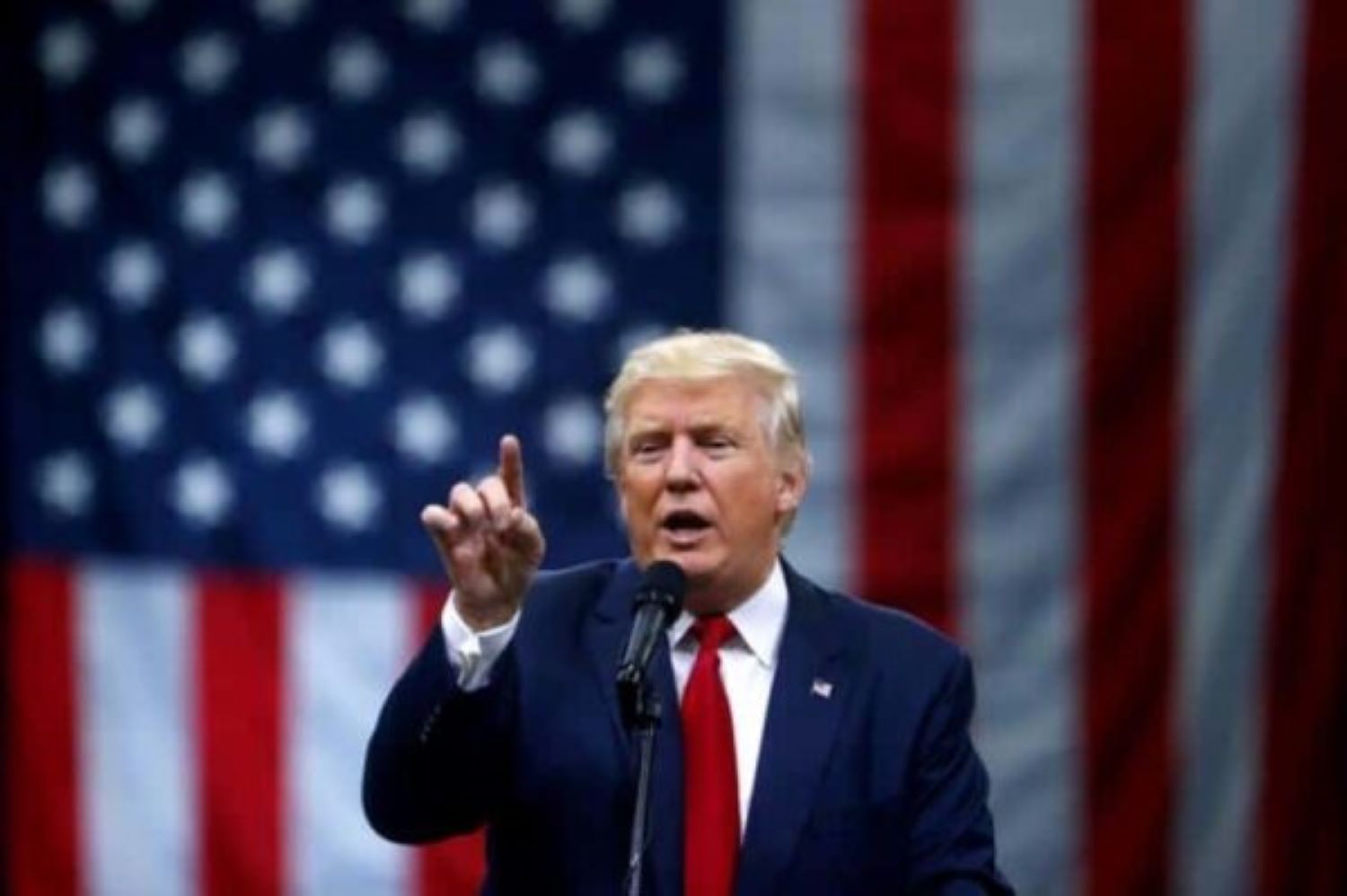

U.S. President Donald Trump has said the United States could impose tolls on vessels using the Strait of Hormuz if negotiations with Iran fail to produce a final agreement, as Tehran kept the strategic waterway closed and diplomats prepared for a new round of talks in Switzerland.
Iran said earlier it had again closed the Strait of Hormuz in response to continued Israeli attacks on southern Lebanon, while the U.S. military said it was monitoring the waterway to ensure it remained open to shipping.
The developments came ahead of technical talks between U.S. and Iranian officials expected on Sunday in Switzerland as both sides seek to implement a fragile accord announced earlier this week aimed at ending the regional conflict.
“There will be NO TOLLS in the Hormuz Strait for 60 days during the Cease Fire Period, and there will be NO TOLLS after the 60-day period has expired, unless they are imposed by and for the United States of America, should the deal not be completed,” Trump wrote on Truth Social.
Iran’s joint military command said the renewed closure was prompted by what it described as Israeli violations of the agreement and Washington’s failure to ensure an end to hostilities.
“The Strait of Hormuz has been closed again,” the command said in a statement carried by state television, warning that additional measures had been prepared if what it called aggression continued.
The move marked a fresh test for the interim accord reached between Tehran and Washington, with Iranian officials increasingly questioning whether the agreement can survive unless its provisions are implemented quickly.
Switzerland talks
An Iranian delegation travelled to Switzerland on Saturday for talks with U.S. officials focused on implementing the agreement, according to state news agency IRNA.
Foreign Ministry spokesman Esmaeil Baqaei warned that the understanding was at risk if practical measures were not taken soon.
“The other side must take the necessary measures as soon as possible. Otherwise, the entire understanding will be in trouble,” Baqaei said.
Iranian state television said the discussions, originally expected on Friday, had been postponed and would now take place on Sunday.
Pakistan earlier said technical-level talks involving U.S. and Iranian representatives would be held on June 21 in Burgenstock, Switzerland, with mediation support from Pakistan and Qatar.
Pakistan’s Prime Minister Shehbaz Sharif and army chief Field Marshal Syed Asim Munir are expected to participate, according to the prime minister’s office.
U.S. Vice President JD Vance said he expected to travel to Switzerland within days as diplomatic efforts continued.
Lebanon violence continues
The diplomatic push unfolded as violence persisted in southern Lebanon despite a ceasefire announced a day earlier between Israel and Hezbollah.
Lebanon’s state news agency NNA said Israeli strikes killed at least 20 people on Saturday.
Israel said the attacks were launched after Hezbollah fired more than 50 projectiles overnight at Israeli forces in southern Lebanon.
An Israeli military official said the strikes targeted Hezbollah positions. Lebanese media reported that warplanes and drones struck multiple locations across southern Lebanon and the Bekaa Valley.
Hezbollah accused Israel of committing hundreds of ceasefire violations and warned that continued attacks would not go unanswered.
In a separate development, Lebanon’s central bank condemned what it called a direct and deliberate Israeli strike on one of its branches in the southern city of Nabatieh.
The bank said the building was empty at the time and sustained only material damage, but described the attack as one targeting an institution of the Lebanese state. It called on the United States and its allies to help protect civilians and official institutions.
The continued fighting has become a central point of contention for Tehran, which argues that the agreement with Washington cannot succeed while Israeli military operations continue in Lebanon.
Strategic waterway
The Strait of Hormuz, located between Iran and Oman, remains one of the world’s most important energy transit routes, carrying a significant share of global seaborne oil exports.
Iran had previously restricted traffic through the waterway during the recent conflict before movement resumed following the announcement of the interim agreement earlier this week.
The U.S. military said it was monitoring the strait to ensure it remained open and that ships had transported more than 17 million barrels of oil through the passage on Saturday.
Analysts say the renewed closure and Trump’s latest warning have increased pressure on negotiators to preserve the agreement while preventing a broader escalation involving Iran, Israel and Lebanon.