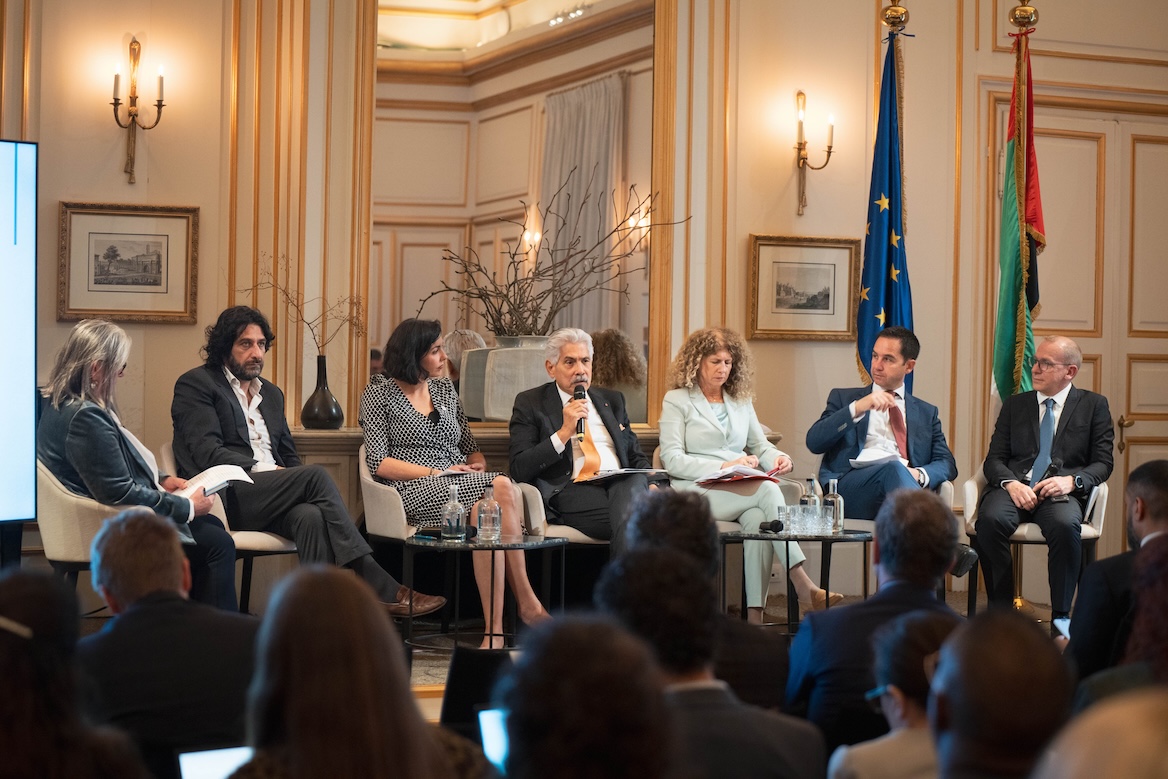

Dubai, UAE — The UAE, the European Union and humanitarian organizations met in Brussels on Thursday to discuss strengthening global humanitarian supply chains as conflicts, maritime disruptions and other geopolitical tensions increasingly threaten the delivery of aid worldwide.
The event, co-hosted by the UAE Embassy in Brussels, Dubai Humanitarian and the European Commission’s Directorate-General for European Civil Protection and Humanitarian Aid Operations (DG ECHO), brought together more than 80 representatives from governments, UN agencies, non-governmental organizations, logistics providers and the private sector.
Participants examined growing pressures on humanitarian operations, including conflict-related disruptions, maritime insecurity, airspace restrictions and broader supply-chain challenges that can delay the delivery of food, fuel, medicine and other essential supplies.
UAE Ambassador to Belgium, Luxembourg and the European Union Mohammed Ismail Al Sahlawi said recent events had underscored the vulnerability of critical trade routes and highlighted the need for greater preparedness.
“Since the shockwaves caused by COVID, the UAE has been working with our European partners to ensure we are better prepared for emergencies and that humanitarian deliveries are more resilient,” he said.
Maciej Popowski, Director-General of DG ECHO, said humanitarian actors must move toward more integrated and coordinated supply-chain networks to improve preparedness and adaptability.
The discussions also reflected deepening humanitarian cooperation between the UAE and the EU following a 2025 administrative arrangement between DG ECHO and Dubai Humanitarian aimed at strengthening coordination across aid operations.
Since the agreement, both sides have expanded collaboration in areas including shared humanitarian hubs, information exchange, support for local preparedness initiatives and operational coordination among humanitarian logistics centres.
Dubai Humanitarian Chief Executive Giuseppe Saba said resilient logistics networks and international partnerships were becoming increasingly important as humanitarian needs continue to grow amid a volatile geopolitical environment.
The panel drew on operational lessons from aid efforts supporting crisis-affected regions including Gaza, Lebanon and Afghanistan, highlighting the role of pre-positioned stockpiles, integrated logistics systems and coordinated partner networks in maintaining aid flows during disruptions.
Participants also examined ways to improve humanitarian preparedness through greater digitalisation, localisation, multi-stakeholder coordination and more resilient logistics infrastructure.
The event concluded with calls for stronger international cooperation and more coordinated approaches to ensure humanitarian assistance remains uninterrupted and reaches vulnerable populations during future crises.