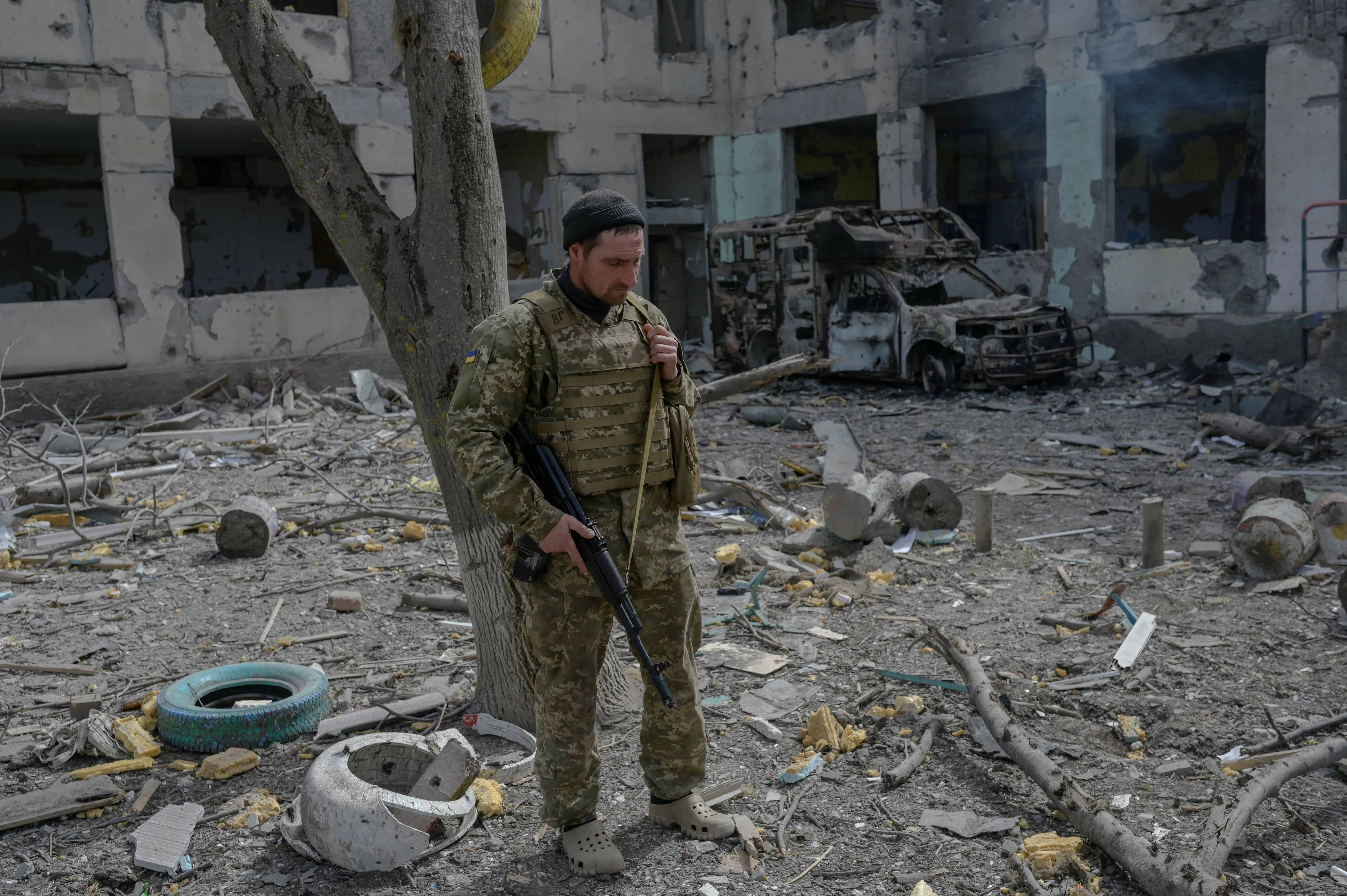

Russia’s war in Ukraine could almost halve world trade growth this year and drag down global GDP growth too, the World Trade Organization (WTO) projected Monday.
The WTO said that the Russian invasion not only created a humanitarian crisis of “immense proportions” but also dealt a “severe blow” to the global economy.
It noted that while the shares of Russia and Ukraine in overall world trade and output are relatively small, they are important suppliers of essential products, notably food, and energy.
“Using a global economic simulation model, the secretariat projects that the crisis could lower global GDP growth by 0.7 to 1.3 percentage points, bringing growth to somewhere between 3.1 percent and 3.7 percent for 2022,” the Geneva-based global trade body said.
“The model also projects that global trade growth this year could be cut almost in half from the 4.7 percent the WTO forecasted last October to between 2.4 percent and three percent.”
Grinding towards its seventh week, the war in Ukraine will affect others more strongly than others, according to the WTO.
Europe is the main destination for both Russian and Ukrainian exports and therefore is likely to experience the heaviest economic impact.
Reduced shipments of grains and other foodstuffs will boost the prices of agricultural goods, with negative consequences for food security in poorer regions.
“Poorer countries are at high risk from the war since they tend to spend a larger fraction of their incomes on food compared to richer countries.
“This could impact political stability.”