

Israeli forces have launched a major ground offensive in central Gaza, advancing with tanks beyond the so-called Yellow Line and issuing new forced evacuation orders, as military operations continue despite the ceasefire agreement.
The operation marks Israel’s first major ground offensive in central Gaza, with its forces pushing into areas where they had not previously established control. Aid organizations have warned that the renewed military activity and displacement orders are worsening already critical humanitarian conditions.
A coalition of five international aid organizations — the Danish Refugee Council, Norwegian Refugee Council, Oxfam, Refugees International and Save the Children — gave US President Donald Trump’s 20-point Gaza peace plan just four out of 26 possible points in a humanitarian assessment released one year after the UN Security Council endorsed it.
The assessment awarded the plan zero points for humanitarian access and just one point for civilian protection. The organizations said renewed military operations and forced displacement undermined the commitments made under the framework.
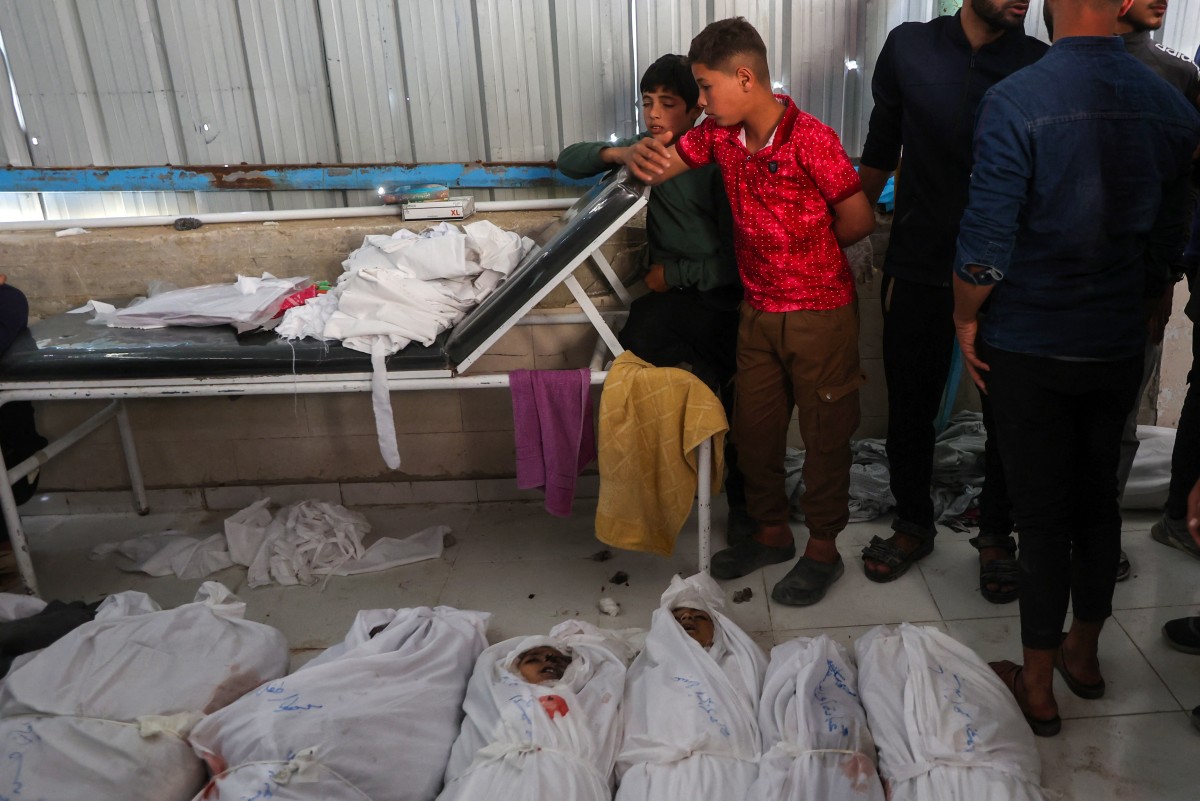
Gaza’s Health Ministry reported that five Palestinians had been killed over the previous 24 hours, including two newly killed, two who died of their wounds and one body recovered from rubble. Eight others were wounded.
Since the ceasefire took effect on October 11, 2025, Israeli attacks have killed 1,662 Palestinians and wounded 6,007, while 851 bodies have been recovered, the ministry said. It put the overall death toll since the beginning of the war at 74,715, with 176,139 wounded.
Medical restrictions leave children awaiting treatment
At least 300 Palestinian children have died while waiting for Israeli authorization to leave Gaza for life-saving medical treatment, according to the territory’s Health Ministry.
The ministry said at least 90 of the children had cancer, while another 5,400 children remained on medical travel lists awaiting permission to leave the enclave.
The figures highlight the continuing obstacles facing patients requiring specialized treatment outside Gaza. The ministry previously reported in February that 1,360 patients had died while awaiting medical travel permits following the closure of the Rafah crossing in May 2024.
Meanwhile, Israeli authorities extended the detention of Dr. Hussam Abu Safiya, director of Kamal Adwan Hospital in northern Gaza, by six months, according to the Palestinian Prisoners’ Society.
The organization condemned the decision under Israel’s so-called unlawful combatants law and called for international pressure to secure his release. It said more than 15 doctors from Gaza and the West Bank, alongside dozens of other health workers, were being held without charge or trial.
West Bank raids and settlement violence continue
Violence, demolitions and Israeli military raids continued across the occupied West Bank, with Palestinian sources reporting incidents in several communities.
Israeli settlers reportedly set fire to an excavator near the town of Sair, north of Hebron. In another incident, Israeli bulldozers uprooted olive trees and demolished agricultural structures on land belonging to Deir Ibzi’, west of Ramallah.
Israeli forces also pursued Palestinians harvesting olives in the Wadi Seif area of Beit Fajjar, south of Bethlehem, and detained workers at a stone factory in the town, according to the Palestinian Wafa news agency.
In occupied East Jerusalem, Israeli forces raided al-Masira School and the Women’s Centre in Shuafat refugee camp, searched both premises and took over the school’s administration office.
Separately, Israeli forces fired tear gas at residents in the town of Naalin, west of Ramallah, following a raid, according to local sources.
International pressure mounts over settlements
Fifteen Arab and Islamic countries welcomed sanctions imposed by the United Kingdom and Australia targeting Israeli settlement activities in the occupied West Bank, which they described as illegal under international law.
In a joint statement, the countries’ foreign ministers supported further measures to ensure accountability for settlement-related activities, including sanctions against individuals and entities involved in the E1 settlement plan.
They also welcomed British sanctions against an Israeli group accused of obstructing humanitarian aid deliveries to Gaza.
Iranian Foreign Minister Abbas Araghchi separately called for an emergency meeting of the Organization of Islamic Cooperation’s foreign ministers, urging action to lift the siege on Gaza and ensure humanitarian assistance could enter the territory.