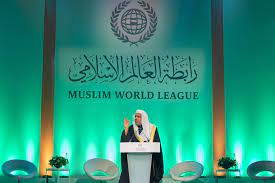

Islamabad, Pakistan – The Muslim World League (MWL) launched a program for distributing Ramadan food baskets in Pakistan as part of its humanitarian efforts and to complement the role Saudi relief institutions play around the world.
The Muslim World League is an International Islamic NGO based in Makkah that promotes what it calls the true message of Islam by advancing moderate values that promote peace, tolerance and love.
A celebration to mark the launch of the program was held today at MWL’s headquarters, attended by Saudi Ambassador to Pakistan Nawaf bin Saeed Al-Maliki and Caretaker Minister of Health in Pakistan’s Punjab Province Dr. Jamal Nasir.
Saad bin Masoud Al Harthy, the MWL’s regional director in Pakistan, stated that the program distributes 3,500 food baskets, each weighing 33 kg, to provide a month of sustenance for a family.
Al Harthy also noted that the program is part of the MWL’s humanitarian efforts to meet the needs of the needy people in Pakistan.
The program benefited thousands of poor, impoverished people, and widows in different areas of Pakistan.