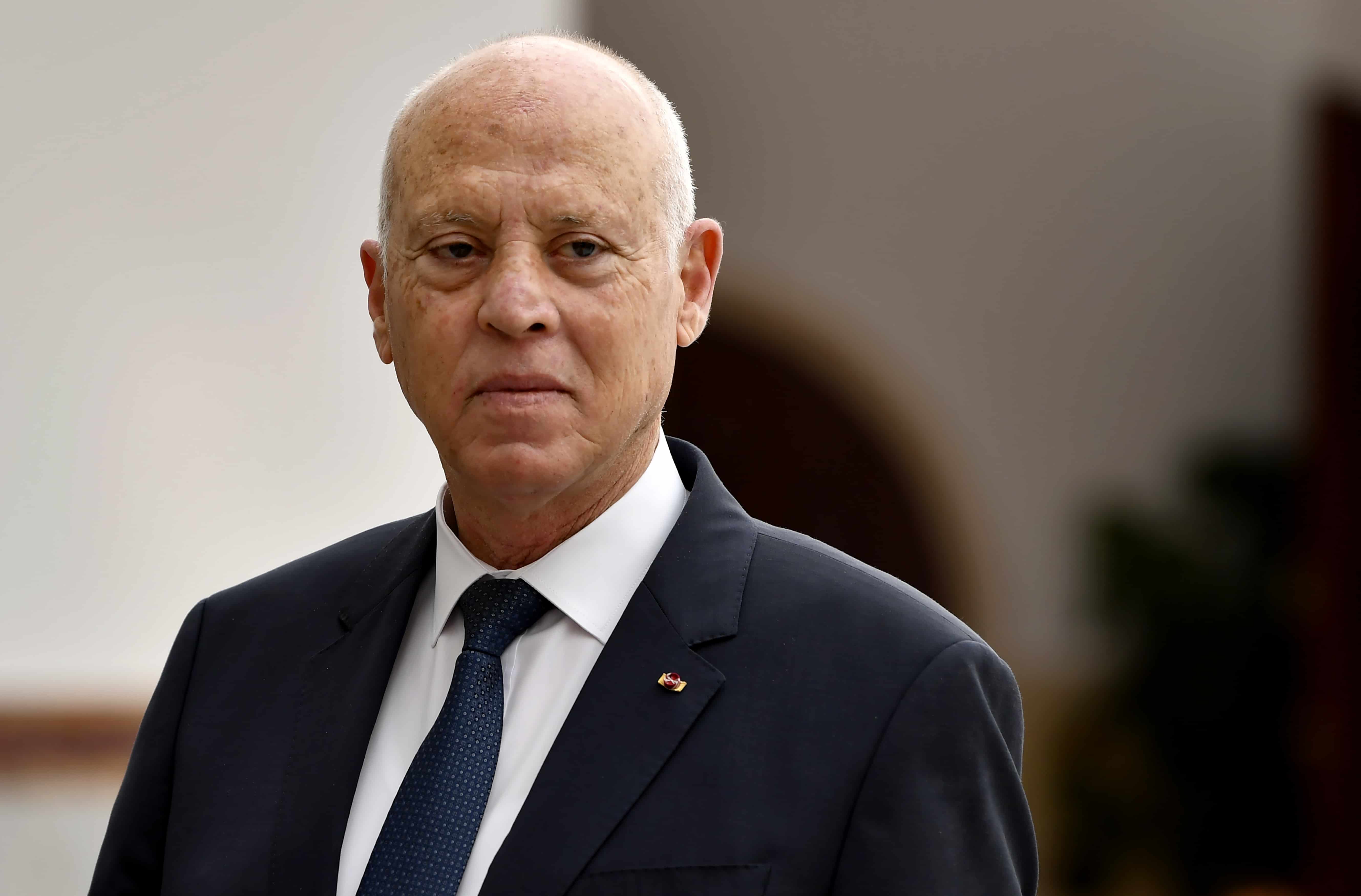

Tunis, Tunisia– Tunisian President Kais Saied has dismissed Prime Minister Najla Bouden, the first woman to lead a government in the North African country, according to a video from the presidency on Tuesday evening.
No explanation was given.
Saied immediately appointed in her place Ahmed Hachani, who until now worked at the Tunisian central bank and studied law at the University of Tunis, where Saied taught, according to Hachani’s Facebook profile.
The new head of government, a figure unknown to the general public, was immediately sworn in before the president, according to the presidency video.
Bouden was appointed by Saied on October 11, 2021, two and a half months after the president granted himself sweeping powers on July 25 by dismissing his then-prime minister and suspending parliament.
Since his power grab, Saied has ruled by decree.
The constitution, which he had amended by referendum in the summer of 2022, greatly reduced the powers of parliament and granted the president’s office unlimited powers.
A new assembly took office in the spring of 2023 following legislative elections at the end of 2022, which were boycotted by the opposition parties and shunned by voters with a turnout rate of around 10 percent.
On several occasions in recent months, the president has ordered the dismissal of various ministers, including the foreign minister, without giving a reason.
Since last February, about 20 opposition, media and business figures have been imprisoned in a wave of arrests that also affected Rached Ghannouchi, leader of the Islamist-inspired Ennahdha party and one of the president’s highest-profile critics.
They are accused of “plotting against state security” and Saied has called them “terrorists”.
Amnesty International has labelled the roundup a “politically motivated witch hunt”.
Ennahdha dominated coalitions in the decade since the 2011 democratic revolution that culminated in the downfall of dictator Zine El Abidine Ben Ali and kicked off the Arab Spring uprisings across the region.
The political crisis Tunisia has been going through for two years is compounded by serious economic difficulties.
The country is heavily indebted, at 80 percent of GDP, while growth is a sluggish two percent, added to which poverty levels are rising and unemployment is very high at 15 percent.