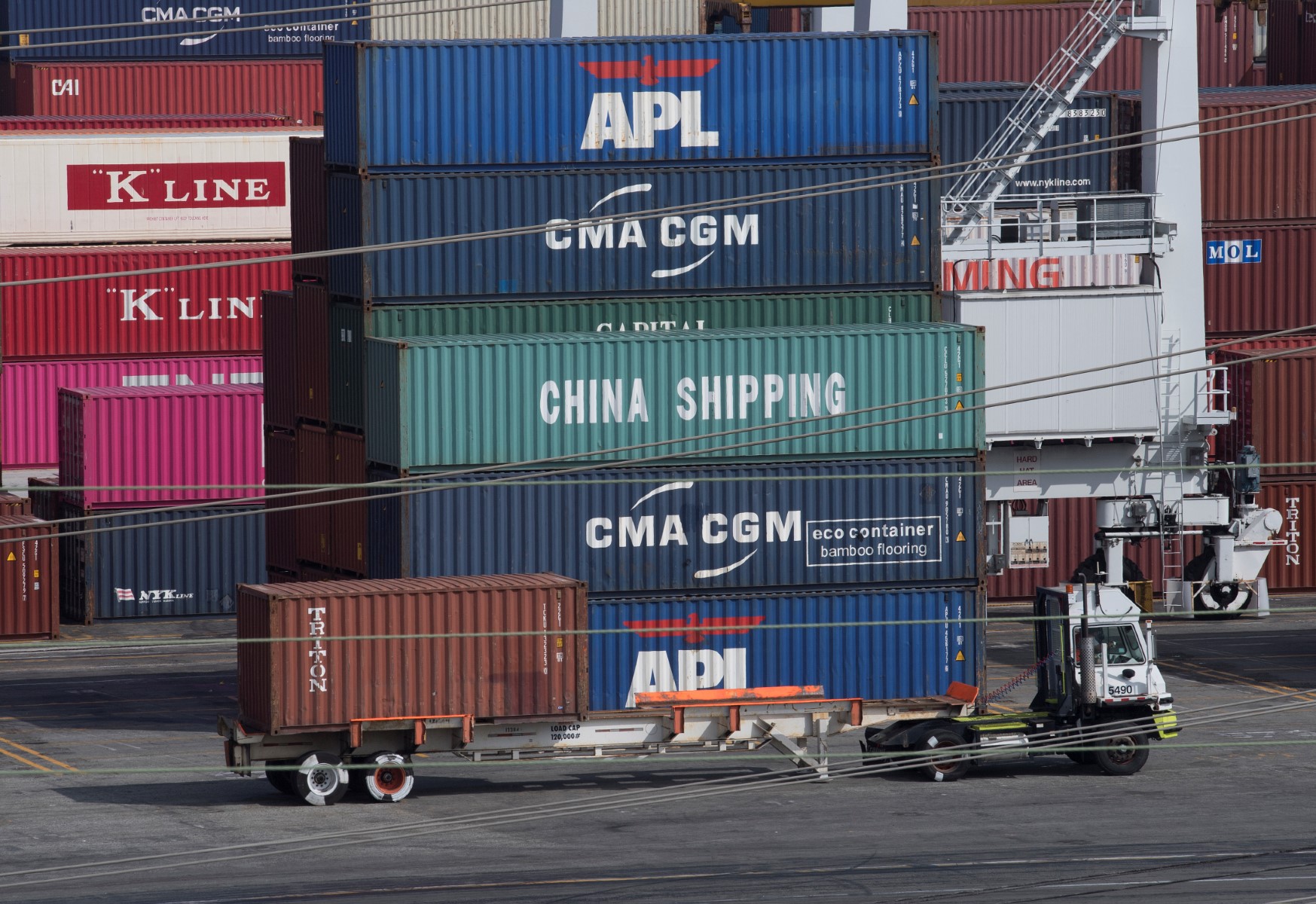

Beijing, China– China last month suffered its biggest fall in exports for more than three years, official data showed Tuesday, as the world’s second-largest economy is battered by sluggish global demand and a domestic slowdown.
The data will likely ramp up calls for leaders to do more to revive growth, having laid out a series of stimulus measures in recent weeks focusing on consumers and the troubled property sector.
Sales of Chinese products to foreign markets sank 14.5 percent on-year last month, a third consecutive drop, according to the customs authority.
The decline was bigger than expected and the heaviest since a 17.2 percent plunge in January-February 2020, when the economy came to a standstill in the early weeks of the Covid-19 pandemic.
Apart from a brief rebound in March and April, exports have been in constant decline since October.
The threat of recession in the United States and Europe, combined with high inflation, has contributed to weakening international demand for Chinese products in recent months.
Exports dived 12.4 percent on-year in June.
Shipments to the European Union in the first seven months of the year came to 2.08 trillion yuan ($288.9 billion), down 2.6 percent, the customs authority said in a separate statement on Tuesday.
Meanwhile, imports shrunk a forecast-busting 12.4 percent, a ninth straight month of contraction and further evidence that domestic demand has fallen off a cliff.
“China trade figures for July disappointed again,” Ken Cheung Kin Tai, an analyst at Mizuho Bank, wrote in a note.
“The weak trade figures highlighted the sluggish external demand, while (importers) refrained from purchasing goods for domestic production and investment,” Cheung said.
“In this context, renminbi depreciation could serve as a tool to support China exports and facilitate economic recovery,” he added.
Domestic slowdown
The trade figures are the latest indication that China’s post-Covid recovery has run out of steam, having enjoyed a brief surge after officials removed growth-killing zero-Covid measures at the end of last year.
The economy grew just 0.8 percent on-quarter in April-June, while youth unemployment has reached record highs of more than 20 percent.
July’s official manufacturing purchasing managers’ index — a key measure of factory output — came in at 49.3, below the 50-point mark that separates expansion and contraction.
And the property sector remains in turmoil, with major developers failing to complete housing projects, triggering protests and mortgage boycotts from homebuyers.
Authorities have come under increasing pressure to introduce fresh stimulus after months of debilitating data.
The top leadership, known as the Politburo, have pledged to provide much-needed support to the economy but warned it faces “new difficulties and challenges” as well as “hidden dangers in key areas”.
China’s State Council last month released a 20-point plan to increase consumption across the board, touching on housing, culture and tourism, as well as green consumption such as electric vehicles.
The central bank has also cut several interest rates in recent weeks in an effort to reinvigorate the economy.
However, analysts have warned that vast local government debt piles and officials determination to put the country on a more sustainable growth trajectory, and away from state investment, mean the wide-ranging bazooka measures of the past are unlikely.
Beijing is aiming for about five percent growth this year, one of the lowest targets set by the Asian giant in decades, and one that Premier Li Qiang has warned will not be easy to achieve.