
Dubai, UAE – Middle East powers should maintain their push to de-escalate the region through trade and economic ties despite the Israel-Hamas war, a senior United Arab Emirates official said on Saturday.
The sudden flare-up in Gaza, after a deadly attack by Hamas, follows a period of fence-mending in the region including by the UAE and its neighboring fellow oil giant, Saudi Arabia.
According to UAE presidential adviser Anwar Gargash, countries should maintain that strategy even though the war is sending shockwaves through the region.
“National actors are basically trying to use economics as a way to de-escalate tension,” Gargash told the World Policy Conference in Abu Dhabi.
“I think there is no reason why we should also veer away from that course of action.”
Gargash said the war demonstrated that the UAE and others still had to “work together with other regional actors in order to ensure that regional stability is guaranteed”.
“But I think the other message is also (that) national plans have to move on. I don’t think that national plans have to be on pause, because there will always be a major regional issue that will surprise us.”
The UAE and Gulf ally Bahrain, along with Morocco and Sudan, broke with the long-standing Arab consensus to normalize relations with Israel in 2020.
The UAE has also rebuilt relations with Turkey and was instrumental in Syria’s return to the Arab League after more than a decade on the sidelines over its bitter civil war.
Meanwhile Saudi Arabia, the world’s biggest oil exporter, resumed ties with rival heavyweight Iran in March after a seven-year hiatus, and was in talks over a potential normalization with Israel before the current war broke out.
For the wealthy Gulf countries, the diplomatic and trade drive is part of plans to reduce economic dependence on oil ahead of an expected drop in demand as the world turns to other fuels.
The ongoing war erupted when Hamas members crossed from Gaza into southern Israel on October 7, killing some 1,400 people, mostly civilians, according to Israeli officials.
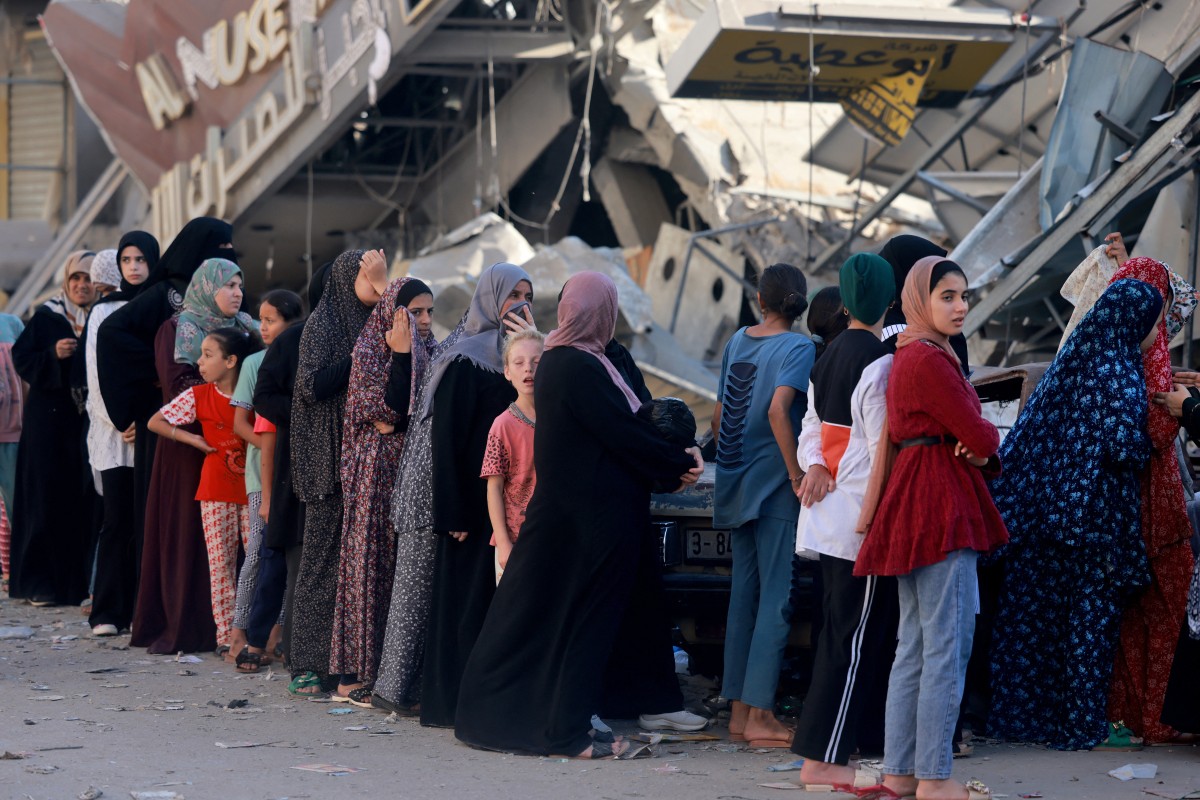
Nearly 9,500 people, most of them children or women, have been killed in retaliatory Israeli strikes unleashed to crush Hamas in the Gaza Strip, the health ministry in the Palestinian territory says.
“Many who call for a pause on all national issues, national programs, because of a crisis as colossal as we are seeing and its different dimensions, I think that is not advice that is correct,” Gargash said.
“But many also come and say let’s just move on with our regional, our national projects and national plans of investment and economy and revitalizing our economies.”
He added: “I think that balance of looking at what I would call the future is important, but at the same time dealing with the demons of the region, dealing with the demons of the past.”