
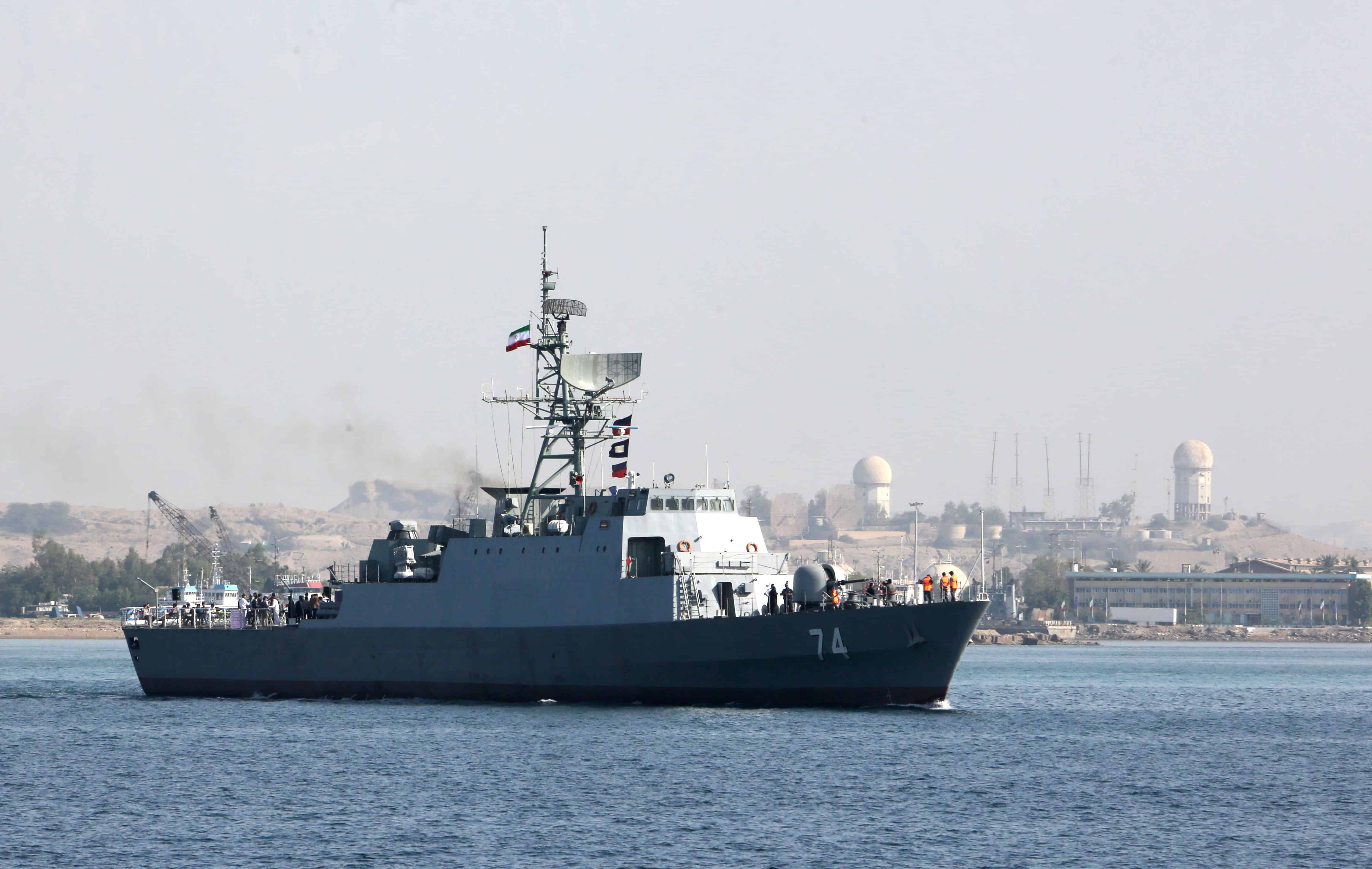


As geopolitical tensions disrupt shipping through the Strait of Hormuz and raise fresh concerns about global energy security and supply chains, the Gulf region once again finds itself at the centre of economic and strategic calculations. While short-term shocks may be absorbed through fiscal buffers and strategic reserves, prolonged disruption could accelerate shifts in global trade routes, investor risk perceptions and supply chain diversification.
In an interview with TRENDS, Kelsey Goodman, Head of Middle East and North Africa at the World Economic Forum, explains the immediate and long-term implications of the crisis for global trade, energy markets and food security, and assesses whether GCC economies can turn disruption into a logistics and investment opportunity. She also discusses how the region’s expanding role across energy, finance, logistics and digital infrastructure is strengthening its position in an increasingly fragmented global economy.
With shipping through the Strait of Hormuz disrupted, what are the immediate consequences for global trade, energy markets, and investor confidence? Are we looking at a temporary shock or the start of a structural rethink in global supply chains, and how well positioned are GCC hubs to turn this into a logistics advantage?
Even before the outbreak of the current conflict, the global economy was facing heightened geopolitical tension and increasing fragmentation across trade, energy and investment flows. The Forum’s latest Global Risks Report identifies geoeconomic confrontation and state-based armed conflict among the most immediate global risks, while the latest Global Cooperation Barometer points to declining cooperation on peace and security– both of which are essential for sustained prosperity and growth.
How this further impacts the regional and global economy is a question of duration.
Short, sharp disruptions have historically been absorbed by the Gulf’s deep fiscal buffers or swift operational recovery.
However, the longer that strikes in the Gulf continue, and the longer that trade in the Strait of Hormuz is disrupted, the more severe the impact will be on both the Gulf’s and the global economy.
According to the International Energy Agency this represents the most significant supply disruption in history. 34% of the world’s crude oil exports travel through the Strait of Hormuz—mostly en route to Asia, with China and India receiving 44% of these exports. Most of these exports are effectively at a standstill.
In the short term, there are bridging measures. Many consumer countries have significant amount of strategic reserves of oil to bridge gaps during these disruptions, OPEC+ producers have boosted production. The US has also indicated it may ease some sanctions on Russian oil to stabilize global energy markets
In the short term, there has also been a reduced energy demand due to the suspension of flights at major airports in Middle Eastern airports. However, in the long term, disruptions of Middle Eastern energy production will have major negative impacts on diesel and jet fuels markets, according to the IEA.
Another sector to watch is food and agriculture. 20% of global LNG exports (a feedstock for synthetic nitrogenous fertilizer) and 20-30% of global fertilizer pass through the Strait of Hormuz. These are critical inputs into global food production, and while farmers may be able to bridge in the short term, long-term disruption could lead to higher input costs and ultimately higher food prices.

Can GCC hubs turn this into a logistics advantage? Partially and selectively. Ports, hub and pipelines outside the chokepoints have become lifelines.
For example, DP World has directed its customers towards Khorfakkan or Fujairah, where cargo can then move inland by road or rail.
Likewise, Saudi Arabia’s East-West pipeline and the UAE’s Habshan-Fujairah pipeline have increased activity to keep between 8-8.8 million barrels per day flowing—which makes up for a little less than half of the Strait’s pre-war supply of 20 million barrels per day.
Moments like this inevitably raise questions among global investors. Historically, how has the GCC managed to maintain confidence during periods of regional tension and what is different today?
What’s different today is that the GCC is more central to multiple global systems at once: not just oil, but LNG, petrochemicals, fertilizer, aviation, data centres, and global logistics.
One of the key drivers of the GCC’s global influence and soft power is that has been its reputation as an oasis of economic growth, innovation and security amidst currents of instability. Located at the crossroads of East and West, North and South, it has a built its reputation as a bloc of actors that can be drivers of global capital, R&D labs for innovation, growing destinations for tourism and sophisticated partners in supply chain and logistics.
However, that expanded centrality can cut both ways.
On the one hand, it reinforces investor confidence as the Gulf is no longer a single-commodity story vulnerable only to oil price volatility. On the other hand, greater integration means greater exposure. Investors are not only assessing physical security, but also technological and geopolitical risks.
Indeed, recent security developments have led to volatility across regional equity markets. That said, markets tend to punish uncertainty more than bad news.
The fundamentals of the GCC’s economic policy remains intact: strong sovereign balance sheets, credible currency regimes, and operational competence under stress.
This suggests that if immediate threats of disruptions in the Gulf can be relieved, Gulf markets will likely restabilize. This is an area where industry and government can work closely together to reinforce this economic resiliency.
If disruptions in the Arabian Gulf persist, could this accelerate shifts in global supply chains or trade routes, and how might the GCC adapt to remain central to global commerce?
In a time of global geopolitical fragmentation, uncertainty is the largest tariff on our global economy.
While the immediate supply chain and trade challenges are disruptive in the Gulf, the domestic stability of the GCC states remains solid. This ability to offer policy and governance continuity remains one of the greatest strengths the GCC has to maintain its central role in the global economy because it lowers the uncertainty premium caused by external factors.
Beyond this, GCC economies could experiment with a few strategies to de-risk their economic outlook:
- Diversify the geography: Multi-port strategies that reduce single-point dependency de-risks supply chain disruptions. This includes making use of the East-West and Habshan-Fujairah pipelines, as well as increasing land travel to the Khorfakkan and Fujairah ports.
- Lean into financial intermediation: The Gulf’s stable currency regimes, deep reserves and sophisticated debt markets provide global financial anchors. As long as the governments preserve macro credibility, Gulf exchanges and banks can function as shock absorbers rather than casualties.
- Continue to develop digital sectors: Digital trade and services are not without their risks, and indeed data centres have been targeted in the attacks, but it is nonetheless less exposed to maritime chokepoints. Strengthening cyber resilience and digital infrastructure protection, while continuing to develop these knowledge-based industries bolsters the GCC’s long-term economic diversification
The GCC has become a go-to partner for capital, energy and logistics in an increasingly fragmented world. From where you sit, how are today’s overlapping conflicts and big-power rivalries actually reshaping the region’s role in global trade and investment?
We are living through an era of geopolitical restructuring—at the Forum’s Annual Meeting 2026 in Davos, Mark Carney, Prime Minister of Canada called it a “rupture” of the traditional rules-based order.
On one hand, this fragmentation has elevated the region’s strategic importance. Despite these disruptions, GCC states have maintained impressively agile diplomatic positions. They engage with all major players – the United States, China, India and others —while strengthening their South-South ties.
This positioning has given the GCC trusted convening power and enabled some of the states to play roles as diplomatic interlocutors– not just between the US and Iran, but across a range of sensitive regional and international negotiations.
However, the escalation in the Gulf has shown that despite these very delicate diplomatic efforts, geography has unfortunately brought them into a conflict that they did not want.
Looking ahead, one way to reinforce the GCC’s leadership in global trade and investment is through deeper economic integration. With a combined GDP exceeding $2.3 trillion—comparable to major G7 economies—the bloc already carries significant weight. Greater integration would amplify that influence, strengthening market scale, supply-chain resilience and collective negotiating power in an increasingly fragmented global economy.