
Saudi Arabian and Emirati startups were among 100 companies selected for the World Economic Forum’s 2026 Technology Pioneers cohort, reflecting the growing role of Middle Eastern innovators in areas ranging from artificial intelligence to financial technology.
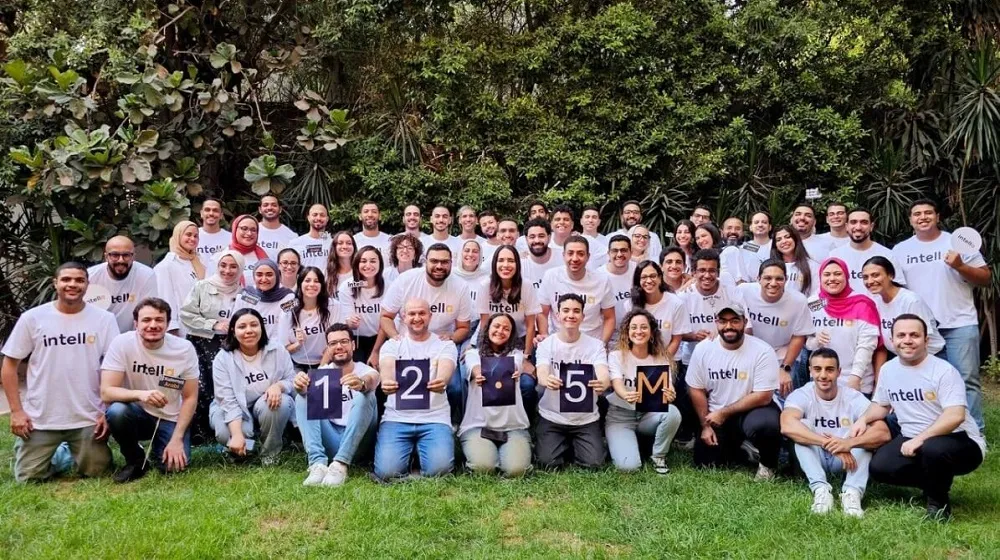
Saudi Arabia was represented by intella, which develops Arabic-language speech recognition and analytics tools, and Nommas Technologies, which provides AI-powered visual inspection systems for manufacturers. The United Arab Emirates secured a place through Fasset, a fintech company using stablecoin technology to expand access to banking, payments and investment services.
The annual list recognizes early-stage companies developing technologies with the potential to reshape industries and societies, with this year’s cohort spanning 23 countries.
AI infrastructure emerges as dominant theme
Unlike recent years, when attention centered on large AI models and consumer-facing applications, many of the selected companies are focused on the infrastructure required to deploy AI at scale.
The World Economic Forum said two broad categories stood out: firms developing the foundations for autonomous AI agents, including identity verification, payments, cybersecurity and enterprise integration, and those building solutions to meet growing demand for computing power, energy and data storage.
“The Technology Pioneers community has been an early indicator of where technology is going,” said Verena Kuhn, head of Innovator Communities at the World Economic Forum.
She said advances in AI are enabling small companies to tackle challenges that previously required substantial capital, infrastructure and large workforces.
Emerging markets strengthen innovation credentials
The cohort underscores a shift in global innovation patterns, with emerging economies playing a larger role in frontier technologies.
India accounted for nine companies, including satellite servicing specialist OrbitAID, launch vehicle developer Ethereal Exploration Guild and urban air mobility company Sarla Aviation. South Korea recorded its strongest representation to date, with startups focused on robotics, artificial intelligence and edge computing.
Companies from Latin America, Africa, Southeast Asia and the Middle East also featured prominently, signaling the broadening geographic base of technology innovation beyond traditional centers in North America and Europe.
From clean energy to space technology
Beyond artificial intelligence, the selected companies are working across a wide range of sectors, including renewable energy, healthcare, advanced materials, quantum computing and space technology.
Several firms are developing technologies for sustainable aviation fuel, carbon removal, geothermal energy and battery systems. Others are focused on cancer detection, drug discovery and quantum-secure cybersecurity tools designed to protect against future computing threats.
The cohort also includes companies working on satellite servicing, lunar resource extraction and robotics, reflecting growing private-sector activity in the space economy.
Two-year engagement with global policymakers
The selected companies will participate in a two-year engagement program with the World Economic Forum, contributing expertise to initiatives involving governments, businesses and civil society organizations.
They will also be invited to attend the Annual Meeting of the New Champions, scheduled to take place in Dalian, China, later this month.
Founded in 2000, the Technology Pioneers program identifies early-stage companies considered likely to have a significant impact on business and society, with many past participants later becoming global technology leaders.