
The United States refrained from launching air strikes on Iran for a second consecutive night on Sunday, pausing a campaign nearing its fifth month as US media reported concerns over dwindling weapons stockpiles and mounting risks of regional escalation.
There were also no reports over the weekend of Iranian retaliatory attacks against countries hosting US military forces.
The lull revived hopes for renewed diplomacy after nearly two weeks of nightly US bombardments, although US media suggested the pause was also driven by concerns over supplies of Patriot missile interceptors and other defensive munitions.
CNN, citing an unidentified Pentagon source, reported US operations against Iran were “on hold” despite President Donald Trump’s warning on Friday that Iran could face strikes at a “much higher level”.
The New York Times, citing two people briefed on the matter, reported plans to intensify the campaign had been shelved partly because of shrinking weapons stockpiles.
CNN also reported that Vice President JD Vance and Chairman of the Joint Chiefs of Staff General Dan Caine raised concerns about further escalation during a White House meeting on Friday.
Axios reported the Pentagon presented Trump with plans for another round of strikes, but he opted instead to pursue diplomacy.
Iran and Oman report progress in talks
Iran said deputy foreign ministers from Iran and Oman held talks in Tehran on Friday and Saturday on managing shipping through the Strait of Hormuz.
Foreign Ministry spokesman Esmaeil Baghaei said the sides exchanged views on operational mechanisms to ensure safe navigation while respecting the sovereign rights of both coastal states.
Baghaei said the discussions were useful, progress had been made and technical and political consultations were continuing.
CBS News, citing two regional sources, also reported progress in the talks but said diplomacy required more time to reach an agreement.
The report said Omani officials travelled to Tehran as Trump paused US bombing after 13 consecutive nights of strikes, adding the pause was intended not to disrupt sensitive diplomatic efforts.
Iran summons Ukrainian diplomat
Iran summoned Ukraine’s chargé d’affaires after accusing Kyiv of attacking an Iranian commercial vessel in the Caspian Sea, killing one sailor and wounding another.
The Foreign Ministry described the incident as a violation of the UN Charter and said Foreign Minister Abbas Araghchi had raised the matter with the European Union’s foreign policy chief, calling for international condemnation.
The diplomatic protest followed comments by Ukrainian President Volodymyr Zelenskiy praising long-range strikes in the Caspian Sea without identifying the vessels targeted.
CENTCOM says blockade continues
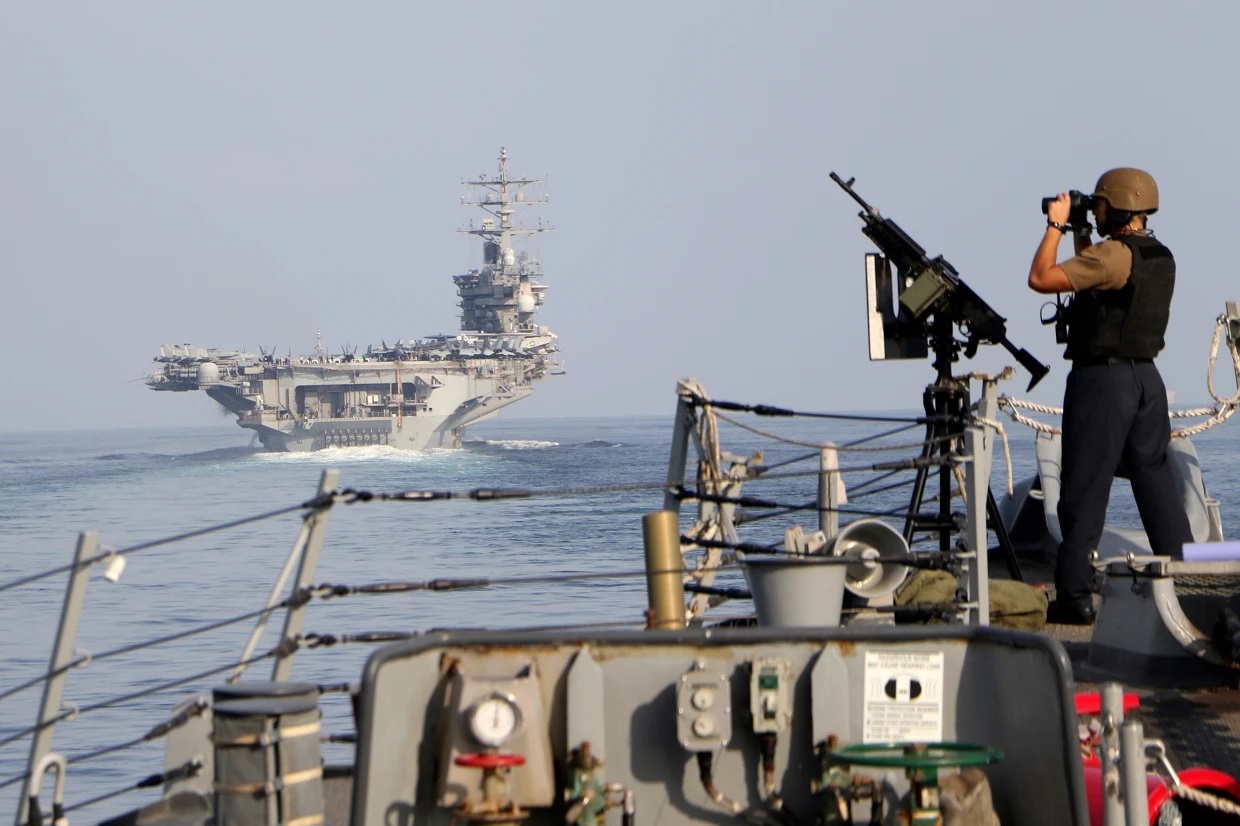
US Central Command said its naval blockade against Iran remained in force and that 12 commercial vessels attempting to reach Iranian ports had been redirected.
CENTCOM said it boarded one tanker in the Arabian Sea before allowing it to continue its voyage, while another tanker in the Gulf of Oman was disabled after allegedly attempting to breach the blockade repeatedly.
Trump warns of renewed military action
Trump said on Friday he had not decided whether to resume large-scale military operations.
He said Washington was continuing talks with Tehran but warned Iran faced a choice between reaching an agreement or facing strikes at a “much higher level”.
Iran’s army warned on Sunday that renewed US attacks would widen the conflict.
Army spokesman Mohammad Akraminia said any decision by Washington to continue air strikes alongside Israel would further expand the war geographically.
Conflict spreads across the region
The conflict continued to widen beyond Iran.
Yemen’s Iran-aligned Houthi movement said it struck Saudi Aramco facilities in Jizan and Yanbu on Saturday, a day after Saudi Arabia targeted Houthi positions.
Iran’s Revolutionary Guards said they had stopped four vessels attempting to transit the Strait of Hormuz within 24 hours, underscoring tensions over the strategic waterway.
Foreign Minister Abbas Araghchi said there was “no military solution” and offered to facilitate talks between the Houthis and Saudi Arabia.