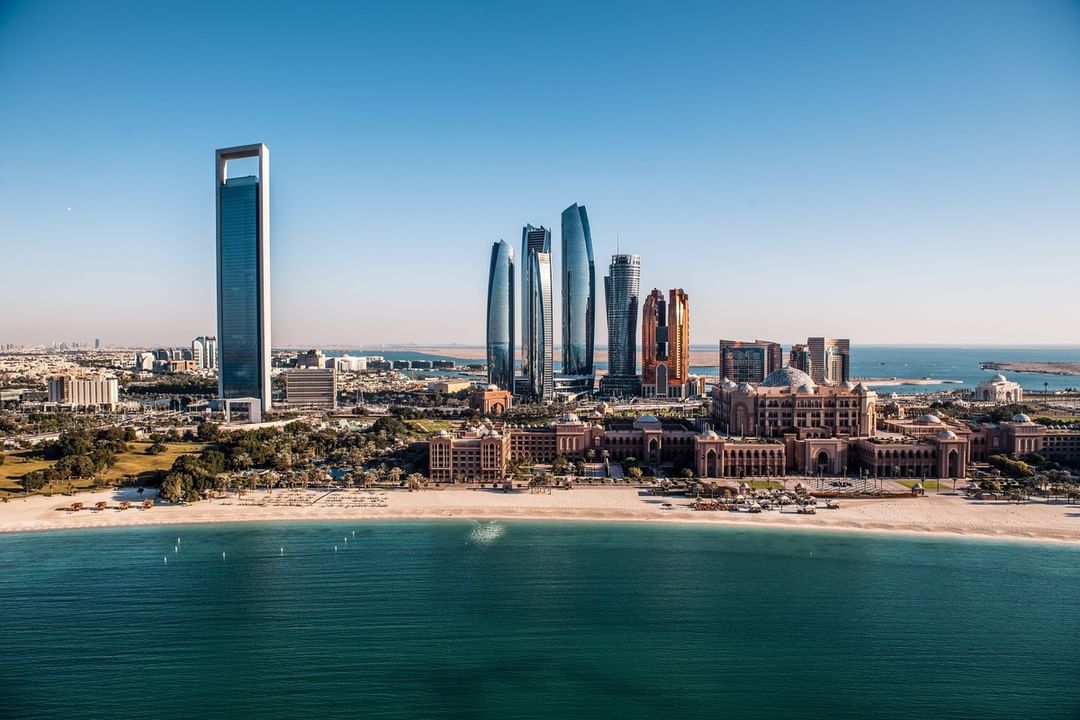

Abu Dhabi’s residential unit sales reached $19.2 billion in the first half of 2026, up from $6.9 billion in the same period a year earlier, according to the Abu Dhabi Real Estate Centre’s (ADREC) H1 2026 market report.
Off-plan transactions accounted for 89% of residential sales value and 82% of deals, while repeat sales prices increased 20% year-on-year for apartments and 12% for villas.
Ten leading developers accounted for 90% of off-plan primary sales, worth $13.9 billion, while 10 projects accounted for 43% of residential unit sales, valued at $8.2 billion. In the ready market, 61% of purchases were completed in cash.
Emirati buyers committed $5.7 billion during the first half, compared with $2.4 billion in H1 2025. Resident expatriates and non-resident foreign buyers together accounted for 70% of residential sales value.
Hudayriyat Island recorded $5.2 billion in residential sales, representing 27% of the total, followed by Saadiyat Island with $3.6 billion, Al Reem Island and Al Maryah Island, operated by the Abu Dhabi Global Market area, with $2.9 billion, and Yas Island with $2.0 billion.
The Abu Dhabi Real Estate Centre, an affiliate of the Department of Municipalities and Transport and the custodian and regulator of Abu Dhabi’s real estate sector, said the report covers registered data on supply and demand, price movements, investment activity and projected supply across the emirate.
Rental market remains active
Abu Dhabi recorded 233,000 active residential lease contracts in the first half of 2026, with total lease values reaching $2.5 billion, an 8% increase from a year earlier. Contract volumes rose 2%.
Rental units accounted for 69% of occupied units in the Abu Dhabi Region, supporting a deep rental market and homeownership opportunities with accessible housing options.
Residential supply reached approximately 409,000 units, increasing at an average annual rate of 2.9% since 2022. The Abu Dhabi Region drove the expansion with average annual growth of 3.3% and accounted for 79% of the emirate’s residential stock.
About 71,000 additional residential units are projected across Abu Dhabi by 2030, with annual deliveries expected to peak at approximately 21,800 units in 2028.
Development projects are estimated to account for 77% of Abu Dhabi Region supply growth between the second half of 2026 and 2030, with building permits accounting for the remaining 23%.
Investment zones represented more than 22% of total residential stock in H1 2026, with approximately 72,000 units. Al Reem Island led with 27,500 units, followed by Al Raha, Yas Island and Saadiyat Island.
Six districts to drive future supply
Six key districts are expected to account for 77% of projected incremental supply through 2030: Saadiyat Island, Al Reem Island, Yas Island, Zayed City, Khalifa City and Al Hudayriyat Island.
Nine major developers account for 76% of the development projects pipeline, delivering high-end and mid-market apartment and villa communities predominantly within investment zones.
Rashed Al Omaira, director general of ADREC, said the first half of 2026 reflected a resilient market supported by sustained demand, clear regulations, transparent data and a balanced approach to supply and demand.
He said transaction data from sales, tenancy contracts and mortgages allowed the centre to track market direction and respond with greater precision.
Al Omaira said the largest share of residential sales value went to homes that had not yet been built, placing greater emphasis on regulatory oversight before completion.
ADREC remained focused on clarity, confidence and fairness for market participants, supported by reliable information, protected buyer funds and rules that apply across market cycles, he added.
Retail and office markets
Retail supply reached 3.85 million square metres of gross leasable area, growing 5% on an annualised basis. Occupancy remained in the mid-nineties, while new lease prices increased 9%.
Office supply reached 3.4 million square metres, up 0.3% from the end of 2025. Occupancy remained at 95% across the overall market as well as prime and Grade A segments, while new lease prices rose 13%.
ADREC said all findings were derived from registered transaction data and followed its established methodology, including price-range validation, transaction filtering and geographic stratification.