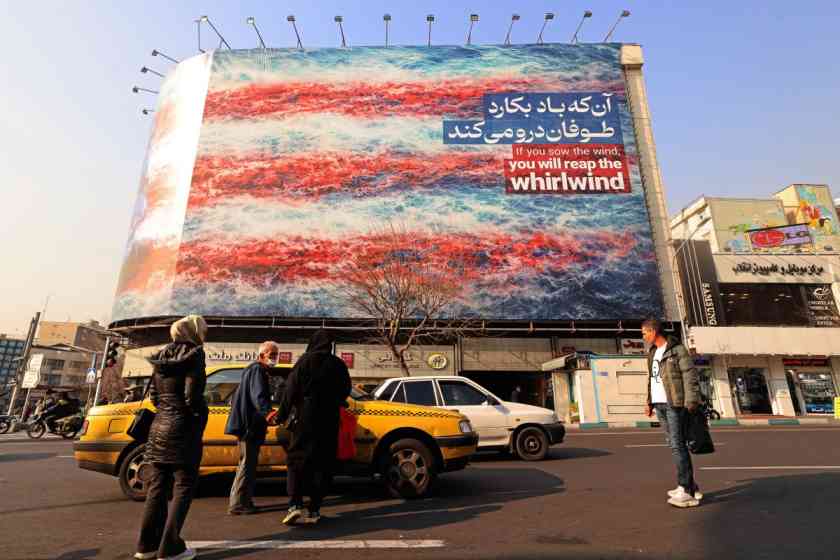

U.S. President Donald Trump warned Iran that it must reach a deal with Washington or face severe consequences, as the United States expanded its military presence in the region and tensions spread across the Gulf.
Trump said the current confrontation with Iran would end “very soon” and warned that Tehran “won’t be around very long” if it failed to act.
“Now I have to make a decision. They’ll either sign a very fair deal, or they won’t exist any longer,” Trump said.
The comments came as the United States moved additional military forces toward the Middle East, including a third aircraft carrier and a second Marine expeditionary unit.
US expands military presence
A U.S. official said three aircraft carriers and two landing groups were deploying around Iran.
The Roosevelt strike group and the Makin Island force, carrying about 2,000 Marines, left San Diego, with the full U.S. military buildup expected to be completed by November.
The Pentagon has also awarded RTX’s Raytheon a five-year, $24.4 billion contract for SM-6 interceptors, part of a broader effort to replenish munitions following conflicts in the Middle East.
The increased U.S. military presence has added pressure to already tense regional conditions, while Washington and Tehran remain at odds over Iran’s nuclear program and U.S. demands.
Oil prices rise as tensions mount
Oil prices rose as markets responded to reports of the additional U.S. military deployment and concerns about disruption to regional supplies.
Brent crude rose 29 cents to $102.60 a barrel, while West Texas Intermediate crude gained 27 cents to $93.14.
The increase followed reports that the United States was sending a third aircraft carrier and as many as 10,000 troops to the region.
Trump said the United States could ask European countries to release emergency diesel stocks, while China halted most fuel exports for October.
Saudi oil exports were recovering, and a U.S. push for Europe to release diesel reserves provided some offset to supply pressures.
Tanker hit in Strait of Hormuz
Regional tensions also affected shipping through the Strait of Hormuz.
The United Kingdom Maritime Trade Operations agency said a 2.5-million-barrel supertanker was hit by an unknown projectile while passing through the strategic waterway.
The vessel caught fire following the incident.
The Strait of Hormuz is a major route for global oil shipments, and any disruption there can raise concerns over energy supplies and shipping.
Houthi attacks add to regional tensions
Yemen’s Armed Forces said there had been 20 air attacks against Houthi positions, movements and vehicles in Taiz.
Yemeni forces also said Houthi drones had been intercepted over Aden.
The Saudi-led coalition said it intercepted and destroyed a ballistic missile targeting Khamis Mushait.
Regional governments condemned a Houthi attack on infrastructure serving Medina, including a power station serving the area around the Prophet’s Mosque.
Egypt condemned the attack as a blatant violation and expressed support for Saudi Arabia. Qatar, the Organisation of Islamic Cooperation and Türkiye also condemned the attack on civilian infrastructure and expressed support for Saudi Arabia.
The Muslim World League separately condemned the strike on the Medina power station serving Masjid an-Nabawi.
Washington and Tehran remain divided over nuclear program
The confrontation also remained centered on Iran’s nuclear activities.
U.S. Ambassador to the United Nations Mike Waltz accused Iran of enriching uranium to 60% and said there was no credible civilian purpose for that level of enrichment.
He also said Iran had denied the International Atomic Energy Agency access.
Iran rejected U.S. demands and said its nuclear program was peaceful and consistent with its rights under the Nuclear Non-Proliferation Treaty.
A senior adviser to Iran’s Islamic Revolutionary Guard Corps said U.S. power in the region was waning.
Trump separately said Iran must act “proper and smart” or “won’t be around very long,” while saying the current confrontation would end “very soon.”
The developments came as the United States and Iran remained at odds over how to end the confrontation, with Washington maintaining pressure on Tehran and Iran rejecting U.S. demands.