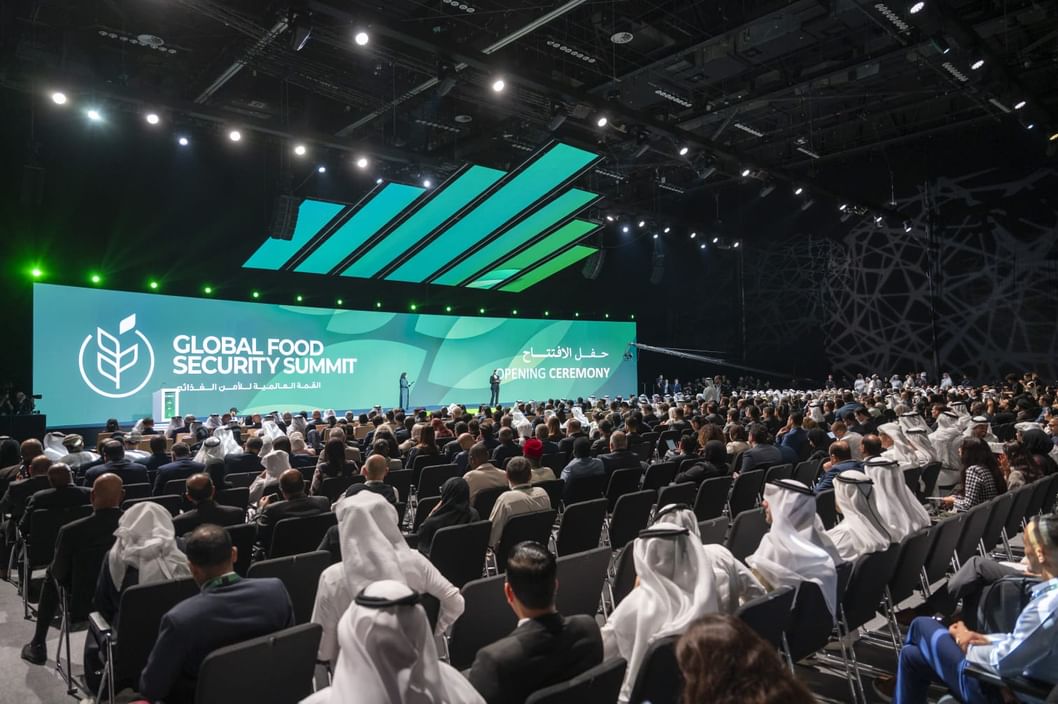

The UAE and Tanzania have launched a food-security initiative designed to connect agricultural production with processing, storage, logistics and markets, seeking to build a more resilient supply chain between the two countries.
The Tanzania-UAE Green Silk Road Initiative was announced at the Global Food Security Summit in Abu Dhabi as a strategic partnership between Abu Dhabi National Investment and Development (ADID), the Tanzania Mercantile Exchange (TMX) and Tanzanian partners.
The initiative aims to create a sustainable food security and economic corridor connecting Tanzania and the UAE while integrating the stages of the food value chain, from production and processing to storage, transportation, trade and market access.
Shamsa Al Fahim, CEO of ADID, said food security was no longer simply a question of securing supplies but of creating systems capable of producing, processing, storing and moving food efficiently.
The Green Silk Road, she said, is designed as an integrated value chain connecting agriculture, technology, investment and markets.
The initiative comes as governments and investors face growing pressure to strengthen food systems against disruptions affecting production, distribution and affordability.
Tanzania targets Gulf food markets
Godfrey Malekano, CEO of TMX, said Tanzania wanted to become a future food basket for the Gulf region, highlighting its agricultural resources, production capacity and investment opportunities.
He said Tanzania was seeking partnerships rather than aid, with the focus on developing agriculture, value-added processing and sustainable economic growth.
The initiative therefore places investment and commercial cooperation alongside food security, creating a framework through which agricultural production can be connected to demand in Gulf markets.
The summit’s discussions similarly focused on the need to bring together governments, financial institutions, investors and private-sector companies to strengthen food systems.
Investment and technology take centre stage
The two-day summit, held under the theme “Global Collaboration for Food Security for All”, is examining policies, partnerships and investments aimed at addressing food-security challenges.
Dr AbdulHakim Elwaer, Assistant Director-General and Regional Representative for the Near East and North Africa at the Food and Agriculture Organization of the United Nations, called for greater use of water-efficient farming, stronger local food production systems and better cold-chain infrastructure.
He also highlighted the need to reduce food loss and waste through technology and innovation while increasing public and private investment.
Other discussions examined food affordability and access, agricultural finance and the role of blended capital in bringing investment into farming.
Diane Menville, Associate Vice President Finance and Chief Financial Officer at the International Fund for Agricultural Development, said smallholder farmers receive only 0.8% of climate finance and argued that blended finance could reduce risk and unlock private capital.
The summit also examined the use of artificial intelligence and precision technologies in agriculture, processing and logistics, with a fireside discussion focusing on India’s agricultural sector.
The UAE initiative with Tanzania adds a cross-border investment model to those discussions, linking agricultural production with infrastructure, finance, technology and market access.
The summit has attracted participants from more than 70 countries, including more than 20 ministers and senior government officials, over 80 speakers and 350 registered CEOs.