


US President Donald Trump has reiterated that the war with Iran will end “very soon”, claiming Washington has “total control” of the Strait of Hormuz even as attacks on shipping intensify.
Speaking at a rally in Bullhead City, Arizona, Trump said Iran had lost its navy, air force, radar systems and air defences. He also claimed that successive levels of Iranian leadership had been eliminated during the conflict.
Trump said the war had pushed up fuel prices but predicted they would fall soon after the fighting ended.
Iranian parliament speaker Mohammad Bagher Ghalibaf, meanwhile, warned that Tehran must remain prepared for war despite ongoing negotiations with Washington. He said Iran’s principal concern was preventing another US attack and argued that any agreement would not guarantee American compliance.
“They break their promises,” Ghalibaf said, calling on Iranians to prepare to fight what he described as a bullying enemy. He said Iran needed to establish sustainable deterrence and make Washington accept the country’s demands.
Israeli Prime Minister Benjamin Netanyahu said overthrowing Iran’s government remained essential for Israel’s security, although he considered it unlikely before Israel’s October 27 election. He claimed Israeli military operations had weakened Iran and prevented it from acquiring nuclear weapons.
Hormuz attacks threaten shipping and energy supplies
The conflict’s impact on energy markets and maritime security continues to deepen as Iran steps up attacks on vessels passing through the Strait of Hormuz.
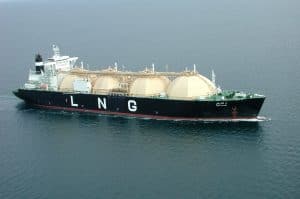
Two vessels sank near the strait within 24 hours after being hit by projectiles in separate incidents, maritime officials said on Wednesday, according to Reuters. Iran has said it is deploying new tactics against ships in response to the US blockade of its ports and tougher sanctions.
Oil prices fell by more than $1 a barrel in early trading on Thursday as investors weighed supply risks against efforts by Washington to reduce shipping costs. Brent crude fell to $104.67 a barrel, while US West Texas Intermediate dropped to $94.07.
The market retreat followed a rise in prices in the previous session after Houthi attacks on Saudi targets and reports of Iran’s intensified maritime operations.
French President Emmanuel Macron is due to visit Kuwait, the UAE, Bahrain and Qatar from October 19 to 21, with discussions expected to include the Strait of Hormuz and its impact on energy prices.
China increases purchases of Saudi crude
Chinese refiners are buying more Middle Eastern crude as falling inventories and recovering refinery activity increase demand for near-term supplies, according to analytics firm Kpler.
Chinese buyers have secured at least 80 million barrels of Saudi crude since mid-September, Kpler said. China’s onshore crude inventories fell by about 1.6 million barrels per day in September, the fastest rate on record.
Refinery throughput is projected to reach 14.2 million barrels per day by December, increasing the need to replenish stocks. Chinese refiners also need to replace roughly 1 million barrels per day of Iranian supply amid the continuing US blockade, Kpler said.
The increased demand could limit further weakness in Dubai crude prices, although regional tensions continue to threaten supply flows.
Separately, the US military said it destroyed an Iranian-affiliated dhow in the Gulf of Oman on October 6, alleging that the vessel had been conducting surveillance and targeting US Navy ships. US Central Command said the crew had been removed safely before the vessel was destroyed.
Houthi attacks widen the regional fallout
Saudi Arabia’s air defences intercepted and destroyed an incoming drone over the kingdom’s Eastern Province, coalition spokesman Major General Turki al-Maliki said, as the Houthis claimed attacks on Saudi targets.
The group said it had targeted King Khalid International Airport in Riyadh with a ballistic missile. It also claimed to have struck a Saudi Eurofighter Typhoon aircraft over Yemen’s Saada governorate. Saudi authorities and independent sources had not confirmed the aircraft claim.
The US embassy in Saudi Arabia warned American government employees that special authorisation was required to use airports in the kingdom following recent Houthi missile and drone attacks. It urged US citizens to exercise extreme caution and monitor flight updates.
The escalation comes as fighting intensifies in Yemen. The Yemeni army said more than 200 Houthi fighters had been killed or wounded in clashes in Taiz province, while the European Union called on the group to lift its siege of the city to allow humanitarian aid to enter.
Yemen’s government also urged the UN Security Council to take urgent action, warning that the fighting and siege threatened more than four million people.
Gaza ceasefire faces fresh challenges
Israeli strikes killed four people in Gaza on Wednesday, Palestinian officials said, days after the anniversary of the declaration of a US-mediated ceasefire.
Two young men were killed when Israeli forces struck a vehicle near Khan Younis, while two other people, including a woman, died in a strike on an apartment building in Gaza City, according to local civil defence officials and hospitals.
Separately, the Guardian reported that Israel had not permitted construction to begin on a proposed military outpost in Gaza for an international stabilisation force under US President Donald Trump’s Board of Peace plan. The project was intended to accommodate 150 international troops, but contractors and trucks had not been allowed to enter Gaza to begin work.
The reported delay raises further questions about the implementation of the wider plan, which was established following the October 2025 ceasefire.