


US President Trump has warned that the war against Iran will end “very soon, one way or the other”, while threatening further military action if Tehran refuses to reach an agreement with Washington, as diplomatic efforts to end the conflict entered another critical phase.
Speaking at campaign rallies in Iowa and Kansas ahead of Tuesday’s US midterm elections, Trump said Washington had largely defeated Iran but could still intensify its military campaign.
“At some point, we’re going to have to give them the hammer,” Trump told Republican supporters in Iowa, adding that the United States was trying to avoid further casualties.
At another rally in Kansas, Trump said Washington could “close them down anytime we want”, suggesting the conflict was approaching its conclusion.
“We’re trying to be nice,” he said. “It’s going to be very close. We’re just going to close them down. That’s going to be the end of it.”
Trump also acknowledged that Washington might have gone too far in killing Iranian leaders, saying there was now “nobody to talk to”.
The remarks came as Iranian and Qatari officials continued diplomatic discussions in Doha, seeking an agreement that could reopen the Strait of Hormuz and establish a framework for ending the US-Israeli war on Iran.
The negotiations are taking place against growing concerns that Washington could resume military operations after Tuesday’s midterm elections, particularly following reports that Israeli Prime Minister Benjamin Netanyahu pressed Trump to restart strikes during a telephone conversation on Saturday.
Iran’s Supreme Leader Mojtaba Khamenei has meanwhile ordered the military to respond immediately to any new attack, without geographical limitations.
Doha negotiations focus on reopening Hormuz
Iranian Foreign Minister Abbas Araghchi said discussions with Qatari mediators had entered their third consecutive day, focusing on a proposed two-day framework for reopening the Strait of Hormuz.
Under the proposal, Washington would first have to address Tehran’s conditions before Iran agrees to reopen the strategic waterway and begin negotiations towards a comprehensive agreement.
Araghchi said he hoped the United States would have “enough sense to choose diplomacy”.
Iran has demanded sanctions relief, a reduction in the US military presence in the region, reinstatement of oil waivers and the release of frozen Iranian assets, including funds held in Qatar.
Tehran has also called for formal recognition of a new shipping route through the Strait of Hormuz established by Iran and Oman, with other routes closed.
The conditions include ending the conflict across all fronts, particularly Israel’s attacks on Lebanon. Iranian security official Mohsen Rezaei has additionally demanded an end to the US naval blockade of Iranian ports and Washington’s interference in Iran’s internal affairs.
Fresh maritime attacks raise Gulf security concerns
Maritime security tensions intensified as the United Kingdom Maritime Trade Operations (UKMTO) reported that two unidentified projectiles struck a tanker travelling through the Gulf, approximately 72 nautical miles east of Saudi Arabia’s coastal city of Khafji.
The incident occurred at 23:47 GMT on Sunday. All crew members were accounted for, with no environmental impact reported.
Separately, Iran’s Islamic Revolutionary Guard Corps (IRGC) said two crude oil tankers had caught fire after hitting mines in the Strait of Hormuz.
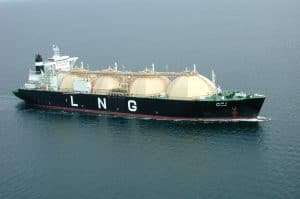
The developments followed Friday’s attack on a Qatari liquefied natural gas carrier, which prompted condemnation from Gulf countries.
Oil markets nevertheless registered some relief from continuing diplomatic efforts. Brent crude futures fell 1.33 percent to $111.92 a barrel, while US West Texas Intermediate declined 1.71 percent to $102.34 in early Asian trading.
Qatar’s benchmark stock index surged 4.6 percent on Sunday, its sharpest intraday percentage gain in more than eight years, while other Gulf markets declined amid concerns about renewed military escalation.
QatarEnergy’s efforts to secure long-term LNG supplies from the United States and other producers also supported investor sentiment.
Yemen fighting spreads as Saudi-led coalition launches strikes
Violence also intensified in Yemen, where Houthi-affiliated Al Masirah TV reported that at least seven people were wounded in air attacks by the Saudi-led coalition in the Hodeidah governorate.
Four people were reportedly injured in an attack on Ras Isa port, while another three were wounded in a strike on an oil company in the Bajil district.
The Saudi-led coalition had not immediately commented on the reports.
Separately, Yemen’s internationally recognised government said its forces had repelled a Houthi attack near Taiz, while Houthi-affiliated media reported air attacks on Saada city and the Ras Isa port.
Saudi Defence Minister Prince Khalid bin Salman held separate telephone conversations with his Australian and Japanese counterparts, discussing regional security and condemning Houthi attacks against the kingdom.
Iranian lawmaker and former foreign minister Manouchehr Mottaki meanwhile warned that another war against Iran could extend into Europe, claiming Tehran’s missiles could reach European territory.
He accused Britain, Italy, Portugal and Germany of allowing the United States to use their military bases for operations against Iran.
Israeli operations intensify in Hebron and Gaza
In the occupied West Bank, Israel’s military operation in Hebron entered its 10th day, with at least 537 Palestinian families reportedly displaced from their homes.
Many residents remain trapped inside neighbourhoods and dependent on the International Committee of the Red Cross for humanitarian supplies.
Israeli forces have demolished and vandalised homes across the wider Hebron district, while dozens of people, including journalists, have been detained.
At least 15 industrial and commercial establishments have also been demolished, according to local reporting.
Abdo Idris, head of the Hebron Chamber of Commerce, said economic losses had already reached millions of dollars, with movement restrictions disrupting supply chains and affecting businesses in other cities.
Meanwhile, Israeli attacks killed at least nine Palestinians in Gaza on Sunday, including five police officers in the southern al-Mawasi area.
Economic and political pressure builds
The conflict is also emerging as a significant issue ahead of Tuesday’s US midterm elections, with rising fuel prices and the economic consequences of the war weighing on voters.
Polling suggests that substantial numbers of Democrats and Republicans believe the conflict has not justified its economic and human costs.
Former International Atomic Energy Agency chief and Nobel Peace Prize laureate Mohamed ElBaradei warned that another American strike against Iran would lead to further violence and destruction.
Separately, New York Mayor Zohran Mamdani expressed support for international dockworkers who staged a strike across 113 ports in 22 countries against war and the transportation of weapons.
The 24-hour action disrupted shipping and ferry services, with participants also demanding improved working conditions and greater protections for seafarers operating in conflict zones.