
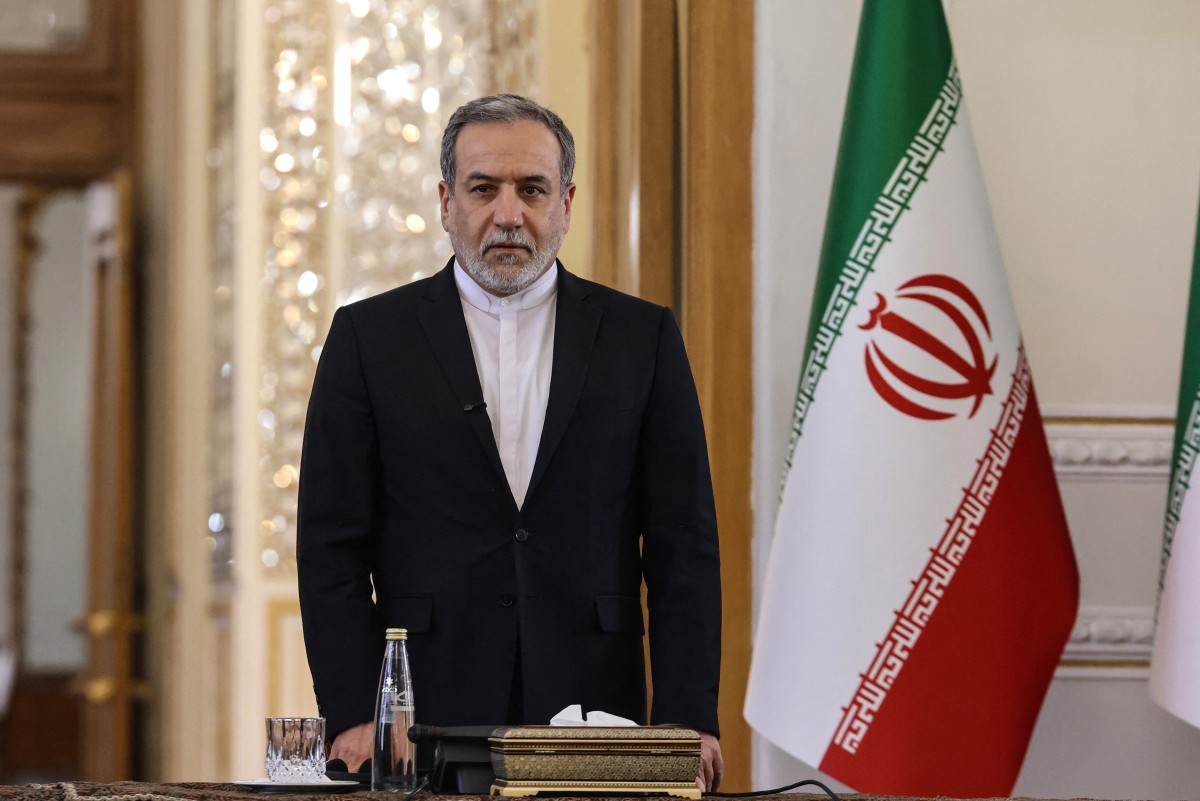

Iran has offered to shorten the time needed to reopen the Strait of Hormuz from seven days to just two, Foreign Minister Abbas Araghchi has said, signalling a possible concession as diplomatic efforts to end the war with the US gather pace.
Reporting from Tehran, Al Jazeera’s Mohammed Vall said Araghchi was seeking to demonstrate that Tehran was prepared to make concessions under its seven-point framework for negotiations and peace with Washington.
The proposed acceleration in reopening the strategic waterway would depend on a favourable US response to Iran’s conditions, Vall said, adding that Tehran was also signalling confidence in its upgraded military capabilities.
Araghchi said Iran had received favourable responses from neighbouring countries following a series of meetings over the past week involving Arab states, Turkiye and Pakistan. He indicated that the foreign ministers of those countries could visit Iran in the near future.
Tehran has argued that regional countries should take responsibility for security and shipping through the Strait of Hormuz, rather than the US or other outside powers.
The diplomatic developments come as Qatar and Pakistan continue mediation efforts, with Iranian officials indicating that discussions with Washington remain active but that Tehran is awaiting a response to its latest proposals.
Tehran awaits Washington’s response
Iran’s security chief Mohsen Rezaei said the US had indicated a willingness to accept Tehran’s seven conditions in a proposal he described as better than previous offers.
“There is a proposal from the US, a better one, in which Washington has indicated its readiness to accept our seven conditions,” Rezaei told Iranian state broadcaster IRIB.
He said the conditions differed from those contained in the Islamabad memorandum of understanding between the two countries, adding that Qatar and Pakistan were leading the mediation efforts.
Rezaei said Iran was awaiting Washington’s response following its latest discussions with mediators. He also said Tehran would seek to change US behaviour by compelling Washington to accept its conditions before discussing other issues.
One of the seven conditions, he said, involved the formal international registration of an agreement between Iran and Oman concerning the Strait of Hormuz. The arrangement would ensure what Rezaei described as clear Iranian management of shipping through the waterway.
He added that a recent meeting involving Iranian, Pakistani, Saudi and Turkish officials in Tehran had focused on regional security arrangements, arguing that Iran must be included in any regional security framework.
Rezaei also said Iran would discuss its nuclear programme only after Washington met its conditions. Tehran has yet to decide whether it would change its existing nuclear doctrine in the event of another war, he added.
Khamenei orders military readiness
The diplomatic efforts have coincided with a fresh warning from Iran’s supreme leader, Mojtaba Khamenei, who has instructed senior military commanders to prepare for potential further hostilities.
In a message released by his office, Khamenei called for an immediate and effective response to any potential enemy threat, without geographical limitations.
According to Al Jazeera’s reporting from Tehran, the supreme leader urged commanders to upgrade military capabilities, improve weapons systems and prepare a list of potential Israeli and US targets, including material and non-material facilities.
The message was also intended to reassure the Iranian public that the leadership remained in control and that the country’s armed forces were capable of defending it.
Rezaei warned that Iran would use new weapons to inflict devastating blows on any aggressor. Parliamentary security commission chairman Ebrahim Azizi separately said Tehran would deliver an immediate and harsher response to any threat, with “zero limits” on its targets.
Meanwhile, the Islamic Revolutionary Guard Corps spokesperson Mohammad Akraminia said Iran had purchased Russian Su-35 fighter jets and expected to receive them after the war. The aircraft had originally been scheduled to arrive before the conflict, and preparations and training had been completed, he said.
Washington keeps diplomatic option open
The US has continued to signal that it has not decided whether to resume large-scale military operations against Iran.
Secretary of State Marco Rubio said President Donald Trump had not made a decision on renewing an open war and that Washington remained open to a diplomatic solution.
His comments came as the US continued enforcing its naval blockade of Iranian ports. US Central Command said its forces had redirected 144 commercial vessels to ensure compliance with what it described as an “ironclad blockade against Iran”.
The George Washington aircraft carrier was supporting enforcement operations, CENTCOM said. The latest figure marked an increase from the 135 vessels the command had reported redirecting earlier in October.
Separately, an Associated Press analysis of satellite imagery and interviews with regional officials found that more than 115 drone and missile strikes claimed by Iran or Tehran-backed groups had damaged or destroyed structures at 26 US military bases and other sites in the Middle East through August.
The analysis found that Iranian attacks initially focused on aircraft hangars and early-warning systems before targeting warehouses and troop accommodation. Two regional officials told the news agency that Washington had moved many of its military assets out of the Gulf following the damage.
The developments underscore the risks facing the region as Washington weighs its next move and mediators attempt to prevent a renewed escalation.
Yemen developments
Elsewhere, forces aligned with Yemen’s internationally recognized government said they had secured strategically important positions and terrain in the northeastern governorate of al-Jawf.
The UN human rights chief, Volker Turk, meanwhile, called for an independent investigation into the death of a UN staff member who had been detained by the Houthi authorities since June 2024.
Mohammad el-Shami’s family said he had died more than a month ago but was informed only recently, without receiving an explanation of the circumstances.
Turk also called for the immediate and unconditional release of other detained UN personnel, aid workers and civil society members.