

Iran’s Islamic Revolutionary Guard Corps (IRGC) chief Ahmad Vahidi said the country’s missile development programme would continue despite threats and sanctions, as Tehran warned of retaliation against any renewed US attack and Israel reportedly stepped up preparations for possible strikes on Iran.
Israel prepares for possible attack on Iran
Israel’s security cabinet, chaired by Prime Minister Benjamin Netanyahu, has directed the military to increase its readiness for a potential attack on Iran, Israeli media reported on Wednesday evening.
Public broadcaster KAN said the directives could lead to military activities capable of triggering a wider war.
The reports emerged after opposition leader Gadi Eisenkot cautioned Netanyahu against deploying the military without a direct and immediate threat. Netanyahu is serving as caretaker prime minister after his ruling coalition lost its parliamentary majority in October’s elections.
Eisenkot was given the opportunity by President Isaac Herzog to form a new government, potentially ending Netanyahu’s tenure.
Iran vows to maintain missile programme
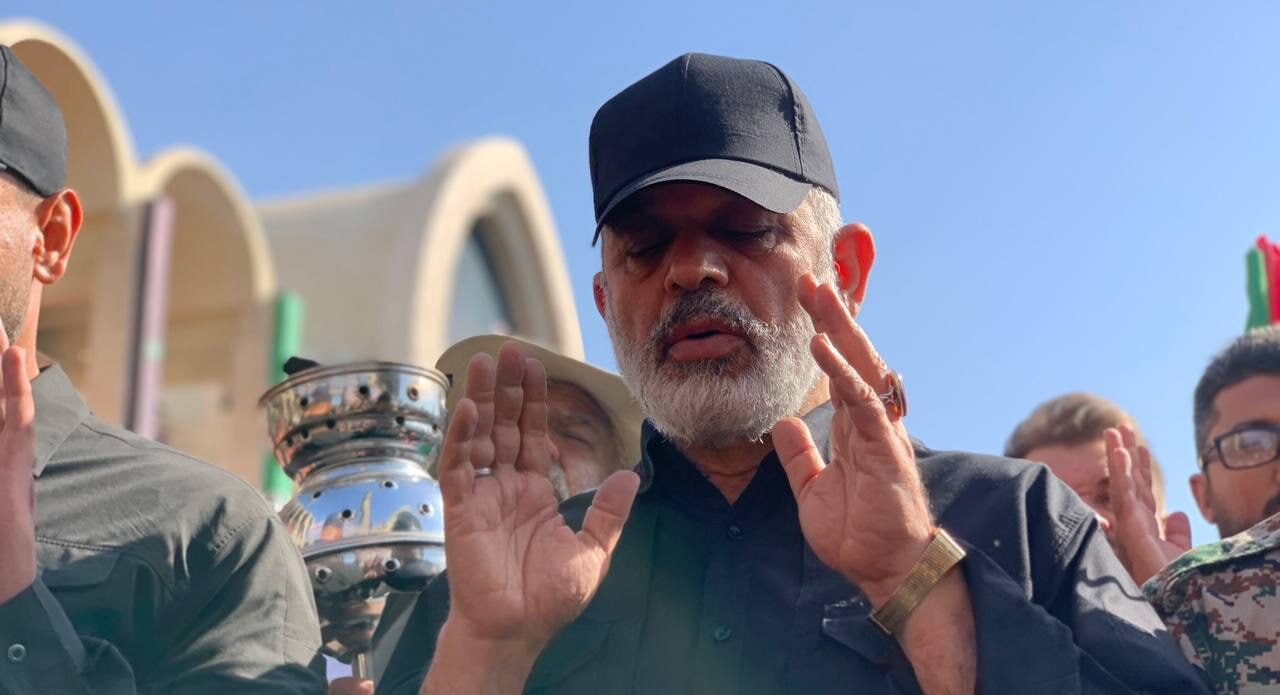
Vahidi said Iran would not abandon its missile development programme despite external pressure. In a message marking Aerospace Day, carried by the Tasnim news agency, he paid tribute to Hassan Tehrani Moghaddam, regarded as the founder of Iran’s ballistic missile programme.
“The enemy must know that the path of martyr Tehrani Moghaddam cannot be stopped by threats or sanctions. This path continues with blood and faith,” Vahidi said.
Addressing members of the IRGC Aerospace Force, he urged them to continue strengthening the country’s military capabilities and paid tribute to former commanders Amir Ali Hajizadeh and Mahmoud Bagheri.
Iran’s security chief Mohsen Rezaei has separately warned that military bases involved in any renewed US attack, including those in Europe, would be legitimate targets for Iranian strikes.
“If the US launches another war against Iran, every military base involved in the aggression, from West Asia to Europe, will be a legitimate target for Iran’s lethal strikes,” Rezaei said in a social media post.
“No safe distance. No safe haven. No immunity,” he added.
Hamas condemns Gaza air strike that kills 6
Hamas has condemned an Israeli attack on Nasser Medical Complex in Gaza that killed six people and injured at least 20 others.
“The bombing of Nasser Hospital in Khan Yunis is a war crime that exposes the occupation’s impunity and places the international community before its responsibilities,” the Palestinian group said in a statement.
“Mediators and the US administration must take action to halt the occupation’s ongoing violations and ensure its adherence to a ceasefire,” Hamas added.
An Israeli strike targeted the second floor of Nasser Medical Complex in the city of Khan Younis, one of the largest hospitals in the Gaza Strip and the only hospital still standing in the city, serving at least 500,000 people in southern Gaza.
Washington weighs diplomacy and military pressure
The developments come amid diplomatic efforts to prevent a renewed conflict and secure an agreement between Washington and Tehran.
US President Donald Trump has said he could return to military action if diplomatic efforts mediated by Qatar fail to produce a deal.
Vice President JD Vance is also considering direct talks with Rezaei, potentially in Doha, The Wall Street Journal reported, citing US and Middle Eastern officials and sources familiar with the negotiations.
The newspaper said Vance had requested a meeting in a letter sent to Rezaei in October. The Iranian official confirmed receiving the letter but declined to disclose its contents.
Meanwhile, US Secretary of State Marco Rubio has said Washington’s economic pressure campaign is proving effective enough to make further large-scale military operations unnecessary. Trump has maintained the naval blockade of Iranian ports while signalling that renewed strikes are not currently necessary.
Tehran rejects uranium proposal
Iranian parliament speaker and lead negotiator Mohammad Bagher Ghalibaf said Washington must make a decision on Tehran’s latest proposal, while reiterating that the Strait of Hormuz would never return to its pre-war status.
Iran has rejected a US proposal to transfer its stockpile of uranium enriched to 60 percent to a third country, insisting that Washington address Tehran’s demands before negotiations can progress.
Ghalibaf said Iran and Oman had reached an understanding on overseeing the strategic waterway as part of Tehran’s seven-point proposal to end the eight-month conflict.
He also cited a lack of trust in Washington as a major obstacle to reaching an agreement.
Oil prices rise amid renewed tensions
Oil prices rose on Wednesday after Iran rejected the US uranium proposal, reversing some of the previous session’s losses.
Brent crude futures settled $1.27, or 1.39 percent, higher at $92.76 a barrel, while US West Texas Intermediate crude gained 49 cents, or 0.57 percent, to $86.53.
Prices had initially fallen by more than $3 a barrel on Tuesday after US officials played down the prospect of further military strikes, before recovering as Tehran denied that negotiations with Washington were taking place.