
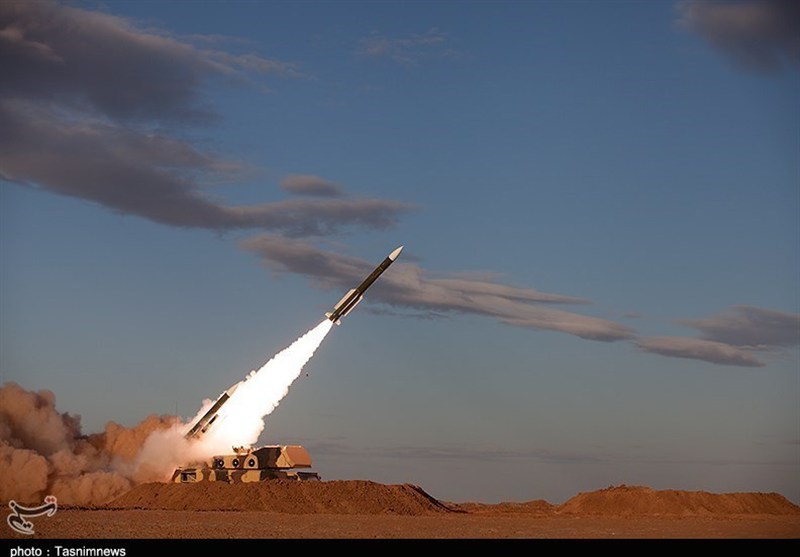

Iran’s Islamic Revolutionary Guard Corps (IRGC) said it had targeted a US early warning radar in Bahrain in retaliation for an attack on a telecommunications tower in Iran’s southern port city of Sirik, escalating regional tensions as the conflict continued to threaten Gulf security.
The IRGC said the strike was a response to Thursday’s attack on the telecommunications facility in Sirik, in Hormozgan province, which Iranian official sources described as having been hit by “enemy fire”.
According to the semi-official Tasnim news agency, the IRGC warned that further attacks and violations in the Strait of Hormuz could prompt an unrestricted military response.
The IRGC Aerospace Force said it remained ready to engage if what it described as aerial provocations and oil smuggling in the strategic waterway continued.
Trump says Gulf allies urged restraint
US President Donald Trump said Saudi Arabia, Qatar and other Gulf countries had asked Washington to hold off on further large-scale attacks against Iran, despite his earlier warning that additional military action remained an option.
In an interview with Stephen A Smith at the White House, Trump said he could end the war immediately but was maintaining economic and military pressure at the request of regional allies.
He said Saudi Arabia had asked him to maintain the current approach, while Qatar, Kuwait, the United Arab Emirates and Bahrain also preferred a pause in further strikes.
“I’m not sure I agree with it,” Trump said.
Asked whether he would have launched additional attacks without those requests, Trump replied: “Yes, I would.”
Trump also claimed the United States could destroy Iran’s energy infrastructure, bridges and manufacturing facilities within three days.
“In one day their energy is gone. In one day their bridges are gone. And in one day their manufacturing capability is gone. It would only take me three days,” he said.
The US president acknowledged that rising gasoline prices caused by the war had contributed to the Republicans’ defeat in the midterm elections, while defending his decision to attack Iran.
Houthi attacks disrupt regional aviation
Meanwhile, Houthi missile and drone attacks continued to disrupt aviation in Saudi Arabia, prompting several international airlines to extend flight suspensions.
Indian carrier Akasa Air suspended all flights to and from Riyadh and Jeddah until November 30. IndiGo extended its Riyadh and Dammam suspensions to the same date, while services to Jeddah and Medina remain canceled until November 21.
Air India and Air India Express suspended services to Riyadh, Jeddah and Dammam until November 14.
European carriers also extended restrictions. KLM canceled flights to Riyadh and Dammam until November 27, while British Airways postponed the resumption of its London-Riyadh route until January 11, 2027.
Etihad Airways suspended flights to Riyadh and Dammam until November 19, while Oman’s SalamAir extended cancellations to November 30.
The disruptions followed repeated Houthi attacks targeting Saudi airports, energy facilities and other infrastructure, including King Khalid International Airport in Riyadh.
UN renews Yemen sanctions
The United Nations Security Council unanimously renewed financial and travel sanctions related to Yemen, while Britain called for tighter restrictions on components used by the Houthis to manufacture weapons.
British Ambassador Sarah MacIntosh said the resolution strengthened enforcement of the existing arms embargo and addressed the group’s reliance on dual-use components and precursor chemicals.
Britain would work with Security Council members to establish a list of dual-use items subject to additional restrictions, she said.
MacIntosh also warned that Yemen’s humanitarian crisis was worsening, with more than 22.3 million people requiring assistance and protection. Recent fighting had displaced more than 330,000 people.
The council also called for the immediate and unconditional release of UN, humanitarian, civil society and diplomatic personnel detained by the Houthis. The UN said more than 70 of its personnel were being held by the group in October.
Separately, Yemen’s internationally recognized government welcomed the renewed sanctions but criticized the Security Council for not designating the Houthis as a terrorist organization.
Presidential Leadership Council chair Rashad al-Alimi told China’s Middle East envoy Zhai Jun that the Houthis had exploited de-escalation efforts.
“There can be no peace with a group that claims a divine right to rule and challenges the state’s exclusive authority,” a statement cited by Yemen’s government said.
Gaza hospital strike draws condemnation
In Gaza, an Israeli air strike on Nasser Medical Complex in Khan Younis killed at least six people, including surgeon Rizq Abu Shuaira, according to the latest hospital-related update.
A British volunteer surgeon documented the aftermath inside the hospital, showing damage and destruction following the attack.
Hospital staff and Palestinians were seen inspecting damaged areas, salvaging medical equipment and moving beds from affected sections of the facility.
The attack added to concerns over the safety of medical facilities and personnel in the besieged Palestinian territory.
UNIFIL’s future in Lebanon uncertain
Separately, US Ambassador to the United Nations Mike Waltz is expected to visit Lebanon next week as the future of the UN Interim Force in Lebanon (UNIFIL) comes under scrutiny.
Waltz recently described UNIFIL as a “human shield for terrorists” and said his mission would be to dismantle the existing peacekeeping arrangement and change the mission.
US Secretary of State Marco Rubio said Washington was considering a civilian mission as a possible replacement.
UNIFIL’s mandate is due to expire on December 31, 2026, unless extended by the United Nations.