


Libya’s only operational oil refinery was “severely” damaged after gunmen battled for three hours around the complex, the National Oil Corporation said.
“The Zawiya Oil Complex was severely damaged as a result of skirmishes by armed groups,” Libya’s state oil company NOC said late Tuesday.
“Those involved held no regard for the lives of workers at the site.”
Fighting raged overnight Monday to Tuesday, some 50 kilometers (30 miles) west of the capital Tripoli.
Eight oil storage tanks and five other tanks for oil and chemical products were damaged and were leaking while the electrical transformer of the power supply system was also knocked out, it said.
Libya’s vast oil sector, the backbone of its economy, has suffered regular halts in production over the decade since a NATO-backed revolt toppled Moamer Kadhafi and sparked the country’s violent disintegration.
“The infrastructure of the oil sector represents the lifeblood of the Libyan state,” NOC chief Mustafa Sanalla said.
“Vandalising these facilities, destroying them, or exposing their workers to danger, is a crime that cannot be tolerated.”
Images posted on social media showed gunmen exchanging heavy fire around the refinery, but neither the identity of the groups nor the cause of the clashes is known.
NOC did not give details about the combatants.
Libya was gripped by violence and political turmoil in the aftermath of the 2001 uprising against Kadhafi.
In recent years, the country has been split between two rival administrations backed by foreign powers and myriad militias.
The “oil crescent” lies in one of the most hotly fought over areas, halfway between Tripoli and Benghazi in the northeast, under the grip of forces of strongman Khalifa Haftar.
But following a ceasefire between eastern and western forces last year, NOC reopened all the country’s oil installations and production bounced back.
Today it produces about 1.2 million barrels per day, ten times more than in late 2020, but still short of the country’s pre-revolution output of 1.5-16 million barrels.
Libya fighting damages only working oil refinery
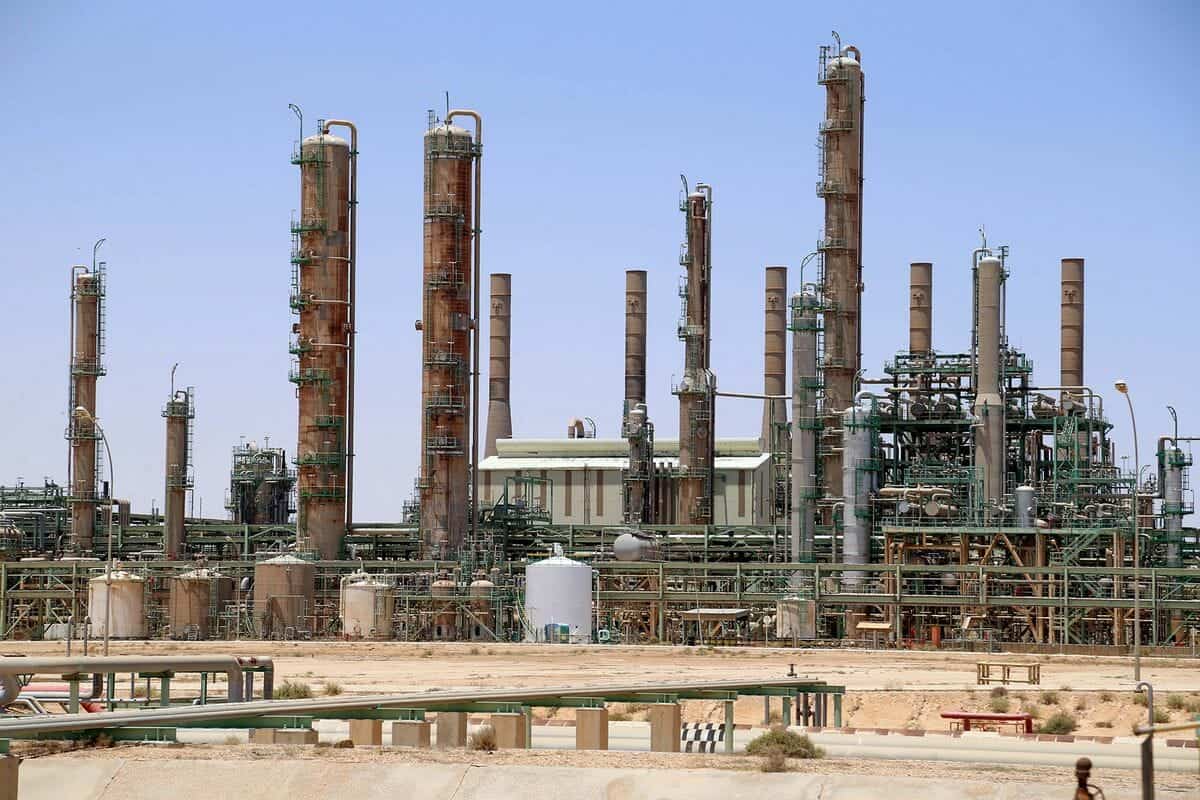
- Libya's vast oil sector, the backbone of its economy, has suffered regular halts in production since the revolution that toppled Moamer Kadhafi.
- The country produces about 1.2 million barrels per day, still short of the country's pre-revolution output of 1.5-16 million barrels.
Today's Headlines
By signing up you agree to our Terms of Use and Privacy Policy

ABU DHABI, UAE – The Environment Agency – Abu Dhabi (EAD) has issued a policy on sustaining marine water quality that reviews the current situation and main challenges related to…

GCC-listed companies' net profit dropped to US$ 57.9 billion in Q2-2023. While retail, capital goods, and utilities sectors faced profit declines, the banking sector thrived.

Rising security concerns, confrontational geopolitics, and chaotic global changes have fueled the demand for private military companies, the new reality of modern warfare.


WTTC research shows that, having endured estimated losses of $4.5 trillion and 62 million jobs in 2020 alone, travel and tourism has recovered and is set to reach new heights.…