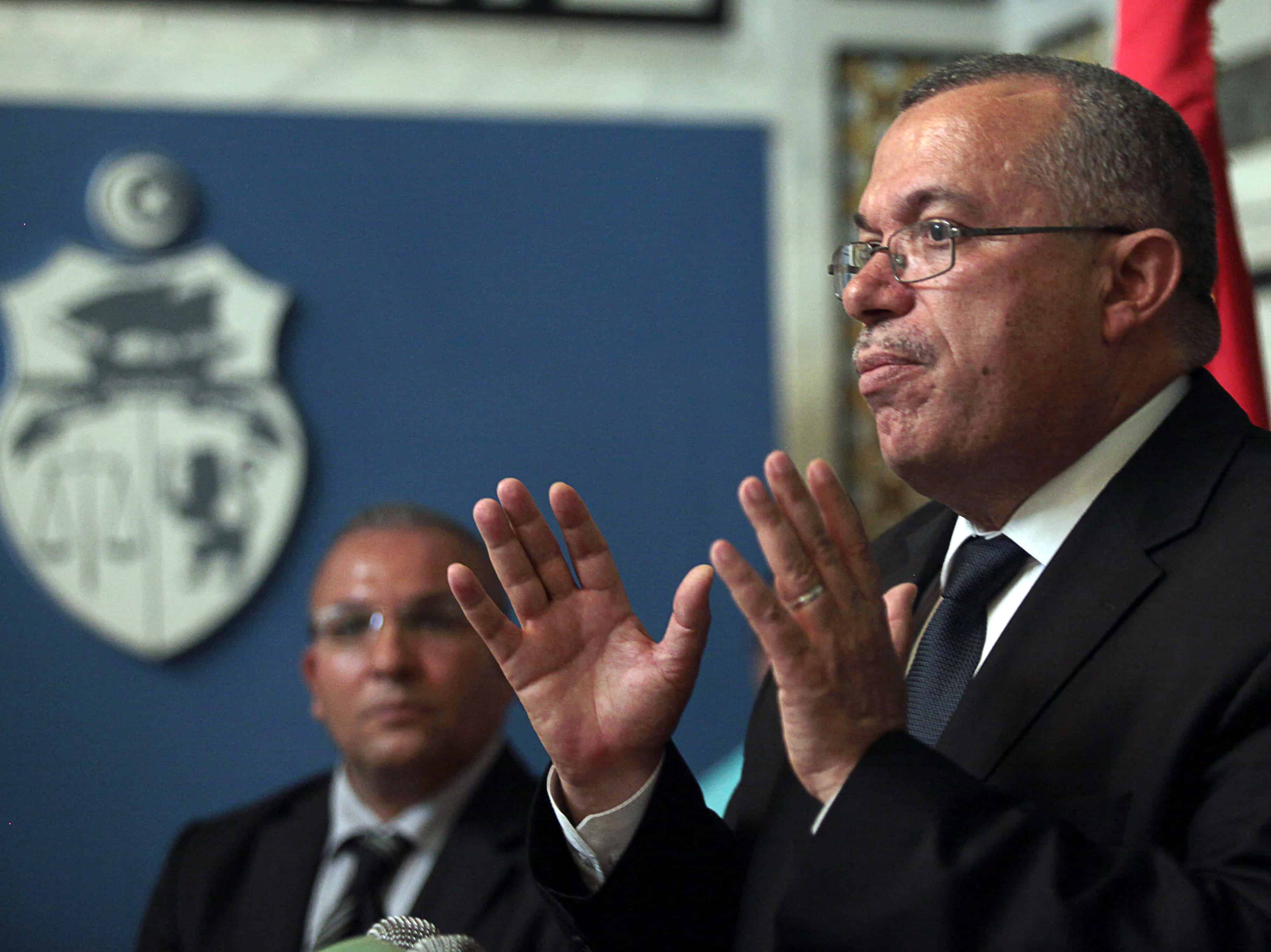

Tunisian former justice minister Noureddine Bhiri, who has been refusing food or medication since his arrest last week, is fighting for his life, a support group said on Wednesday.
Bhiri, who was arrested by plainclothes officers on Friday and later accused of possible “terrorism” offences, suffers from several pre-existing health conditions.
The Islamist-inspired Ennahdha party, of which he is deputy chairman, played a central role in Tunisian politics until a power grab by President Kais Saied last year.
“At the moment, medical sources say he is between life and death,” Ennahdha ex-lawmaker Samir Dilou told reporters, adding that his wife and children were on standby.
“Those who ordered his kidnapping must assume their responsibilities,” he added, referring to Saied and his interior minister, Taoufik Charfeddine, who ordered Bhiri’s arrest.
Another member of Bhiri’s support committee, Abderrazek Kilani, said the former minister was suffering from kidney problems, as well as a longstanding heart condition, diabetes and hypertension, but was still refusing food or medicines.
A previous alarm sounded by Ennahdha about Bhiri’s health was discounted by Tunisia’s independent national body for the prevention of torture (INPT) after it visited him late on Sunday.
But the INPT could not confirm the validity of the latest concerns. Three of its doctors were due to see him later Wednesday, the INPT’s Lotfi Ezzedine told AFP.
Saied on July 25 sacked the Ennahdha-supported government and suspended parliament, presenting himself as the ultimate interpreter of the constitution.
He later took steps to rule by decree, and in early December vowed to press on with reforms to the political system.
Tunisia was the only democracy to emerge from the Arab Spring revolts of a decade ago, but civil society groups and Saied’s opponents have expressed fear of a slide back to authoritarianism after the 2011 revolution that toppled longtime dictator Zine El Abidine Ben Ali.
Human Rights Watch warned late last month that Tunisian authorities were using “repressive” dictatorship-era laws to snuff out criticism of the president.