
Libya’s western-based upper house on Saturday defended a decision by lawmakers in the country’s east to designate a new prime minister as institutional chaos reigns.
The High Council of State (HCS) a Tripoli-based body that is equivalent to a senate usually rivals the House of Representatives (HoR), based in the eastern city of Tobruk.
The HoR this week “unanimously approved” former interior minister Fathi Bashagha to head the government, a move that left Libyans with two prime ministers and threatened to spark a new power struggle in the war-torn nation.
But HCS head Khaled el-Mechri on Saturday appeared to transcend the country’s usual east-west divide and distance himself from the Tripoli executive .
He said a text accompanying last year’s confidence vote in the government of interim prime minister Abdulhamid Dbeibah “stipulated that its mandate would end at the latest on December 24, 2021”.
Bashagha’s designation Thursday replacing Dbeibah flowed from that text following a rare “consensus between parliament and the HCS”, Mechri added.
An influential figure in western Libya, Mechri accused Dbeibah’s government of “fueling a campaign against the parliament and the HCS”.
Dbeibah’s administration had a mandate to lead the country to elections on December 24, but the polls were cancelled amid bitter divisions over their legal basis and the candidacies of several controversial figures.
Dbeibah, a construction tycoon appointed a year ago as part of United Nations-led peace efforts, has vowed he would “accept no new transitional phase or parallel authority” and would only hand over power to an elected government.
Bashagha and Dbeibah, both from Libya’s third city Misrata and both candidates for the aborted presidential poll, have the support of rival armed groups in the west.
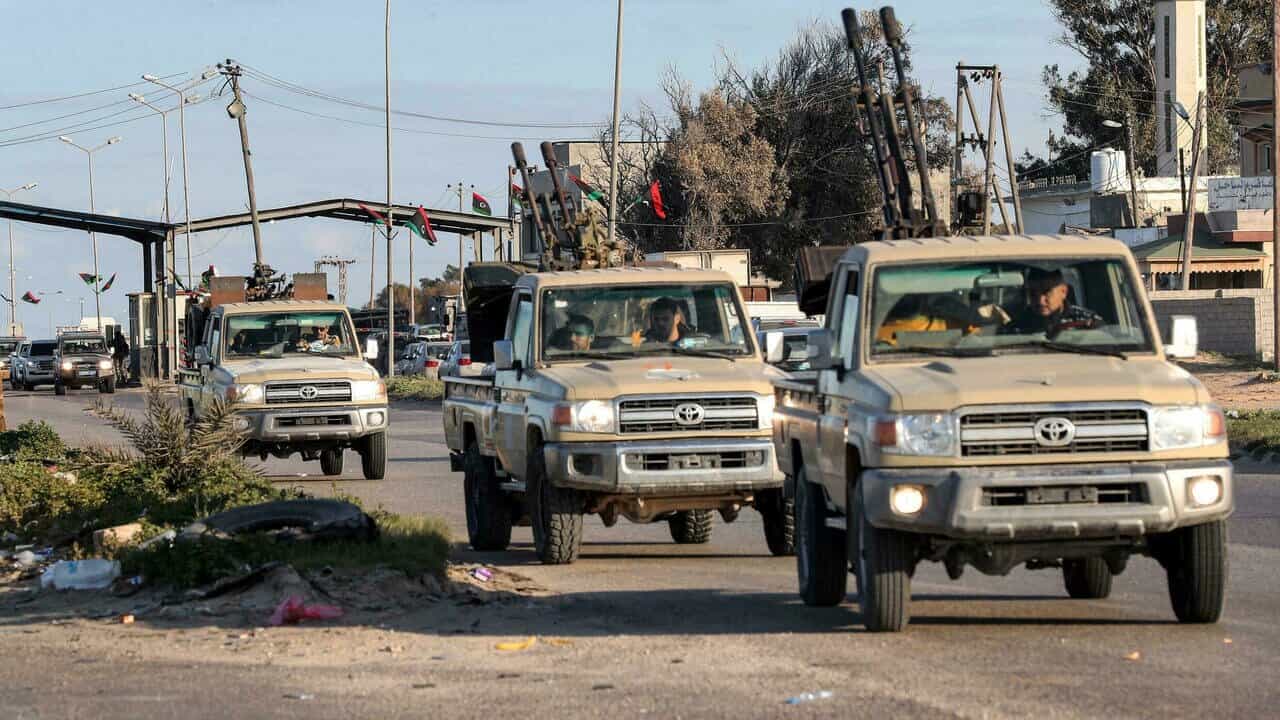
Armed groups converged on Tripoli from Misrata on Saturday to support Dbeibah, an AFP journalist reported, raising fresh fears of armed conflict.
Libya has seen a decade of turmoil since a NATO-backed revolt toppled dictator Moamer Kadhafi in 2011, leaving a patchwork of militias vying for control over an oil-rich country riven by regional divisions.
Experts have warned that Thursday’s vote threatens a repeat of a 2014 schism which saw two parallel governments emerge.