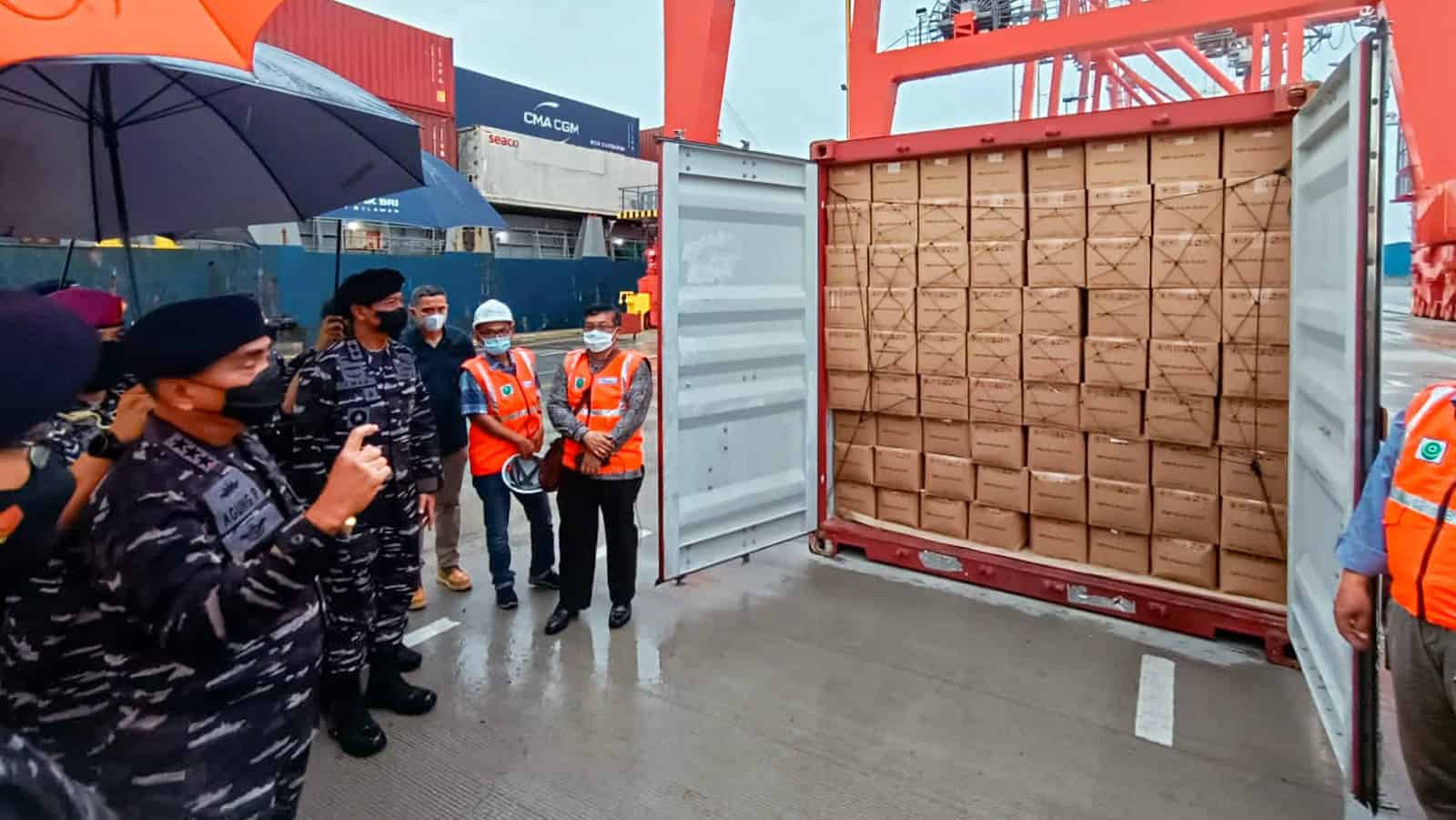

The Indonesian Navy has seized a tanker that was carrying palm oil out of the country in violation of an export ban, a spokesman said Saturday.
Indonesia, the world’s largest producer of palm oil, prohibited its export last week to rein in skyrocketing domestic prices and shortages.
An Indonesian warship intercepted the Singapore-flagged MV Mathu Bhum on Wednesday as it headed for Malaysia, Navy spokesman Agung Prasetiawan said in a press release.
“The ship was carrying… 34 containers containing refined, bleached, deodorized (RBD) palm olein. This is the type of material that is temporarily prohibited for exports,” he added.
Indonesia produces about 60 percent of the world’s palm oil, which is used in a range of products such as cosmetics and chocolate spreads. A third of its output is consumed domestically.
Vegetable oils are among the staple food items that have seen prices hit record highs in recent weeks following Russia’s invasion of agricultural powerhouse Ukraine, according to the United Nations Food and Agriculture Organization.
Producers in Indonesia have been reluctant to sell at home recently because exporting is more profitable currently because of high international prices.
But authorities in the archipelago stepped in to try and control prices, fearing public anger as consumers in several cities were forced to queue for hours at distribution centers to buy cooking oil at subsidized rates.
The Indonesian export ban sent prices of palm, soybean, European rapeseed and canola oils to historic highs.
It plans to resume exports when the local bulk price of cooking oil falls to 14,000 rupiah (97 cents), having soared in recent weeks to 26,000 rupiah.
The price had dropped to 17,200 rupiah by Friday.