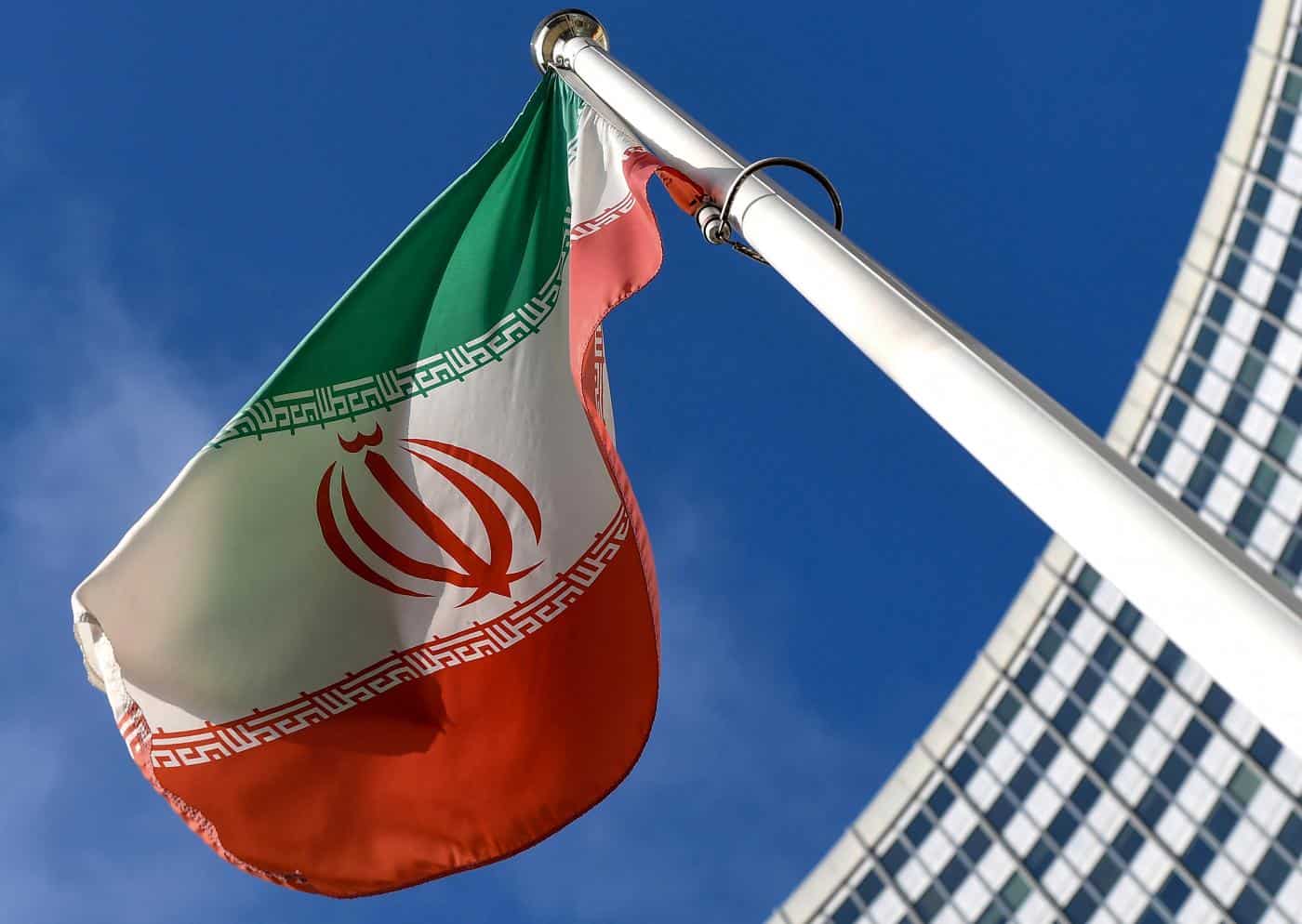

Iran said Tuesday a report by the UN nuclear watchdog on undeclared nuclear material found at three sites was “not fair”.
“Unfortunately, this report does not reflect the reality of the negotiations between Iran and the IAEA,” foreign ministry spokesman Saeed Khatibzadeh told reporters, referring to the Monday report by the International Atomic Energy Agency.
“It’s not a fair and balanced report,” he said, adding: “We expect this path to be corrected.”
The latest report came as talks to revive a landmark 2015 nuclear deal between Iran and major powers remain deadlocked after stalling in March.
In it, the IAEA said it still had questions which were “not clarified” regarding undeclared nuclear material previously found at three sites — Marivan, Varamin and Turquzabad.
It said its long-running efforts to get Iranian officials to explain the presence of nuclear material had failed to provide the answers it south.
Iran saw an Israeli hand in the IAEA’s findings. “It is feared that the pressure exerted by the Zionist regime and some other actors has caused the normal path of agency reports to change from technical to political,” Khatibzadeh said.
Earlier, Iran’s representative to the IAEA, Mohammad Reza Ghaebi, said the report “does not reflect Iran’s extensive cooperation with the agency”.
“Iran considers this approach unconstructive and destructive to the current close relations and cooperation between the country and the IAEA,” he said, adding: “The agency should be aware of the destructive consequences of publishing such one-sided reports.”
In a separate report published on Monday, the IAEA estimated that Iran’s stockpile of enriched uranium had grown to more than 18 times the limit agreed in a troubled 2015 deal between Tehran and major powers.
It “estimated that, as of May 15, 2022, Iran’s total enriched stockpile was 3,809.3 kilograms.”
The limit in the 2015 deal was set at 300 kg (660 pounds) of a specific compound, the equivalent of 202.8 kg of uranium.
The twin reports came as talks to revive the 2015 nuclear deal formally known as the Joint Comprehensive Plan of Action remain deadlocked after stalling in March.
The agreement gave Iran relief from crippling economic sanctions in exchange for curbs on its nuclear activities designed to prevent it from developing an atomic bomb — an ambition it has always denied.
But the pact was left on life support when then US president Donald Trump pulled out unilaterally in 2018 and reimposed biting sanctions on Tehran, prompting Iran to begin rolling back on its own commitments.
One of the main sticking points is Tehran’s demand — rejected by Washington — that the Islamic Revolutionary Guard Corps, the ideological arm of Iran’s military, be removed from a US terrorism blacklist.