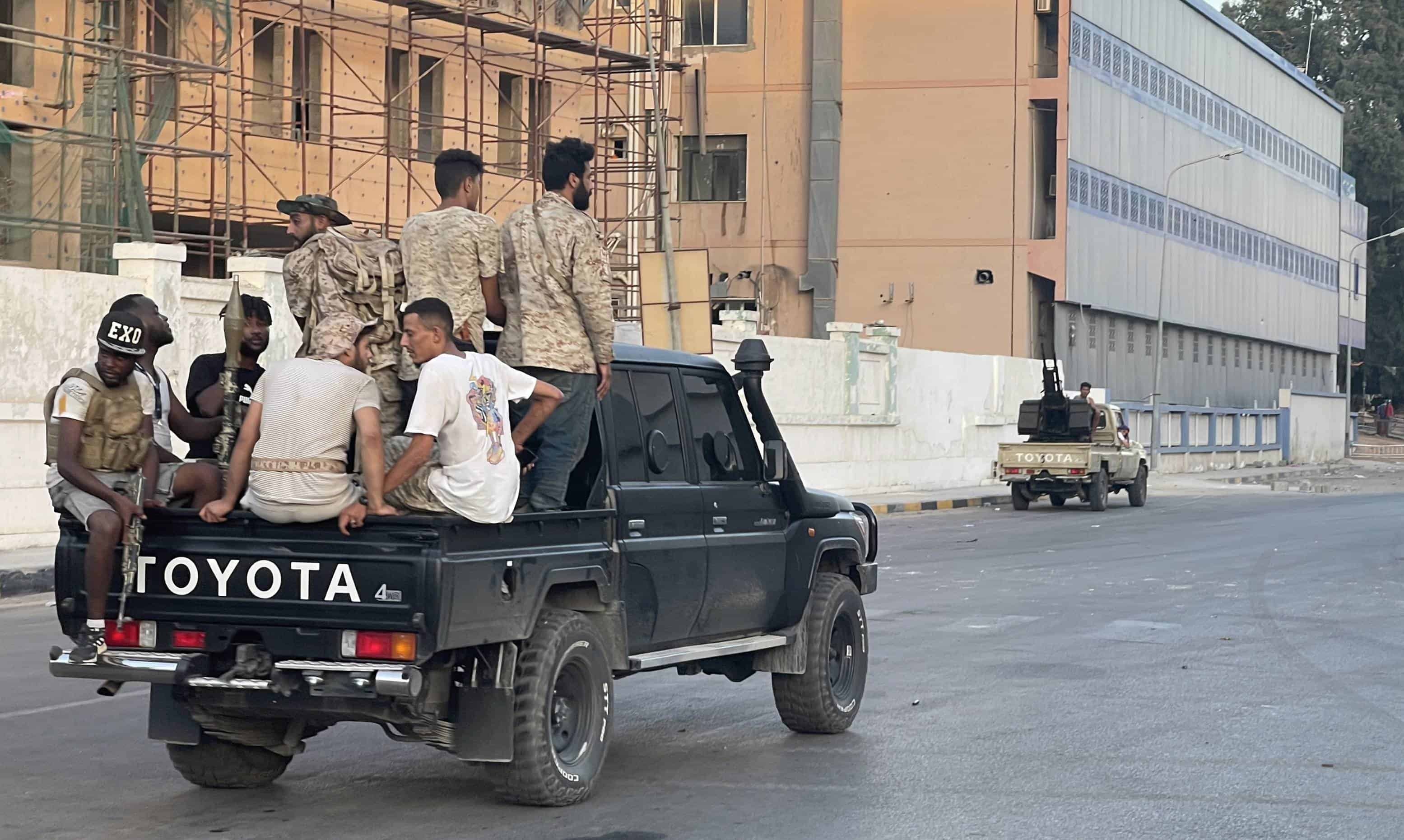

Tripoli, Libya— Libya’s Tripoli-based prime minister Abdulhamid Dbeibah signed two deals with Turkey’s defense minister on Tuesday, building on a 2019 agreement that angered European nations.
Dbeibah’s administration posted a statement saying the deals included “implementation protocols for the security agreement” signed that year by authorities in Tripoli, who at the time were fending off a blistering assault by eastern-based military chief Khalifa Haftar.
Tuesday’s statement did not give further details.
The 2019 deal had seen Turkey claim large and potentially gas-rich areas of the eastern Mediterranean, angering Greece, France and the European Union.
Shortly afterwards, the delivery of Turkish drones to Tripoli-based forces changed the course of the battle, winning them a victory over Haftar’s forces who were backed by Russia and the United Arab Emirates.
Another deal signed by Dbeibah on Tuesday aims to “boost the capacity of Libya’s air force using Turkish expertise”, read the statement, accompanied by pictures of him with Turkish Defense Minister Hulusi Akar.
Dbeibah was in Turkey to visit a defense exhibition.
The latest deals come three weeks after Turkey’s Foreign Minister Mevlut Cavusoglu signed a deal in Tripoli allowing for oil and gas exploration in Libya’s Mediterranean waters.
That was also built on the 2019 deal, which demarcated the countries’ shared maritime borders but sparked anger in Greece and Cyprus.
The agreement was rejected by a rival administration in the war-torn country’s east, as well as neighboring Egypt, both of which argue that Dbeibah’s term as Libyan PM has expired.
Dbeibah came to power as part of a United Nations-led peace process following the battle that had been sparked by Haftar’s attack on Tripoli.
That war was the last major round of violence in Libya’s long-running conflict which began with the 2011 NATO-backed revolt that toppled dictator Moamer Kadhafi.
The country has since been plagued by divisions and today two rival administrations are vying for power: Dbeibah’s in the west and the government of former interior minister Fathi Bashagha, nominally backed by Haftar, in the east.