
Iran has conveyed a fresh proposal to the United States through Pakistani intermediaries, seeking an agreement to reopen the Strait of Hormuz and bring the ongoing war to an end, according to an Axios report.
The development follows remarks by US President Donald Trump on Sunday suggesting Iran could directly approach Washington if it wished to negotiate an end to the conflict, which reportedly began on February 28 after joint Israeli and American strikes on Iran.
Speaking in an interview with Fox News’ “The Sunday Briefing,” Trump said, “If they want to talk, they can come to us, or they can call us. You know, there is a telephone. We have nice, secure lines.”
He also expressed confidence that the war would conclude soon and that Washington would emerge stronger from the conflict.
“Some of people we are dealing with now on Iran are very reasonable, others are not. I hope Iran will be smart,” Trump said.
Iran FM Abbas Araqchi in Russia for talks with Vladimir Putin
Iranian Foreign Minister Abbas Araqchi has arrived in Russia for talks with President Vladimir Putin, amid intensified diplomatic efforts to halt the US-Israel-Iran conflict.
His visit comes after meetings in Oman and Pakistan as mediation efforts continue involving regional players seeking to restart negotiations and stabilise the situation.
According to Reuters, Araqchi had earlier returned to Islamabad before departing for Moscow. Omani state media reported that Sultan Haitham bin Tariq Al Said met Araqchi in Muscat on Saturday to discuss the conflict and ways to ease regional tensions.
During his earlier stop in Pakistan, Araqchi met Pakistan Army Chief Asim Munir and Prime Minister Shehbaz Sharif as part of a three-country regional tour that Pakistani mediators described as “cautiously optimistic.”
However, reports said that before a US delegation could arrive in Pakistan, Araqchi had already departed. Meanwhile, President Trump reportedly cancelled the planned visit of envoys Steve Witkoff and Jared Kushner.
Araqchi is expected to return to Islamabad after his Russia visit as diplomatic efforts continue.
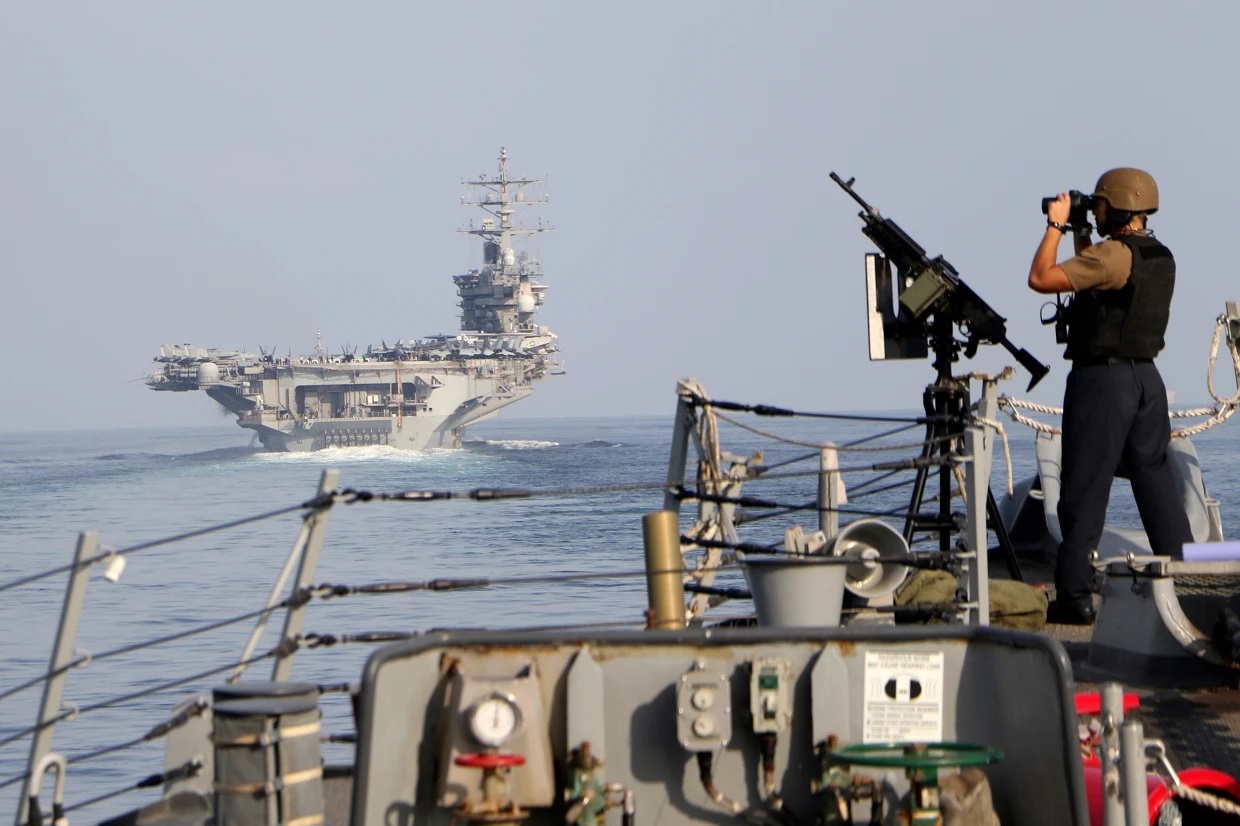
Earlier, Trump had ordered the US Navy to “shoot and kill” any Iranian vessel laying mines in the Strait of Hormuz, a crucial route that typically carries around 20 per cent of global oil supplies but has seen tanker traffic drop sharply since the war began.
In Lebanon, Hezbollah rejected a fresh ceasefire extension and claimed to have shot down an Israeli drone, while Israeli strikes continued in southern Lebanon. State media reported one person was killed and three others injured in Qalawiya.
US envoys to travel to Pakistan for Iran talks, Araghchi already there
Two senior American envoys, Steve Witkoff and Jared Kushner, are expected to travel to Pakistan on Saturday for discussions linked to the ongoing conflict with Iran, the White House said.
“Steve and Jared will be heading to Pakistan tomorrow to hear the Iranians out,” White House Press Secretary Karoline Leavitt said on Friday.
She added that Vice President JD Vance, the lead U.S. negotiator, “is on standby and will be willing to dispatch to Pakistan if we feel it’s a necessary use of his time.”
Iranian Foreign Minister Abbas Araghchi arrived in Islamabad on Friday as diplomatic efforts continued. According to Iranian officials cited in reports, he is expected to present a fresh written response to a U.S. peace proposal.
However, Iran’s Foreign Ministry spokesperson Esmail Baghaei denied plans for direct talks with the United States. In a statement on X, he said “no meeting is planned to take place between Iran and the U.S.” and that “Iran’s observations would be conveyed to Pakistan.”
Several issues remain unresolved between Washington and Tehran, including control of the Strait of Hormuz and Iran’s nuclear programme. The last round of U.S.-Iran negotiations took place in Islamabad in mid-April.
US imposes fresh sanctions on Iran oil trade
The United States announced a new round of sanctions targeting Iran’s oil trade, widening pressure on Tehran amid the ongoing regional conflict.
The Treasury Department imposed measures on 40 shipping firms and vessels allegedly linked to Iran’s so-called shadow fleet of tankers. It also sanctioned Chinese refiner Hengli Petrochemical Refinery, identified as a major buyer of Iranian petroleum.
“Treasury will continue to constrict the network of vessels, intermediaries and buyers Iran relies on to move its oil to global markets,” Treasury Secretary Scott Bessent said.
“Any person or vessel facilitating these flows — through covert trade and finance — risks exposure to U.S. sanctions.”
The latest measures come as Washington seeks to curb Iranian oil revenues and increase leverage in negotiations.
Oil prices stay elevated
Oil markets remained under pressure amid uncertainty in the Gulf region.
Brent crude, the international benchmark, settled above $105 a barrel on Friday, remaining significantly higher than levels seen before the conflict began.
Fresh Israel-Hezbollah strikes in Lebanon
The Israeli military said it struck Hezbollah targets in southern Lebanon on Friday, despite the recent extension of a cease-fire.
Lebanon’s health ministry said six people were killed and two wounded in Israeli attacks. Israel said those killed were Hezbollah members.
Hezbollah said it responded by launching drones at Israeli troops inside Lebanon.
Trump says Israel and Lebanon agree to extend ceasefire
President Trump announced a three-week extension of the cease-fire between Israel and Lebanon following a White House meeting involving Israeli and Lebanese diplomats. The truce, which had been due to expire soon, is seen as an important step toward reducing wider regional tensions linked to the Iran conflict.
The Israeli ambassador to Washington said the cease-fire created an opportunity to weaken Hezbollah and move toward formal peace. Lebanon’s ambassador also described the moment as historic and thanked the United States for helping sustain calm.
However, the cease-fire remains fragile. In the hours before the announcement, Israeli and Hezbollah forces reportedly exchanged fire in southern Lebanon. Lebanese officials said Israeli strikes killed three people near Nabatieh and wounded others elsewhere, while Hezbollah claimed attacks on Israeli troops.
Strait of Hormuz Crisis
The most dangerous flashpoint has now shifted to the Strait of Hormuz, one of the world’s most vital energy shipping routes. Both Washington and Tehran have seized vessels in recent days, accusing each other of violating newly imposed restrictions.
Iranian forces said they intercepted two cargo ships near the strait, while the Pentagon confirmed that American forces boarded sanctioned tankers carrying Iranian oil in the Indian Ocean. President Trump escalated tensions further by ordering the U.S. Navy to “shoot and kill any boat” laying mines in the waterway.
The confrontation has rattled global energy markets. Brent crude surged above $106 per barrel on Friday, gaining nearly five percent in a short span. Traders fear that if the disruption continues, oil and gas supplies could tighten sharply, worsening inflation worldwide.
Wider Regional Impact
The conflict is also influencing other geopolitical theatres. Ukrainian President Volodymyr Zelensky disclosed new security agreements with three Middle Eastern countries aimed at strengthening defences against Iranian drones and missiles.
At the same time, international markets are watching nervously. Experts warn that a monthslong disruption in the Strait of Hormuz would affect not only oil and natural gas, but also global supplies of fertilizer, helium, and other critical commodities.
Current Mood
The overall situation remains highly unstable. Both Washington and Tehran appear unwilling to retreat, yet neither side seems eager for full-scale war. As one analyst described it, the crisis has become a dangerous “game of chicken” — with diplomacy still possible, but the margin for error growing smaller each day.
Iran blames US blockade for stalled talks as Gulf tensions deepen
Senior Iranian officials have accused Washington of derailing efforts toward peace, saying the United States naval blockade of Iranian ports has become the principal barrier to negotiations.
Iranian President Masoud Pezeshkian said Tehran remains open to diplomacy and seeks “dialogue and agreement” but added that “breach of commitments, blockade and threats are the main obstacles to genuine negotiations”.
His remarks reflected growing frustration in Tehran over what it describes as economic coercion and military pressure by Washington.
Revolutionary Guard Seizes Two Vessels in Strait of Hormuz
Regional tensions escalated after Iran’s Islamic Revolutionary Guard Corps (IRGC) said it captured two foreign vessels in the Strait of Hormuz and opened fire on a third ship for allegedly violating maritime regulations.
Iran later released video footage it said showed armed and masked commandos boarding a container vessel in the strategic waterway, through which a large share of the world’s oil passes.
According to the IRGC, both ships seized on Wednesday were redirected toward the Iranian coast. The identities of the vessels were not immediately known.
White House Says Trump Has Set No Deadline on Ceasefire
In Washington, White House spokesperson Karoline Leavitt said no deadline has been set by US President Donald Trump regarding the extension of his ceasefire on Iran.
She added that it will be the president’s decision when the truce ends, signalling continued uncertainty over the future of the arrangement.
Lebanon Condemns Killing of Journalist in Israeli Strike
Lebanon has condemned Israel for the targeted killing of Lebanese newspaper correspondent Amal Khalil and the wounding of journalist colleague Zeinab Faraj.
The incident took place despite a negotiated ceasefire between both countries, which Lebanon says Israel has violated daily through deadly attacks and the demolition of homes.
Over 10 Million Barrels of Iranian Oil Leave Gulf Despite Blockade
Energy analytics firm Vortexa said it recorded 34 movements of sanctioned and Iranian-linked tankers in and out of the Gulf in the week after the US imposed a naval blockade of Iranian ports.
According to figures cited by The Associated Press, the traffic included 19 outbound and 15 inbound movements between April 13 and Monday.
The firm said six of the outbound voyages were “confirmed laden with Iranian crude, representing about 10.7 million barrels”.
It remains unclear whether all of those shipments successfully reached overseas markets.
Maritime Flashpoint Grows More Dangerous
The latest developments suggest that while diplomatic channels remain technically open, the confrontation between Tehran and Washington is increasingly unfolding through naval pressure, tanker movements and military signalling in one of the world’s most sensitive energy corridors.
Trump extends ceasefire with Iran, keeps naval blockade in place
US President Donald Trump has announced an extension of the ceasefire with Iran, saying Washington would pause further military action to allow Tehran time to submit a unified proposal for negotiations. However, he made clear that the US naval blockade of Iranian ports would continue.
In a statement, Trump said: “Based on the fact that the Government of Iran is seriously fractured, not unexpectedly so and, upon the request of Field Marshal Asim Munir, and Prime Minister Shehbaz Sharif, of Pakistan, we have been asked to hold our Attack on the Country of Iran until such time as their leaders and representatives can come up with a unified proposal. I have therefore directed our Military to continue the Blockade and, in all other respects, remain ready and able, and will therefore extend the Ceasefire until such time as their proposal is submitted, and discussions are concluded, one way or the other.”
The move signals a temporary pause in direct hostilities, but continued economic and military pressure on Tehran.
Iran Yet to Decide on Fresh Peace Talks
Before Trump’s ceasefire announcement, Iran’s foreign ministry said no final decision had been taken on whether Tehran would join another round of talks with Washington later this week.
Speaking to the BBC, Iranian foreign ministry spokesman Esmail Baghaei criticised Washington’s approach, saying Iran entered previous negotiations “with good faith and sense of seriousness, but you have a negotiating party that has shown its lack of seriousness, lack of good faith”.
He also referred to recent US threats, including Trump’s warning that America could “knock out every single power plant, and every single bridge” if Iran rejected what he described as a fair deal.
The remarks underline continuing mistrust between both sides despite the ceasefire extension.
Trump Claims Iran Under Severe Financial Pressure
Trump also continued his sharp rhetoric on social media, claiming Iran’s economy was collapsing under sanctions and maritime pressure.
In a Truth Social post, he wrote: “Iran is collapsing financially!”
He further claimed: “They want the Strait of Hormuz opened immediately.”
According to Trump, Iran was “Starving for cash! Losing 500 Million Dollars a day.”
He added that the Iranian “Military and Police [are] complaining that they are not getting paid. SOS!!!”
The claims could not be independently verified.
US Tightens Pressure on Iraq Over Iran-Backed Militias
The Wall Street Journal reported that the Trump administration has halted shipments of US dollars to Iraq and frozen certain security cooperation programmes with Baghdad as part of a wider strategy to weaken Iranian-backed militias operating there.
According to the report, US Treasury officials blocked the transfer of nearly $500 million in banknotes derived from Iraqi oil sales held at the Federal Reserve Bank of New York.
Neither the US Treasury Department nor the Federal Reserve immediately commented on the report.
IAEA Chief Warns Peace Without Nuclear Oversight Is an “Illusion”
International Atomic Energy Agency chief Rafael Grossi welcomed the extension of the ceasefire, calling it an opportunity for diplomacy.
Speaking to reporters, Grossi said: “I think it’s very important that an opportunity for peace is given.”
However, he cautioned that any future agreement must involve nuclear monitoring mechanisms from the beginning. Without IAEA oversight, he warned, “you will have an illusion of an agreement”.
Pakistan Welcomes US Move
Pakistan Prime Minister Shehbaz Sharif thanked Trump for accepting Islamabad’s request to extend the ceasefire.
Posting on X, Sharif said:
“On my personal behalf and on behalf of Field Marshal Syed Asim Munir, I sincerely thank President Trump for graciously accepting our request to extend the ceasefire to allow ongoing diplomatic efforts to take their course.”
Pakistan has emerged as a key mediator in the latest diplomatic efforts.
Oil Markets Remain Volatile
Despite the ceasefire extension, global oil prices remained unstable amid uncertainty over whether talks would succeed and whether the Strait of Hormuz would reopen fully.
Brent crude briefly slipped 0.2% to $98.32 a barrel, while West Texas Intermediate eased 0.3% to $89.41 in Asian trading.
Energy markets have remained tense since the outbreak of conflict on February 28, when the US and Israel launched strikes on Iran and Tehran threatened maritime disruption in the Gulf.
CENTCOM Says US Forces “Remain Ready”
US Central Command said American forces remain prepared despite the pause in fighting.
In a video statement, commander Admiral Brad Cooper said:
“We are rearming. We’re retooling and we’re adjusting our tactics, techniques and procedures.”
“There is no military in the world that adjusts like we do and that’s exactly what we’re doing right now during the ceasefire.”
The statement suggests Washington is maintaining full military readiness while diplomatic channels remain open.
Iran, US signal fresh talks as Hormuz tensions persist
The United States and Iran have sent mixed signals ahead of a possible second round of peace talks in Pakistan, even as tensions remain high over maritime traffic through the Strait of Hormuz.
According to reports, a day after the U.S. Navy seized and boarded an Iranian cargo ship, both sides appeared to indicate they may send negotiators to Islamabad on Tuesday. Vice President JD Vance is expected to lead the U.S. delegation, while Iranian officials said Mohammad Bagher Ghalibaf would attend if Vance also participates.
However, the two sides remain divided over the Strait of Hormuz. President Donald Trump has vowed to maintain a blockade of Iranian ports, while Iran has asserted military control over the strategic waterway. The U.S. Navy said it had turned back 27 ships so far under the blockade. Oil prices reportedly climbed back toward $100 a barrel on Monday.
Iranian President Masoud Pezeshkian struck a cautious tone, referring to the “deep historical mistrust” between Iran and the United States. He warned that Americans “seek Iran’s surrender. Iranians do not submit to force.”
Trump, meanwhile, repeated threats to strike Iranian power plants and civilian infrastructure if diplomacy collapses.
Iran’s parliament speaker Ghalibaf also accused Trump of trying to force Tehran into submission, saying Iran would not enter talks under threats.
Analysts said Tehran’s mixed messaging reflects internal and external pressure. Hamidreza Azizi, an expert on Iran security issues, said Iranian leaders face pressure from hard-liners at home as well as Washington’s coercive tactics.
“They have a core support base of the Islamic Republic, which is very hard-line and ideological, and is very sensitive to any sign of a concession,” he said.
“The other pressure, of course, is Donald Trump — and his apparent willingness to stick to his coercive diplomatic strategy.”
Mohammad Ali Shabani, editor of Amwajmedia.com, said Tehran still wants an agreement despite tensions.
“I think the Iranians really do want a deal, but Trump is just too crude — he just wants total victory in public,” he said. “And the Iranians feel like time is on their side.”
The cease-fire between the two countries, which began on April 8, is due to expire early Wednesday in Iran.
Meanwhile, the U.S.-Iran dispute widened after American forces seized the Iranian-flagged container ship Touska in the Arabian Sea. Trump said the vessel was under sanctions and had attempted to evade the blockade.
“The TOUSKA is under U.S. Treasury Sanctions because of their prior history of illegal activity,” Trump wrote on social media. “We have full custody of the ship, and are seeing what’s on board!”
A U.S. military official said Marines were searching up to 5,000 containers aboard the ship. Iran condemned the seizure as “armed piracy” and threatened retaliation.
Iran rejects fresh US talks, cites “excessive demands” and naval blockade
Iran has said it has no plans to participate in a new round of negotiations with the United States, dismissing a diplomatic initiative announced by US President Donald Trump. The development comes amid escalating regional tensions and continued disruption in the Strait of Hormuz.
According to Iran’s state broadcaster IRIB, citing official sources, “There are currently no plans to participate in the next round of Iran-US talks.”
The statement was issued only hours after Trump said a US delegation would travel to Islamabad for possible negotiations aimed at ending the ongoing conflict involving the US and Israel in Iran.
A senior Iranian official, Ebrahim Zolfaghari, went further, claiming Tehran had officially rejected all negotiations with Washington. In a strongly worded post, he said: “Peace deal is now cancelled. Strait of Hormuz fully closed again.”
Trump had described the proposed Islamabad talks as a final opportunity for diplomacy. He warned that failure to reach an agreement could trigger severe consequences. “If Iran does not sign this deal, the whole country is getting blown up,” Trump reportedly said.
Iran’s official news agency IRNA later outlined the reasons for rejecting the talks, blaming what it called “Washington’s excessive demands, unrealistic expectations, constant shifts in stance, repeated contradictions, and the continuing naval blockade”.
The diplomatic breakdown comes as the conflict enters its eighth week, with thousands reportedly killed and global oil markets under pressure due to restrictions in one of the world’s most critical energy shipping lanes.
Iran recently reimposed curbs on commercial shipping through the Strait of Hormuz after briefly easing them. Tehran has insisted that normal maritime transit cannot resume while the US naval blockade remains in place.
Pakistan, meanwhile, has reportedly been in touch with both sides, with officials stressing the need for “continued dialogue and engagement” to prevent further escalation.
In a separate statement, Iran condemned the US blockade as “unlawful and criminal”, describing it as a form of collective punishment.
Tehran Slams US Ship Seizure as “Armed Piracy”, Vows Response
Iran has sharply condemned the US seizure of an Iranian-flagged cargo vessel in the Strait of Hormuz, calling the operation an act of “armed piracy” and promising retaliation.
The confrontation reportedly took place hours after President Trump announced his intention to send officials to Islamabad for possible talks with Tehran, underscoring the contrast between diplomatic messaging and military escalation.
Iranian officials said any future negotiations would depend on the lifting of the US blockade, indicating that Tehran will not engage while maritime pressure tactics continue.
The seizure has further inflamed tensions in the Gulf, where military activity and shipping disruptions have already rattled energy markets and heightened fears of a wider regional conflict.
At the same time, attention has also turned to Lebanon, where a 10-day ceasefire with Israel has largely held. Thousands of displaced residents have continued returning to southern areas to assess damage to homes and infrastructure destroyed during recent fighting.
Trump Approval Drops to Second-Term Low as Iran War Weighs on Public Mood
US President Donald Trump’s approval rating has fallen to its lowest point of his second term, with public dissatisfaction increasingly linked to his handling of the war on Iran.
According to a new NBC News poll, Trump’s job approval stands at 37 percent, while 63 percent of US adults disapprove of his overall performance. Half of those surveyed expressed strong disapproval.
The conflict with Iran appears to be a major factor behind the decline. Just 33 percent of respondents said they strongly or somewhat approved of Trump’s management of the war, while 67 percent said they strongly or somewhat disapproved.
The issue remains sharply polarised along political lines. Around 82 percent of Democrats and independents disapproved of Trump’s handling of the war, while 74 percent of Republicans backed his approach.
Opposition to further military escalation was especially pronounced among younger Americans. While 61 percent of adults overall said the US should not take any additional military action in Iran, that figure rose to 74 percent among respondents under the age of 30.
The polling suggests that while the war has consolidated Republican support for Trump, it has significantly eroded his standing with independents and younger voters.
Iran denies agreeing to transfer enriched uranium abroad
Iran has firmly rejected claims that it has agreed to move its stockpile of enriched uranium out of the country, pushing back against repeated assertions made by US President Donald Trump.
Ebrahim Rezaei, spokesperson for Iran’s National Security Committee, said Tehran would not accept any proposal involving the transfer of enriched uranium overseas and denied that such commitments had ever been made.
Speaking to Al Jazeera Mubasher, Rezaei said Tehran “categorically rejects” anything related to zeroing out enrichment or halting its peaceful nuclear programme, describing both issues as a strategic red line for the country.
Trump has repeatedly claimed that Iran would hand over its enriched uranium reserves. In a post on Friday, he wrote that “the U.S.A. will get all Nuclear ‘Dust’”.
Iran’s Foreign Ministry spokesperson Esmaeil Baghaei also dismissed those statements, underlining Tehran’s uncompromising stance on the matter.
“Enriched uranium is as sacred to us as Iranian soil and will not be transferred anywhere under any circumstances,” Baghaei told the Tasnim news agency.
Iran says it will not levy ‘traditional fees’ in Strait of Hormuz
Iran has said it does not intend to impose conventional transit charges on vessels passing through the strategically vital Strait of Hormuz, though lawmakers are drafting a new framework tied to security arrangements in the waterway.
Ebrahim Rezaei, spokesperson for Iran’s National Security Committee, told Al Jazeera Mubasher that Tehran would not impose fees on the passage of ships through the strait in a traditional manner.
He said the Iranian parliament is currently preparing a draft law that would establish charges linked to “securing the strait”. He added that maritime traffic would be allowed only through prior coordination with Iranian authorities.
According to Rezaei, hostile military vessels, particularly those from the United States and Israel, would not be permitted to cross under any circumstances. Friendly vessels, however, could pass provided they had prior coordination with Iranian forces.
He further stressed that Iran rejects any American role in managing or securing the crucial shipping lane.
Earlier, Iran’s ISNA news agency quoted Iranian official Mahmoud Nabavian as saying some commercial ships would be allowed to cross the Strait of Hormuz, but only after paying fees.
Nabavian also linked the reopening of the route to the ceasefire in Lebanon, despite Trump denying any connection between the two developments.
Trump says China’s Xi pleased over Hormuz reopening
US President Donald Trump has said Chinese President Xi Jinping is pleased with the reopening of the Strait of Hormuz, a route critical to global energy supplies and international trade.
In a post on Truth Social, Trump said Xi was “very happy that the Strait of Hormuz is open and/or rapidly opening”.
Trump also referred to his upcoming visit to China, expressing optimism over talks with the Chinese leader and describing the meeting in glowing terms.
He said his engagement with Xi would be “a special one and, potentially, Historic”.
“I look forward to being with President Xi — Much will be accomplished!” he added.
Iran says Hormuz Strait to remain open for commercial shipping during ceasefire
Dubai, UAE — Iran said the Strait of Hormuz will remain fully open to commercial shipping during the current ceasefire, in a move welcomed by the United States as tensions across the Middle East showed tentative signs of easing.
Iranian Foreign Minister Abbas Araghchi said on Friday that passage through the strategic waterway would be “completely open” for the remainder of the truce, adding that vessels would transit along routes coordinated by Iran’s Ports and Maritime Organisation.
The Strait of Hormuz, which carries a significant share of global oil exports, has been a focal point of concern throughout the conflict, with fears that disruption could trigger a broader energy shock.
U.S. President Donald Trump welcomed Tehran’s announcement, thanking Iran for keeping the route open and suggesting a broader agreement with the country was close.
“Iran has agreed to never close the Strait of Hormuz again,” Trump said on social media, adding separately in remarks to AFP that a deal with Tehran was “very close”.
However, uncertainty persisted over security conditions in the waterway. A U.S. naval advisory warned that the threat from sea mines in parts of the strait “is not fully understood” and advised ships to consider avoiding certain areas, particularly within the Traffic Separation Scheme, a UN-recognised routing system dividing shipping lanes between Iranian and Omani waters.
Trump also claimed that Iran, with U.S. assistance, was in the process of removing mines from the strait, though the assertion could not be independently verified.
Despite the reopening, Washington signalled that pressure on Tehran would continue. Trump said a U.S. naval blockade related to Iran would remain in force until a broader agreement is reached, and added that the United States planned to recover enriched uranium from Iran.
The developments come amid wider diplomatic efforts to stabilise the region. European leaders, including France’s Emmanuel Macron and Britain’s Keir Starmer, are expected to discuss a potential multinational force to secure shipping in the Gulf.
Meanwhile, China has indicated it could play a more active diplomatic role. President Xi Jinping said Beijing would take a “constructive” approach to ending the conflict, reflecting growing international concern over the economic and security implications of instability in the Gulf.
The International Energy Agency warned that any loss of energy output in the Middle East could take up to two years to recover, underlining the global stakes tied to uninterrupted passage through Hormuz.
Trump says Iran peace deal is “very close” as talks may resume soon
US President Donald Trump has again signalled confidence that a diplomatic settlement with Tehran may be within reach, declaring that a deal to end the war on Iran is “very close”. Speaking after the Lebanon ceasefire announcement, Trump said talks with Iranian officials could restart as early as this weekend, with Pakistan’s capital Islamabad being discussed as a possible venue. His comments suggest Washington sees the temporary halt in Lebanon as part of a broader effort to cool regional tensions and revive negotiations with Iran.
The US administration has repeatedly said it wants a negotiated end to the crisis rather than a prolonged military confrontation. Trump also indicated that if meaningful progress is made, temporary ceasefires already in place could be extended to create more room for diplomacy. Markets and governments around the world are closely watching the next phase of talks, as any breakthrough with Tehran could reduce pressure across multiple conflict zones, including Lebanon, Iraq, Syria and the Gulf.
Israeli public anger grows over ceasefire, analyst says
The sudden ceasefire with Lebanon has reportedly triggered frustration among many Israelis, especially communities in the north that have endured repeated Hezbollah rocket and drone attacks. Political commentator Abed Abou Shhadeh told Al Jazeera that many citizens feel the outcome falls far short of what they were promised by the Israeli government. “First of all, they were surprised that Hezbollah was able to maintain military capabilities and fight until the last minute of the ceasefire,” Shhadeh said.
He added, “Second, this is not what they were promised.” According to Shhadeh, Israeli leaders had raised expectations of a decisive military victory and even the creation of a permanent buffer zone inside southern Lebanon. Instead, Hezbollah remained active until the ceasefire began, and no clear strategic breakthrough was achieved. He also said many Israelis feel they were not fully informed about the diplomatic understandings between the United States, Iran and regional actors, particularly after Trump was the first leader to publicly announce details of the ceasefire.
Asian markets retreat despite Wall Street rally on Iran hopes
Asian stock markets opened lower on Friday despite a strong rally in US equities, showing investor caution over whether diplomacy with Iran will succeed. While Wall Street had advanced on optimism that the Trump administration was close to reaching an agreement with Tehran, markets across Asia reacted more cautiously once trading began. Japan’s Nikkei fell around 1 percent in early trade, while Hong Kong, South Korea, Taiwan and mainland Chinese indexes also moved lower.
The decline suggests investors remain concerned that ceasefires and diplomatic statements may not necessarily translate into a lasting settlement. Tensions involving Iran have already disrupted trade routes, raised energy market fears and created uncertainty for global growth. Any collapse in talks could quickly reverse market sentiment. For now, traders appear to be balancing hopes of peace against the risk of renewed escalation if negotiations fail or if the Lebanon ceasefire breaks down before the 10-day window expires.
Lindsey Graham warns Hezbollah disarmament key to peace
US Republican Senator Lindsey Graham has cast doubt on whether Lebanon’s military can play the role Washington expects under any long-term peace framework. Speaking to Fox News, Graham said, “I do not trust the Lebanese military to disarm Hezbollah,” expressing scepticism that the state security apparatus has either the capability or political freedom to confront the powerful Iran-backed group. He also argued that changes in Lebanese military leadership may be necessary before any serious progress can be made.
Graham further insisted there will be “no peace deal in Lebanon until there’s a credible pathway to disarm Hezbollah”. His remarks highlight divisions inside the United States over how to convert the temporary ceasefire into a sustainable agreement. While some policymakers favour diplomacy backed by Lebanese institutions, others believe Hezbollah’s military power must be directly addressed first. The issue is likely to become central in any negotiations linked to a broader settlement with Iran, given Hezbollah’s long-standing strategic ties with Tehran.