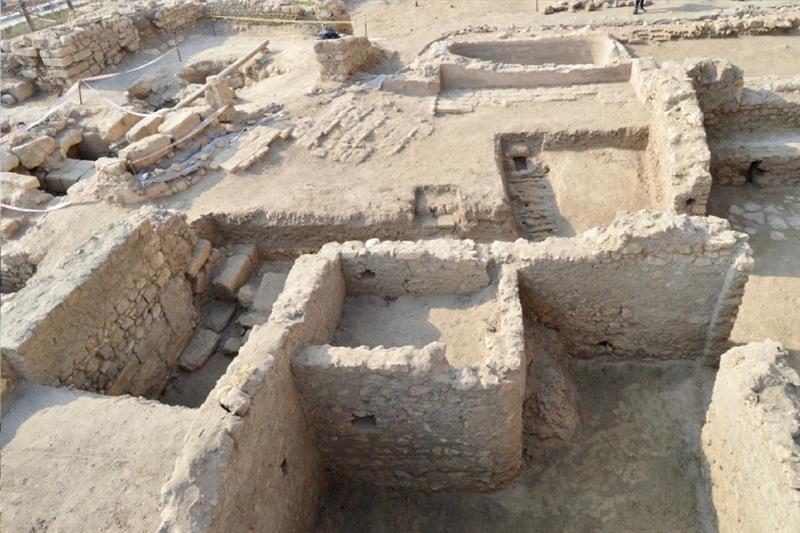

Cairo, Egypt — An Egyptian-French archaeological mission has uncovered a Mamluk-era water supply system and the remains of a mosque near the Citadel of Sultan Salah al-Din al-Ayyubi (Saladin) in Historic Cairo, the Middle East News Agency (MENA) reported.
The discoveries were made during a joint project between the Supreme Council of Antiquities and the French Institute for Oriental Archaeology (IFAO) aimed at documenting and studying historic areas surrounding the citadel.
Excavations revealed two large wells connected to an advanced water distribution system that supplied water to the citadel through waterwheels and stone channels linked to the historic Aqueduct of Cairo.
Archaeologists also uncovered service facilities associated with the system, including animal pathways, storage areas, and water basins.
In the Hattaba district, the mission discovered remains of a Mamluk-era mosque, including the mihrab, parts of the qibla area, sections of stone flooring, and several Islamic-era burial sites.
The team also found a collection of artifacts, including pottery vessels used for water lifting, Mamluk and Ottoman coins, jewelry, seals, and objects dating back to the 18th and 19th centuries.
Officials said the discoveries provide new information about water management, urban planning, and daily life in Cairo during the Islamic era. Excavation and documentation work at the site is ongoing. (WAM)