
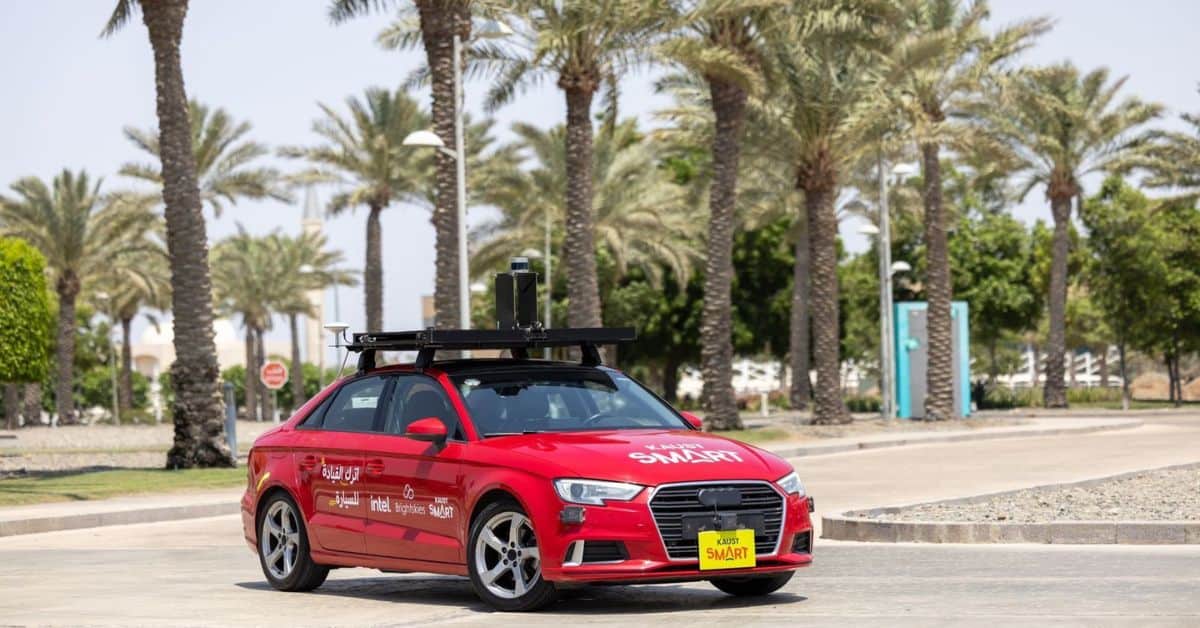


RIYADH, SAUDI ARABIA — By 2030, autonomous cars will comprise 15 percent of the Saudi Arabia’s public transportation fleet, said officials.
The move is part of the Kingdom’s effort to utilize digital technology to enable the development of “smart cities” to address issues such as transportation congestion and garbage collection, making urban areas more livable.
Smart mobility, encompassing self-driving cars, shared mobility, adaptive traffic lights, e-bikes, and airborne taxis, has the potential to transform cities by making vehicles and transportation infrastructure tech-enabled and data-driven, the officials said.
Innovative technologies could save commuters in large cities with extensive public transportation up to 15 minutes per day. However, McKinsey & Company found that the daily improvement in growing cities could reach 20 to 30 minutes, posing challenges for transportation.
Saudi Arabia’s smart cities and automobility initiatives, such as NEOM and the Red Sea project, focus on autonomous technologies. These “smart cities” aim to be self-sustaining, incorporating passenger and freight transport systems utilizing crewless aerial vehicles, pods, and robo-taxis.
Although self-driving cars have generated significant buzz over the past decade, they are currently facing challenges due to the global semiconductor chip shortage and other supply issues. Consequently, car companies are prioritizing the integration of safety-critical features.
The availability and functionality of autonomous technology in testing grounds and real-life conditions have been hampered by insufficient infrastructure and unoptimized cost structures.
Arthur D. Little’s (ADL) new Autonomous Mobility Journal, the fourth installment in the series, explores these findings and more. The publication highlights industry dynamics, compelling use cases, and the importance of intelligent mobility solution providers and governments collaborating to achieve sustainability goals by 2030.
The Saudi Arabian Transport General Authority (TGA) is pursuing a dual strategy. Firstly, it promotes and adopts new transportation forms through testing, piloting, research and development, and collaboration with public and private organizations, academic institutions, and research agencies to develop a supportive regulatory framework.

Secondly, TGA conducts economic, social, and environmental feasibility studies for operators and providers of public transport services and goods transport to determine the implementation of specific regulations, as explained by Omaimah Bamasag, Deputy of Transport Enablement at the Transport General Authority of the Kingdom of Saudi Arabia.
Although regulating autonomous vehicles (AVs) in the Kingdom is still in its early stages, it remains a primary goal and focus for the transportation ecosystem.
The government is exploring various technologies, conducting studies, and consulting with local and international experts to identify the technical, operational, and legal requirements for AVs in the Kingdom.
Saudi Arabia aims to become a world-class testing ground for new transportation technologies, which bodes well for the future of AVs in the country and should expedite the development of a mature regulatory framework.