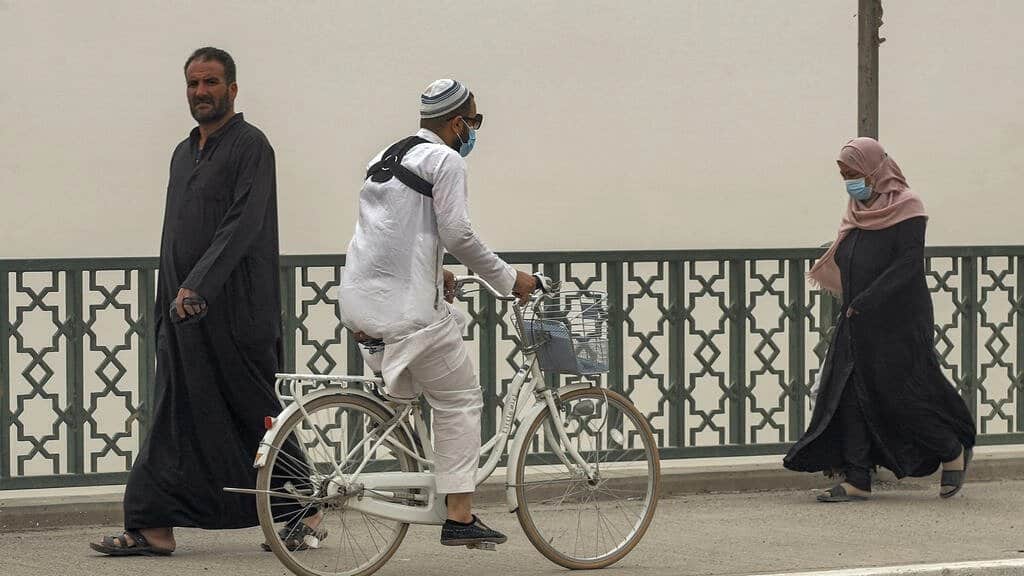

Iraq was hit Wednesday by its third heavy dust storm in two weeks, temporarily grounding flights at Baghdad and Najaf airports, as the weather phenomenon grows increasingly frequent.
The air in Baghdad was thick with a heavy sheet of grey and orange dust, while the state news agency INA cited the meteorological office as saying the latest storm was expected to lift on Thursday.
Flights were suspended at Baghdad International Airport due to poor visibility.
The airport serving the Shiite holy city of Najaf to the south also released a statement announcing flights were grounded.
Two dust storms struck the country earlier in April, leaving dozens hospitalised with respiratory problems and temporarily grounding flights at a number of airports.
“The dust is affecting the whole country but particularly central and southern regions,” Amer al-Jabri, an official at Iraq’s meteorological office, told AFP.
“Iraq is facing climatic upheaval and is suffering from a lack of rain, desertification and the absence of green belts” around cities, he said.
Iraq is particularly vulnerable to climate change, having already witnessed record low rainfall and high temperatures in recent years.
Experts have said these factors threaten social and economic disaster in the war-scarred country.
In November, the World Bank warned that Iraq could suffer a 20-percent drop in water resources by 2050 due to climate change.
In early April, environment ministry official Issa al-Fayad had warned that Iraq could face “272 days of dust” a year in coming decades, according to the state news agency INA.
The ministry said the weather phenomenon could be confronted by “increasing vegetation cover and creating forests that act as windbreaks”.