
Baghdad, Iraq— Iraqi President Barham Saleh on Tuesday encouraged early legislative elections to settle a political crisis that escalated into deadly clashes this week, killing dozens and wounding hundreds more.
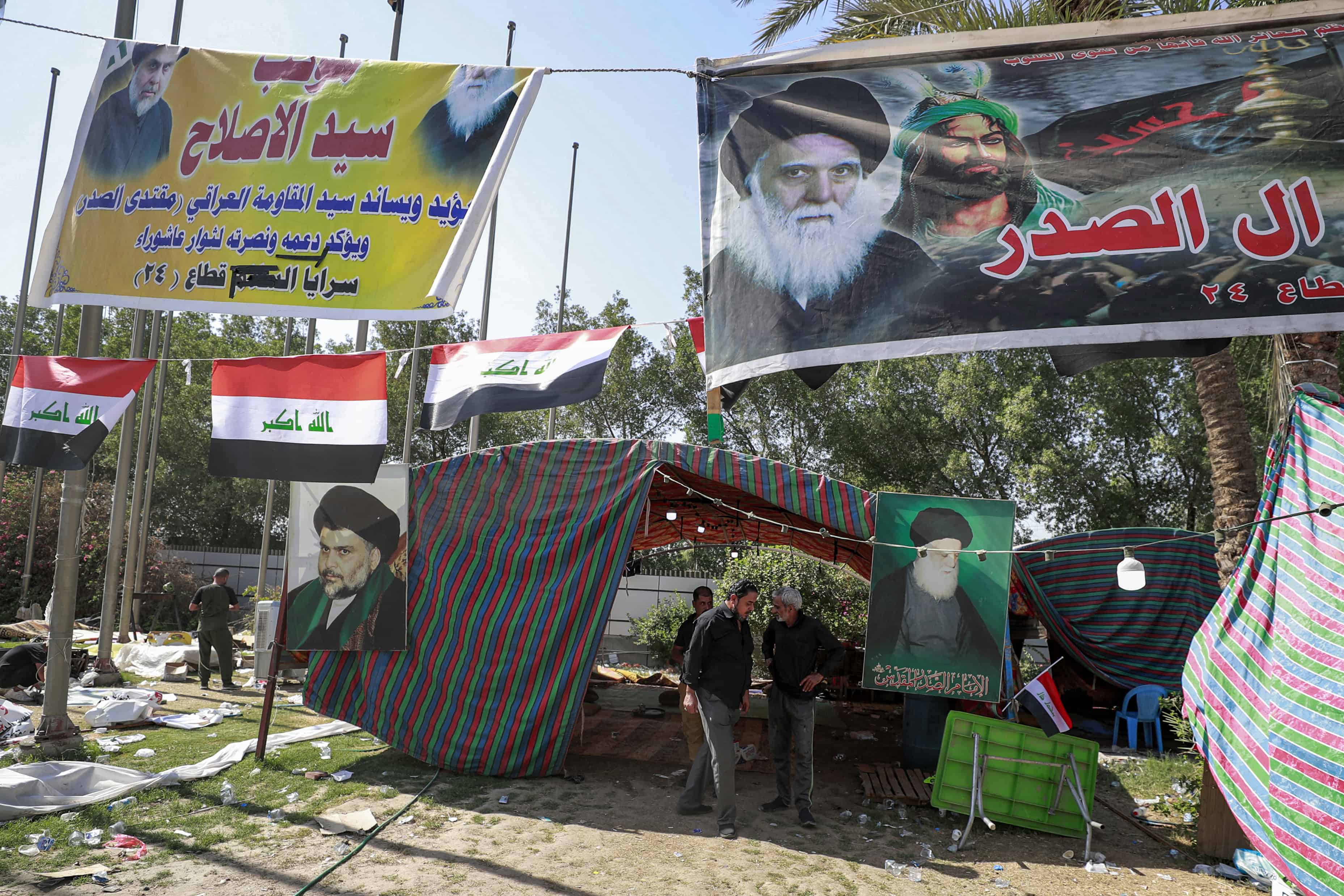
Early elections, less than a year after the last polls, have been a key demand of Shiite Muslim cleric Moqtada Sadr, whose supporters battled state security forces in violence that started on Monday.
“Holding new, early elections in accordance with a national consensus represents an exit from the stifling crisis,” Saleh said in a speech.
“It guarantees political and social stability and responds to the aspirations of the Iraqi people”.
Saleh spoke hours after supporters of Sadr withdrew from Baghdad’s Green Zone following nearly 24 hours of clashes that pitted them against the army and Shiite factions backed by neighboring Iran.
Thirty Sadr supporters were shot dead and at least 570 others were injured after fighting that began on Monday when Sadr’s loyalists stormed the government palace following their leader’s announcement that he was quitting politics.
Sadr and his supporters have spearheaded calls for the dissolution of parliament and new legislative elections following months of political paralysis.
Under the constitution, parliament can only be dissolved by an absolute majority vote in the house, following a request by one-third of deputies or by the prime minister with the approval of the president.
Sadr’s bloc emerged from last October’s election as the biggest in the legislature, with 73 seats, but far short of a majority.
Since then the country has been mired in political deadlock due to disagreement between Shiite factions over forming a coalition.
In June, his lawmakers quit in a bid to break the logjam.
Sadr’s supporters had for weeks been staging a sit-in outside Iraq’s parliament, after storming the legislature’s interior on July 30.