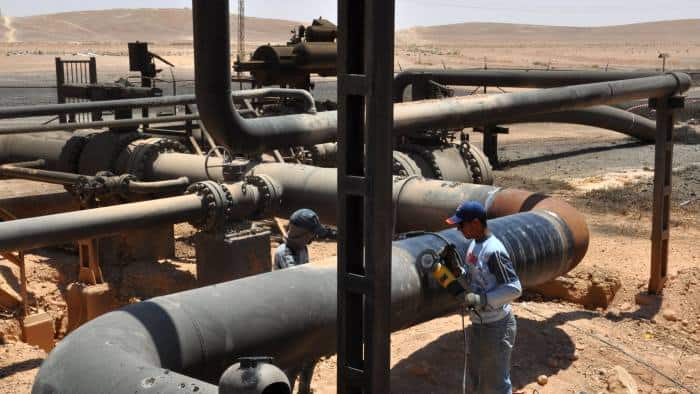

The Islamic State group on Saturday claimed an attack on a major natural gas pipeline southeast of the Syrian capital that led to power outages in the city and surrounding areas.
IS fighters “were able to plant and detonate explosives on the gas pipeline feeding the Tishreen and Deir Ali plants,” the group said in a statement.
The Deir Ali station southeast of Damascus generates half of Syria’s power needs, Electricity Minister Ghassan al-Zamel said Saturday in comments carried by the official SANA news agency.
He said an attack on the gas pipeline on Friday evening with explosive devices caused the station to go out of service temporarily.
The outage affected several other stations, causing blackouts in Damascus, its outskirts and other areas, Zamel said, before power was restored some thirty minutes later.
He said maintenance works had started Saturday but warned of severe rationing until the pipeline is repaired and power plants resume normal operations.
The Deir Ali and Tishreen plants remain out of service.
The IS group’s so-called caliphate in Syria was declared defeated in the riverside hamlet of Baghouz in 2019 following a gruelling US-backed offensive.
But the group continues to conduct attacks on Syrian government forces from its hideouts, including in the vast east Syrian desert.
Syria’s gas and oil infrastructure have been among the targets of militants and rebel groups opposed to President Bashar al-Assad’s regime.
The Syrian conflict since 2011 has ravaged electricity networks as well as oil and gas infrastructure across the country.
Syria’s largest oilfields remain beyond the government’s reach in the country’s Kurdish-held northeast, and Western sanctions have hampered fuel imports from abroad.
Syrians in government-held areas have had to adapt their lives at home and work around power cuts of up to 20 hours a day.